
Turquoise: The Wanderer’s Stone
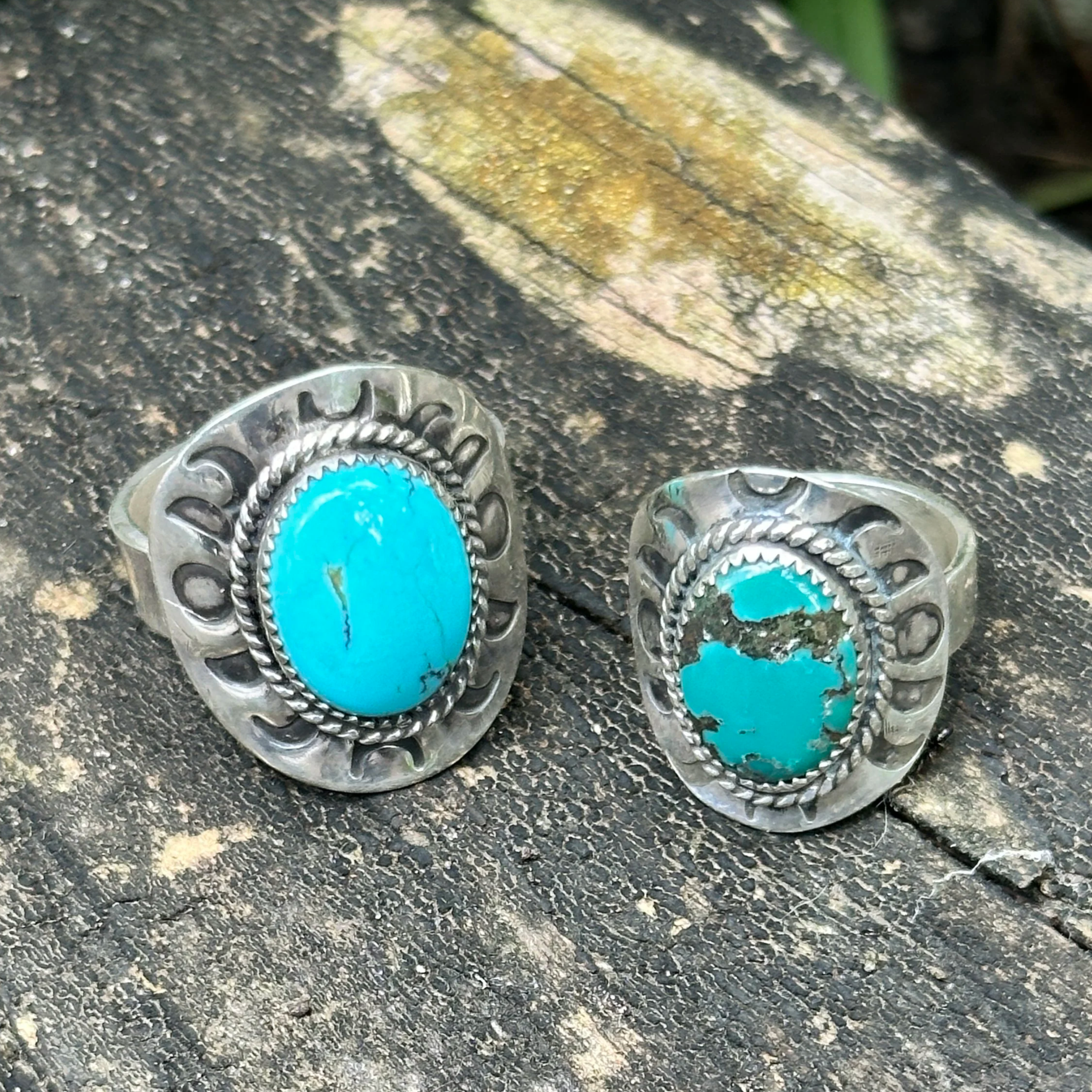
Long Before It Was A Beach Vacation Souvenir, Turquoise Was A Traveler’s Talisman. Egyptian Rulers Wore It Into The Afterlife. Chinese Artisans Were Carving It Over Three Thousand Years Ago. In Tibet, Where It’s Still Considered The National Gem, It’s Carried As Protection From Evil And A Charm For Good Fortune On The Road.
The Apache Told A More Practical Version Of The Same Story: Turquoise Tied To A Bow Or A Rifle Made A Hunter’s Aim Truer, And Warriors Carried It On Long Journeys As Insurance, Not Decoration. Even The Name Gives It Away. Turquoise Comes From The French For “Turkish Stone,” A Nod To The Trade Routes That First Carried It Into Europe. This Has Always Been A Stone That Moves.
Further West, Turquoise Carries A Different But Related Weight. For The Navajo, Zuni, And Pueblo Peoples Of The American Southwest, It’s Considered A Sky Stone — A Piece Of Fallen Sky Or Captured Water, Depending On The Telling — And Traditionally Worn To Connect The Wearer To Both Earth And Heaven At Once. Persian Turquoise, Meanwhile, Set The Standard The Rest Of The World Measured Against For Centuries: A Deep, Uniform Robin’s-Egg Blue Mined In Iran And Traded As Far As China And Europe Along The Same Silk Road Routes That Moved Silk And Spice. American Southwest Mines Like Sleeping Beauty In Arizona And Royston In Nevada Later Built Their Own Reputations For Clean, Consistent Color, And Today Collectors Will Talk About A Stone’s Mine Of Origin The Way A Wine Drinker Talks About A Vineyard.
Geologically, Turquoise Is A Bit Of A Fluke. It Forms Where Copper-Rich Water Seeps Slowly Through Aluminum-Rich Rock, Usually In Dry, Arid Climates — Which Is Exactly Why It Shows Up In The Same Kinds Of Places Around The World: The American Southwest, The Sinai Peninsula, The Iranian Plateau. No Two Stones Come Out Quite Alike. Color Runs From A Pale, Almost Chalky Sky Blue To A Deep Greenish Teal, And The Matrix — Those Dark, Web-Like Veins Running Through Some Stones — Is Actually Remnant Host Rock Trapped In The Turquoise As It Formed, Not A Flaw. It’s The Stone’s Own Fingerprint.
Which Is Exactly Why It Belongs In A Ramble & Riot Piece. The Ramblin’ Rose Wide Band Wears Turquoise The Way It’s Always Been Worn: Substantial, A Little Weathered-Looking, Built For A Hand That Doesn’t Sit Still. It’s Cut Wide On Purpose, Enough Metal Around The Stone That The Ring Reads As Armor As Much As Ornament — Something You’d Still Want On Your Hand After A Long Drive Or A Late Night Loading Out A Show.
The Winding Road Ring Takes It Further, Hand-Stamped With A Moon Phase That Turns The Stone Into An Actual Timekeeper For Whatever Long Way You’re Going. The Phase Isn’t Decorative Shorthand — Each One Is Stamped By Hand At The Bench, So No Two Come Out Perfectly Identical, Which Feels Like The Right Kind Of Imperfect For A Stone That’s Never Been Uniform In The First Place.
Every Piece Starts The Same Way, At A Small Bench In Nashville, With Sterling Silver And A Stone Picked For Its Particular Character Rather Than A Perfectly Even Color. The Metal Is Cut, Shaped, And Soldered By Hand, Then The Setting Is Built Around Whatever That Specific Piece Of Turquoise Actually Looks Like — Which Means Sizing And Bezel Work Shift Slightly From Stone To Stone. It’s Slower Than Ordering A Uniform Setting Off A Sheet, But It’s The Only Way To Let A Naturally Irregular Stone Sit The Way It’s Supposed To.
A Quick Note On Living With Turquoise, Since It Behaves Differently Than A Harder Stone Like Sapphire Or Quartz. It’s Relatively Soft And Genuinely Porous, So It Can Absorb Oils, Lotion, And Perfume Over Time — Which Isn’t Damage, Exactly, More Like The Stone Slowly Picking Up A Little Bit Of Wherever It’s Been. Many Turquoise Wearers Consider That Deepening Of Color A Feature, Not A Flaw, Proof The Piece Has Actually Been Worn And Not Just Kept In A Box. Still, It’s Worth Taking Off Before Swimming, Showering, Or Cleaning With Anything Harsh, And Storing It Away From Direct Sunlight When It’s Not On Your Hand. Treat It Like What It Is: A Stone That Was Built For Travel, Not For A Display Case.
Both Pieces Pair Easily With The Rest Of A Stack, Which Is How Most People End Up Wearing Them Anyway — The Ramblin’ Rose Anchoring A Hand Alongside Something Thinner And Quieter, Or The Winding Road Worn Solo When You Want The Moon Phase To Actually Be The Thing Someone Notices. Either Way, This Is A Stone That’s Meant To Be Handled, Not Shelved. It’s Earned Its Reputation The Same Way Most Of Us Do — By Actually Going Places.
Shop The Ramblin’ Rose And The Winding Road In The Collection, And Tell Us In The Comments Where Your Turquoise Has Been.