
Turquoise: the stone that wears its history on the surface
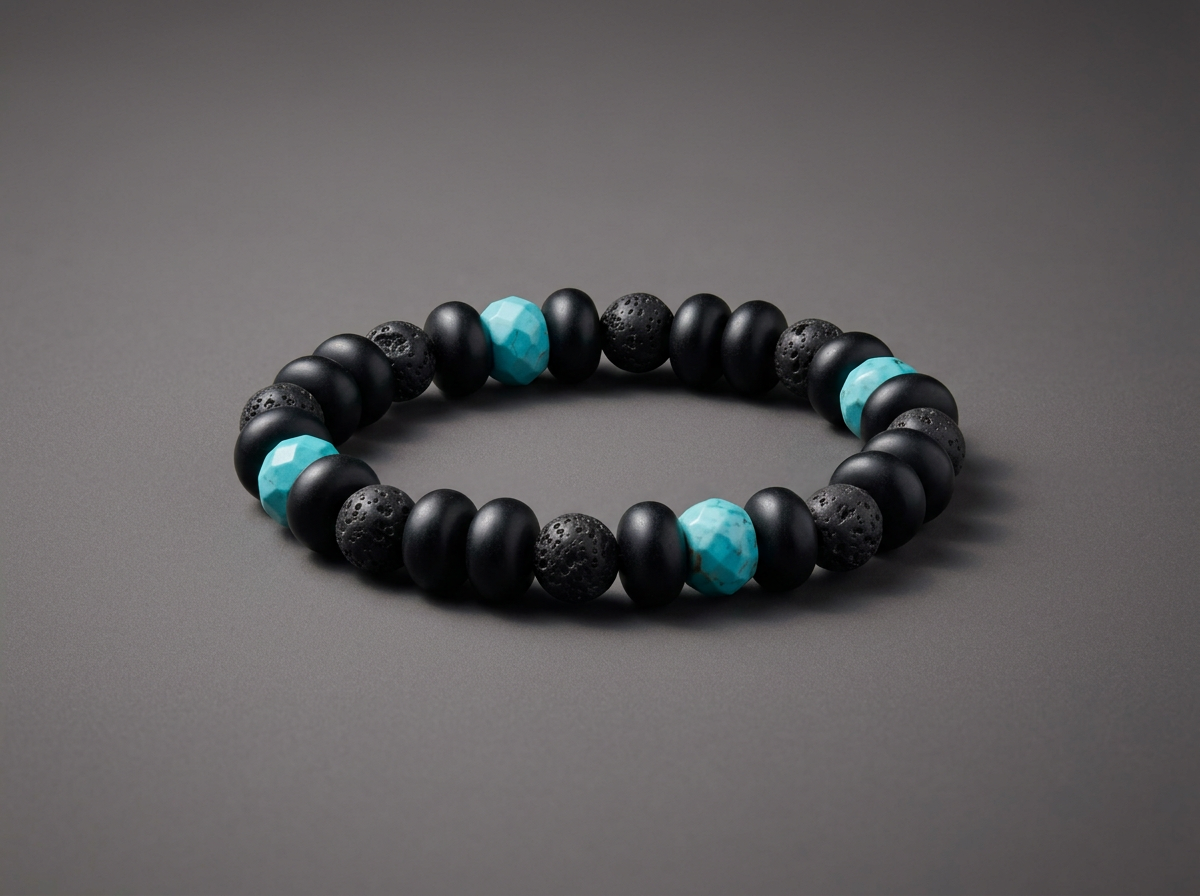
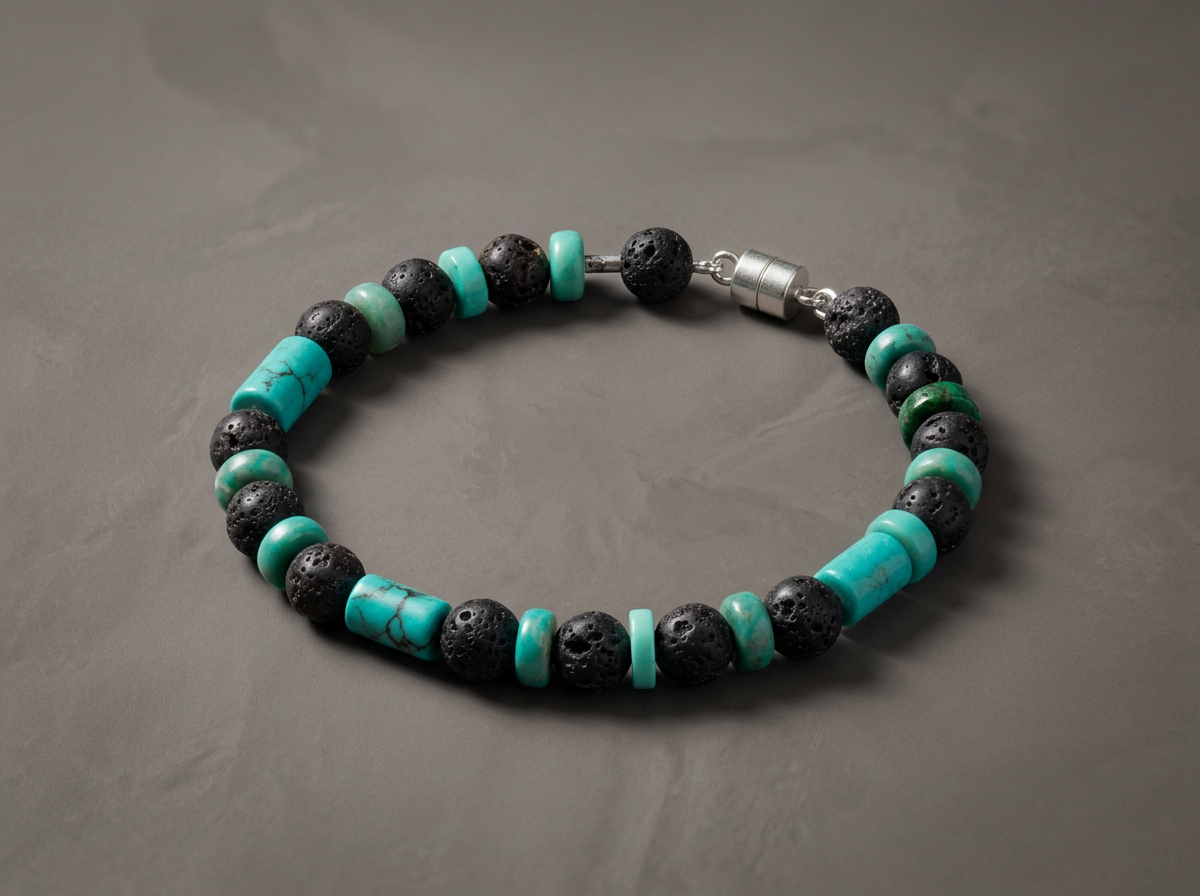
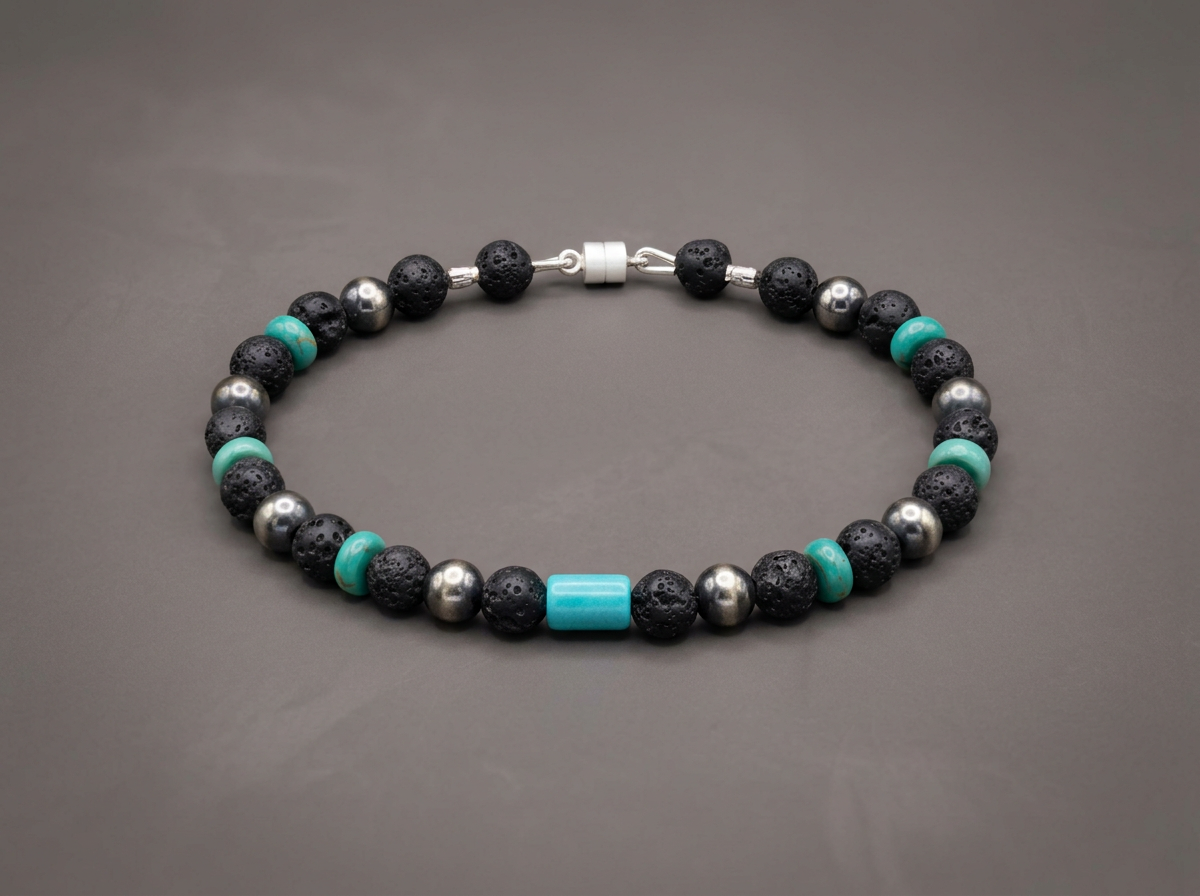
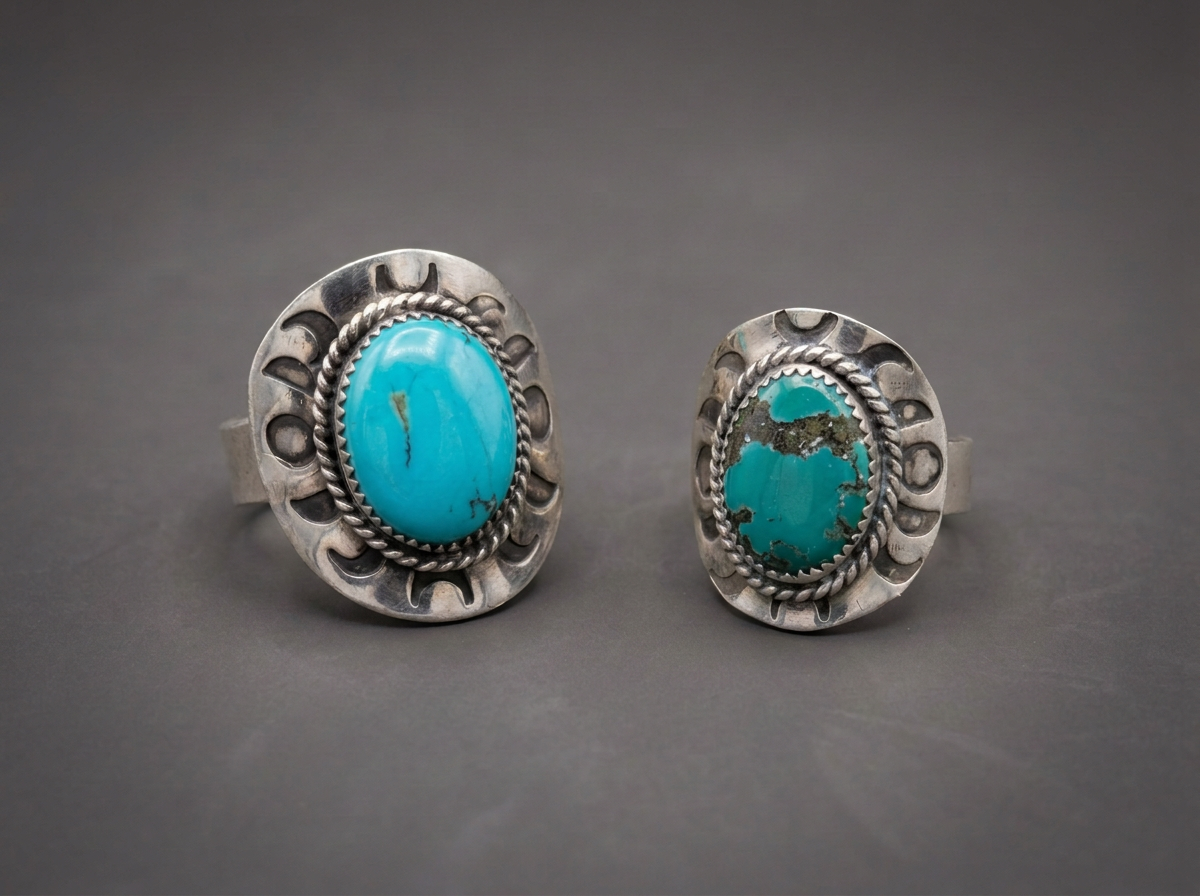
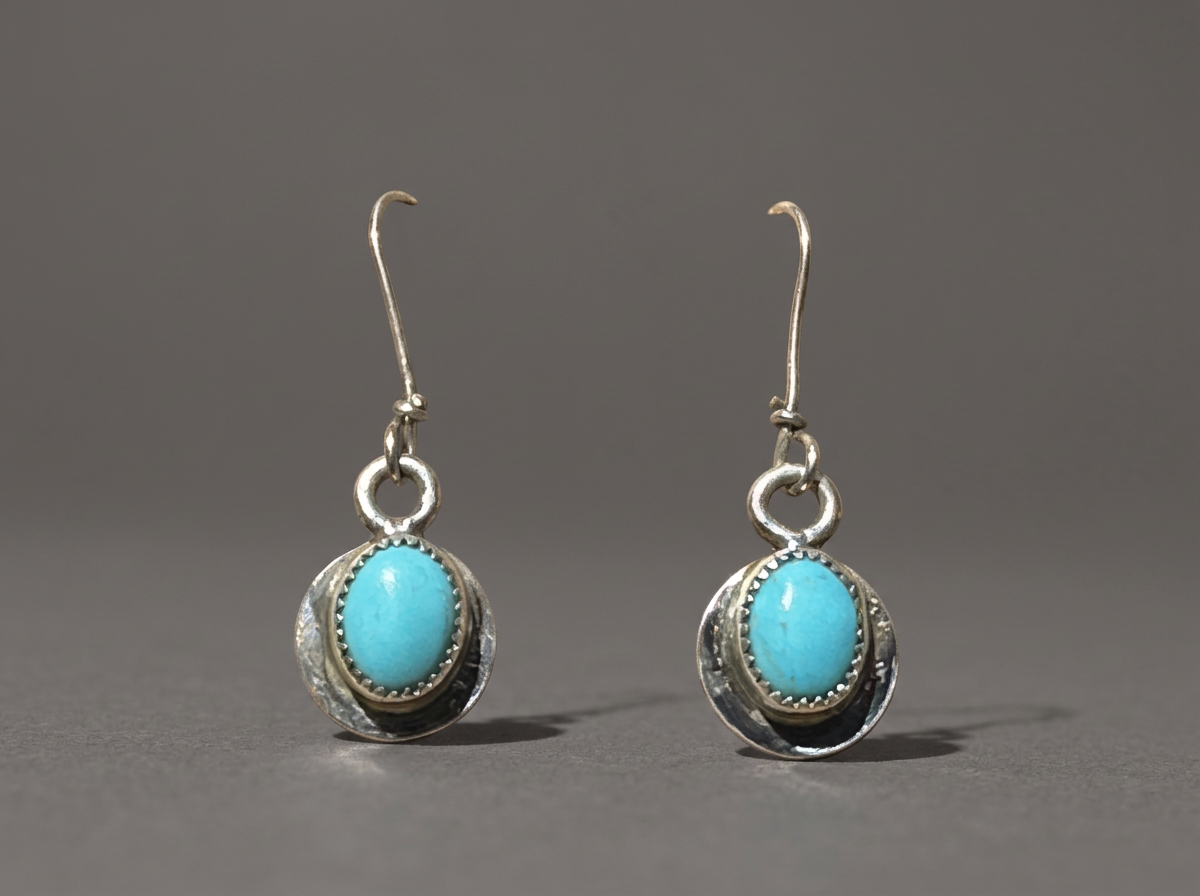
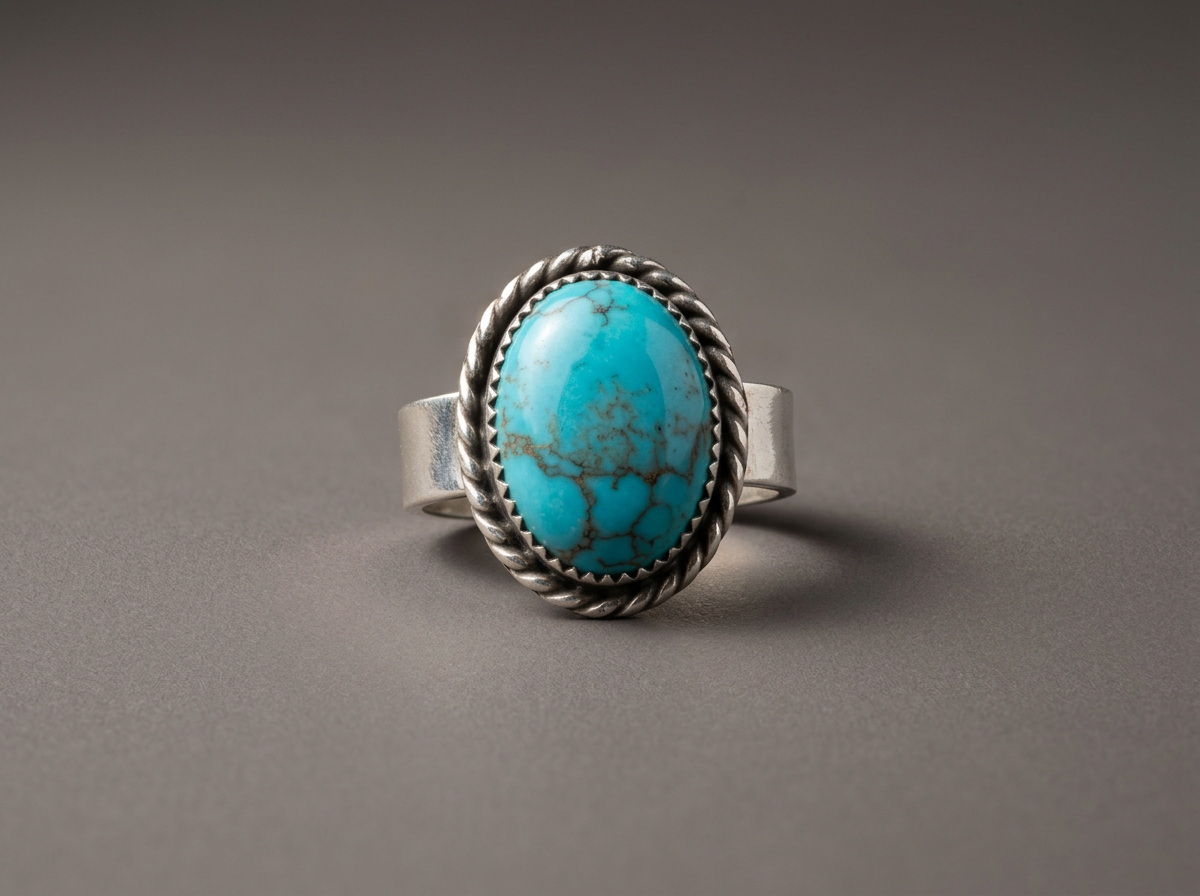
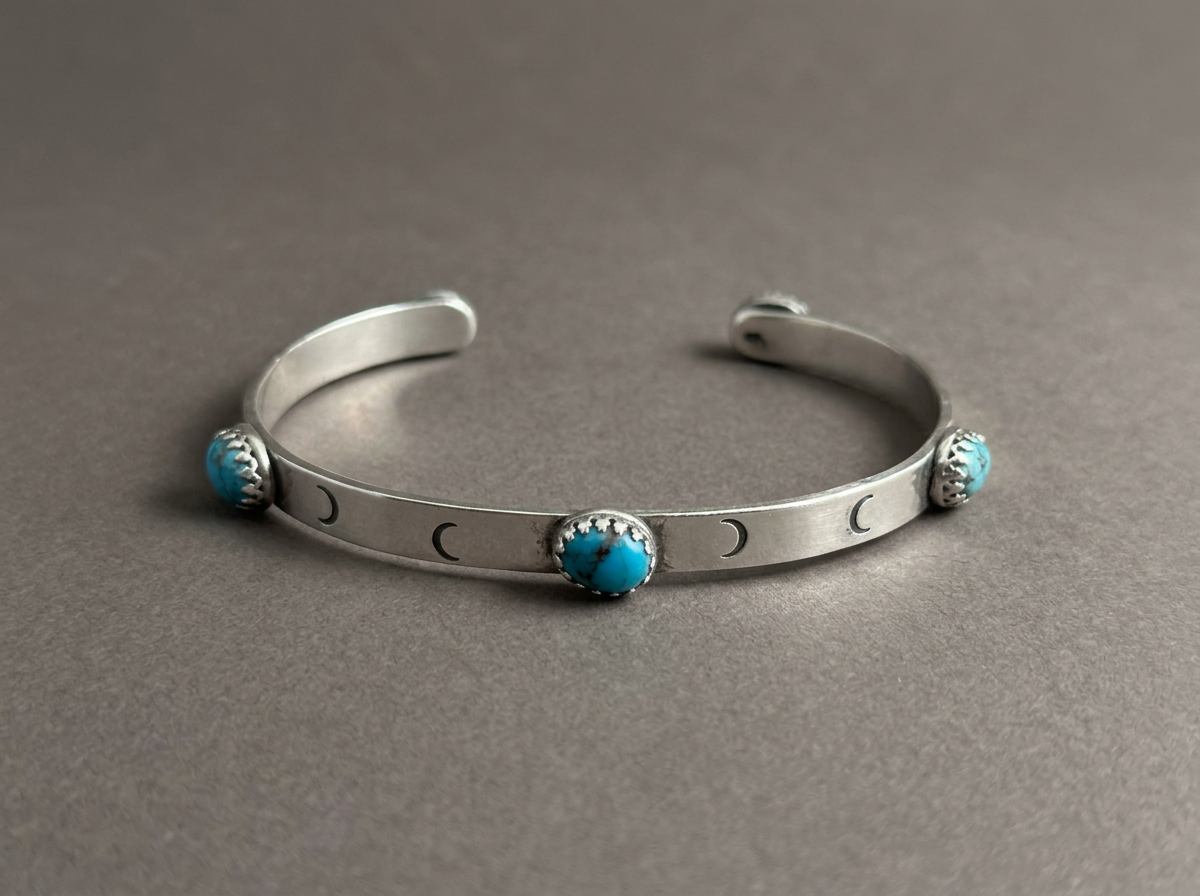
Nine pieces in the shop are set with turquoise — statement rings, a five-stone cuff, hand-stamped bands, dangles and beaded bracelets — all hand-forged in oxidised sterling silver, all made to order in Nashville. Below: what turquoise actually is, the one question worth asking before you buy any of it, and everything I set it in.
What turquoise actually is
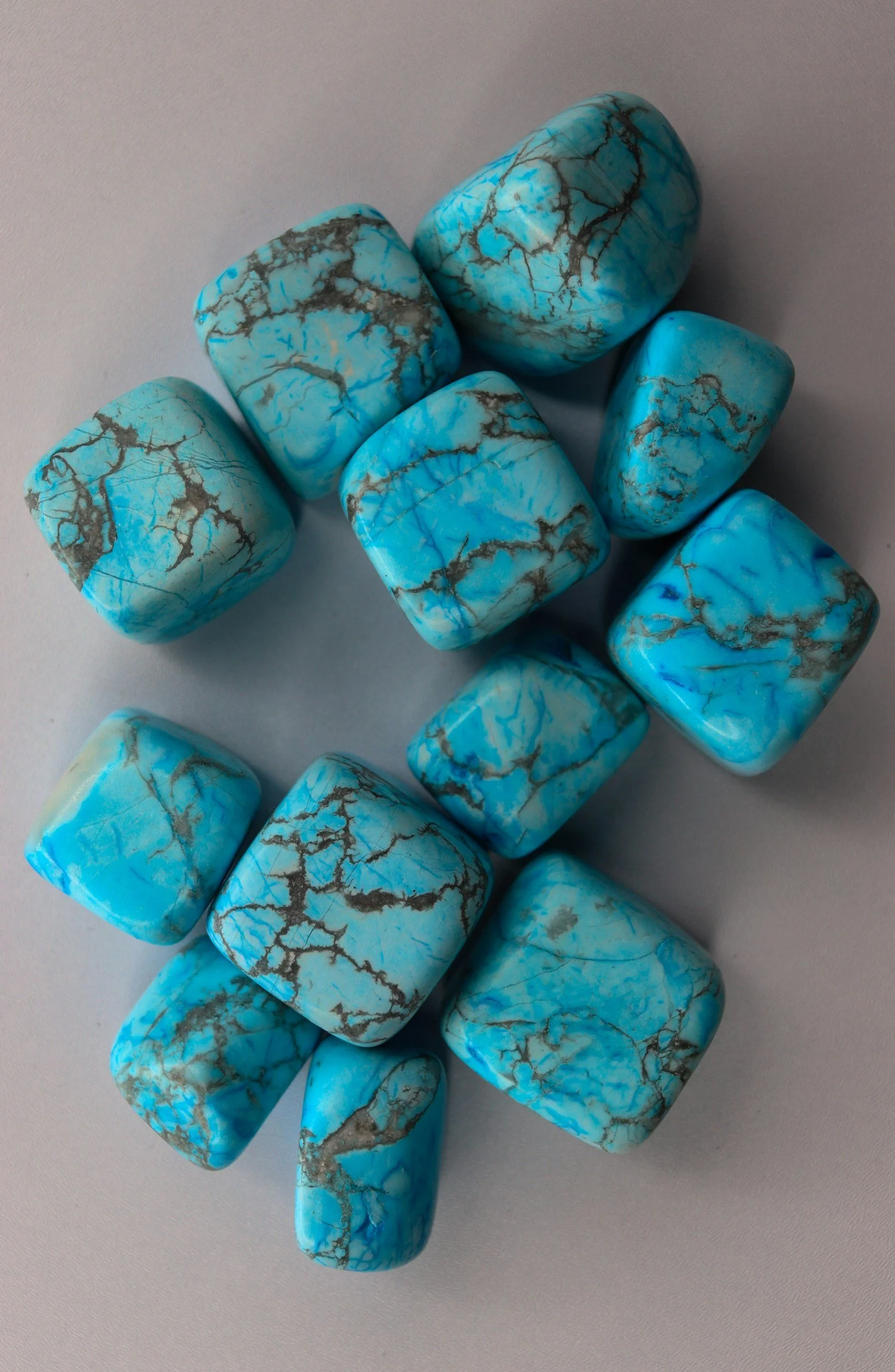
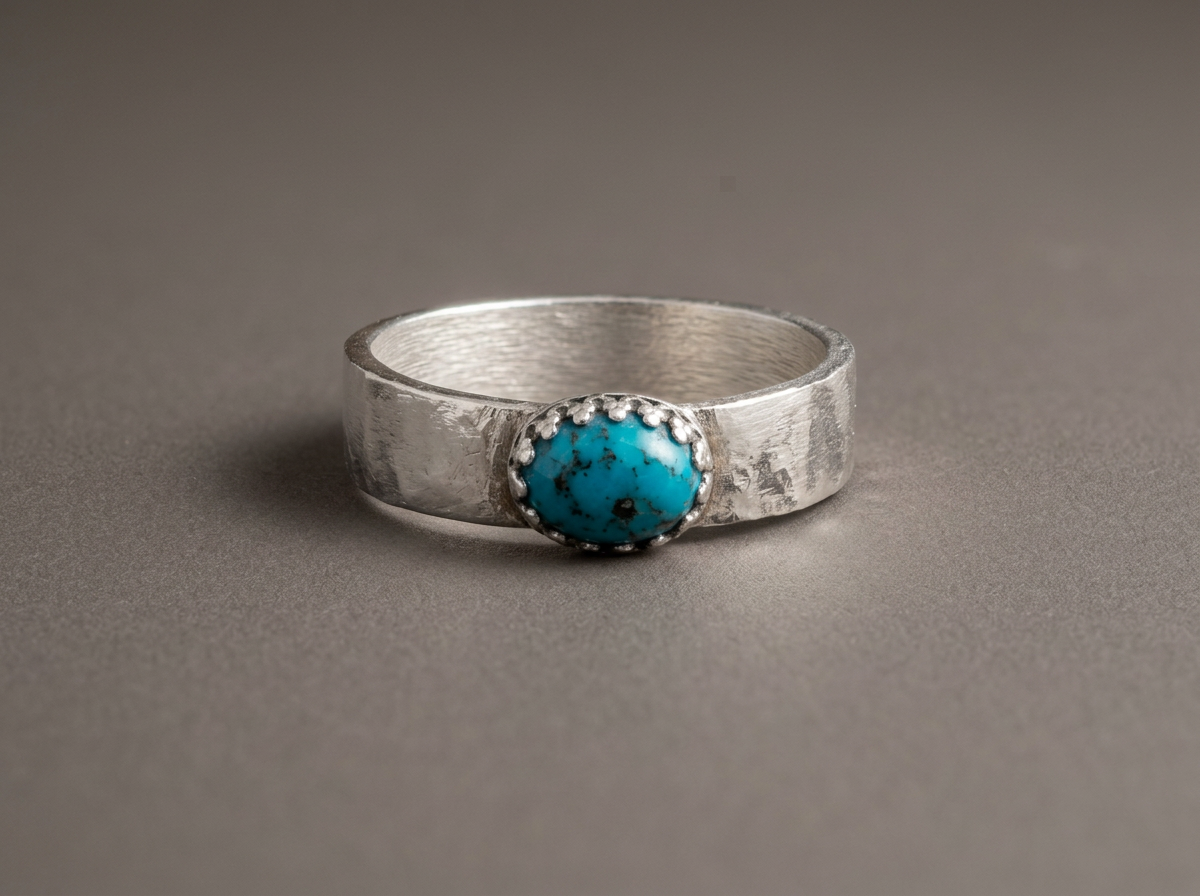
Turquoise is a copper aluminium phosphate that forms slowly in dry country, seeping through rock and setting in the seams. The blue comes from copper; where iron gets into the mix it pulls toward green. The dark webbing running through a stone is matrix — the host rock it grew in — and it's the reason no two pieces look alike.
It has been mined for well over five thousand years. It sat in the burial goods of Egyptian queens and on Persian domes, and it has been worked in the American Southwest for centuries — the Navajo and Zuni silverwork tradition is the reason turquoise and sterling read as a single idea to most people. Putting turquoise in silver joins a very long conversation.
It is also soft, and porous. That matters more than any of the history, and it's why the next section exists.
The one question to ask about any turquoise
Natural, stabilised, or reconstituted. That's the whole ballgame, and most sellers won't raise it unless you do.
Natural turquoise is cut and polished and nothing else. It's the least common and the most expensive, because most turquoise coming out of the ground is too soft and too porous to survive being set and worn.
Stabilized turquoise is natural stone that has had clear resin drawn into it under pressure. It hardens the stone and stops it drinking up oils and sweat. It is not a fake — it is the same stone, made wearable — and the great majority of turquoise jewelry you will ever handle is Stabilized.
Reconstituted is the one to watch: turquoise dust and chips bound with resin, pressed into a block and dyed. Below that sits dyed howlite, which isn't turquoise at all. If a turquoise ring is cheap and the color is perfectly even with a suspiciously tidy black web, that's usually what you're looking at. Ask before you buy — from me or from anyone.
Set in turquoise
Nine pieces, each one forged to order.
If turquoise isn’t your blue
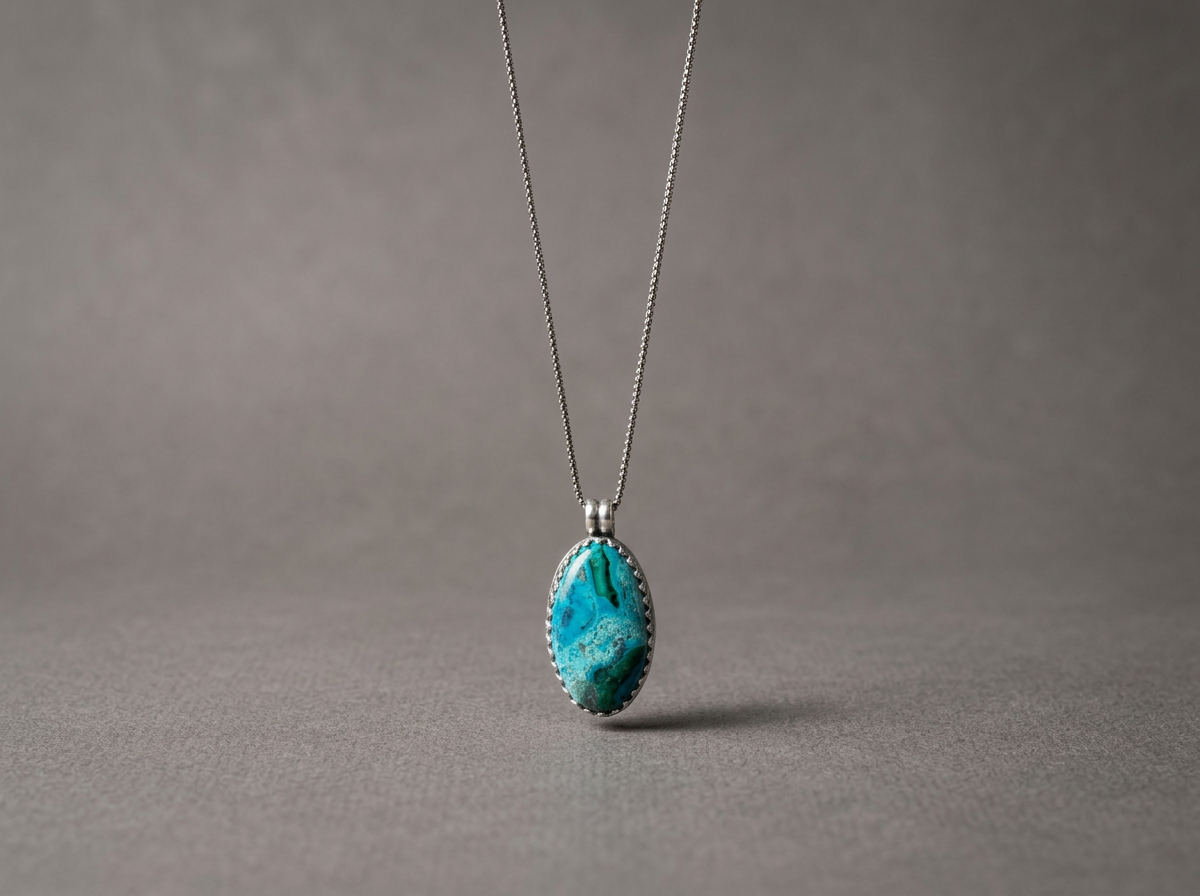
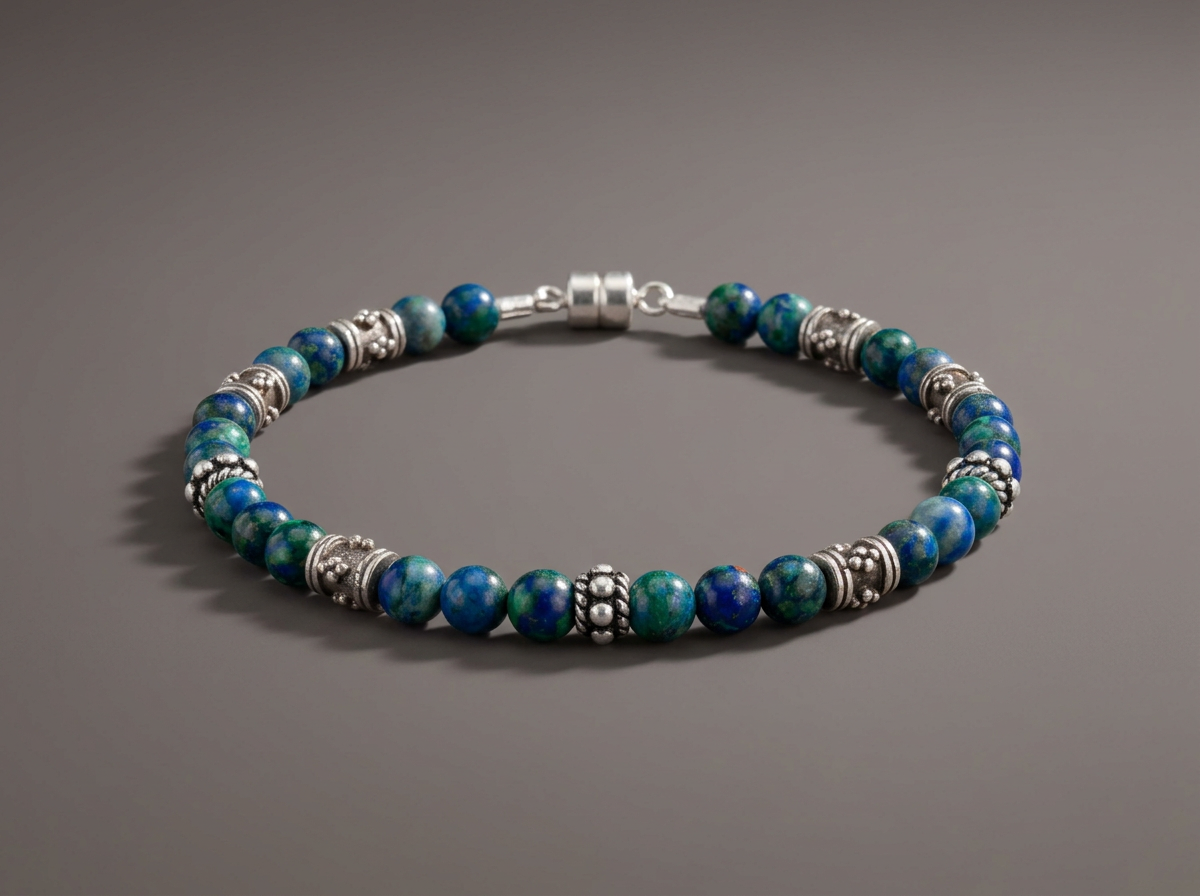
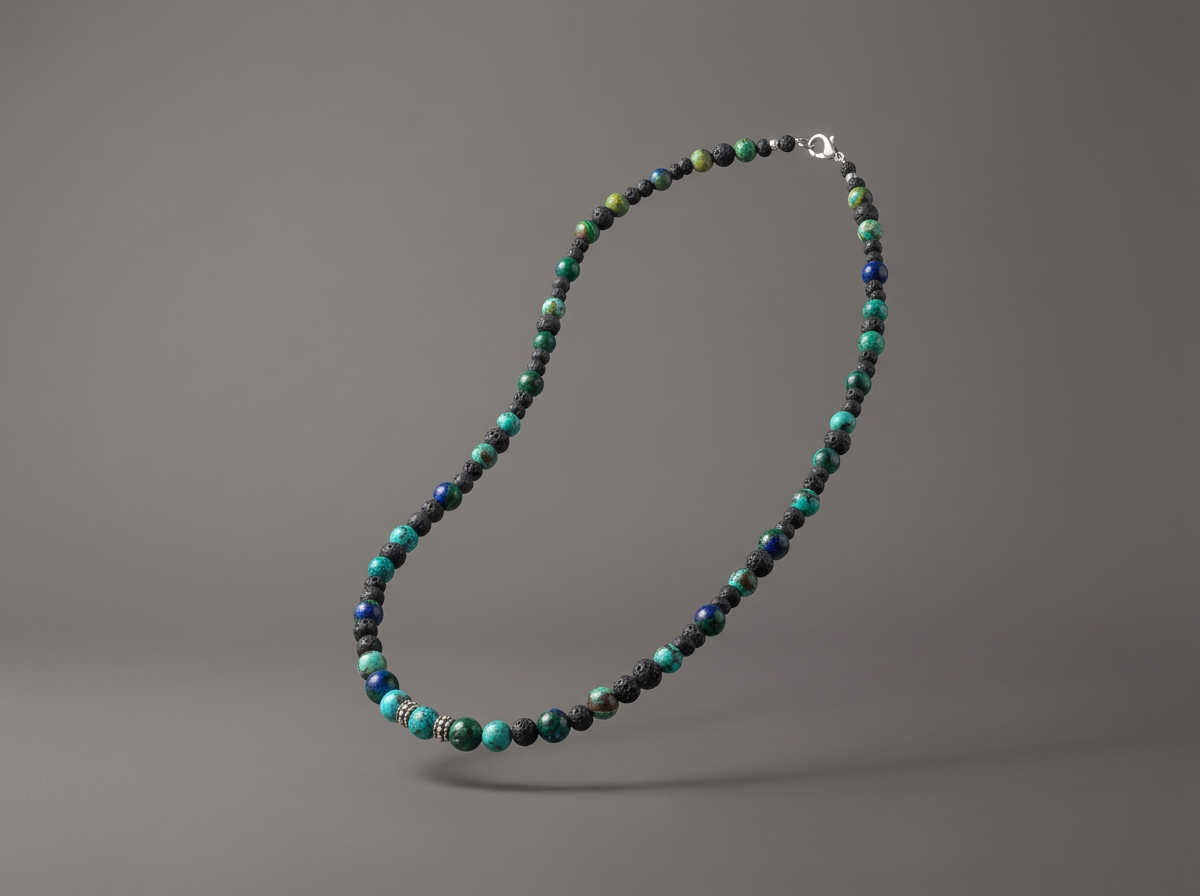
Same silver, same hands, a different stone. Lapis runs deeper and more formal. Chrysocolla sits closer to the sea.
How I set it, and why that matters for turquoise
Turquoise sits around 5 to 6 on the Mohs scale — softer than window glass — and it is porous enough to drink whatever it touches. That is the whole design problem, and everything about how I build a turquoise piece follows from it. So the stone sits in a bezel rather than prongs: a wall of silver around the girdle that takes the knocks the stone can't. I set it last, after the oxidising is done, because the chemicals that blacken silver will stain a porous stone if they reach it — and because setting last keeps the washing, and the water, to a minimum. None of that shows in a photograph. It's the difference between a piece you wear for twenty years and one you wear for two.
Looking after it
Warm water, a barely damp cloth, dried straight away. Turquoise wants less water than most stones, not more.
Keep it away from ultrasonic cleaners, steam, ammonia, bleach and the silver dips sold in supermarkets. Perfume, hairspray, sunscreen and hand cream go on before the jewelry, not after — turquoise absorbs oils, and absorbed oils are what turn a blue stone green over the years.
Off before the gym, the pool and the shower. Store it out of direct sun and away from harder stones.
The silver is meant to darken — that's the Oxidizing doing its job, and it's what makes the blue read. If it ever goes further than you want, bring it back to me. Polishing and re-Oxidizing is free, forever, for anything I've made.
Questions I get about turquoise
Is your turquoise natural or Stabilized?
Ask me and I'll tell you, piece by piece. Most of what I set is Stabilized, because Stabilized stone survives being worn every day and natural stone at this size often doesn't. Same stone, treated so it lasts.
Why is my turquoise going green?
Because it's doing what turquoise does. A porous stone takes in oils from your skin and slowly shifts toward green. Some people hate it. Most people come to like it — it's a record of wear, not damage.
What's the black webbing running through it?
Matrix — the host rock the turquoise grew in. It's evidence you're holding natural stone rather than a Molded block, and it's why yours won't match the photograph exactly.
Can you make something specific in turquoise?
Yes — commissions start with a conversation, so just submit a commission request And if you’re buying for someone else and aren’t sure of their size, a gift card lets them tell me.
Some roads only reveal themselves once you're already on them.
The Traveler Ring channels dusty highways, one-way tickets, and the restless pull toward wherever's next.
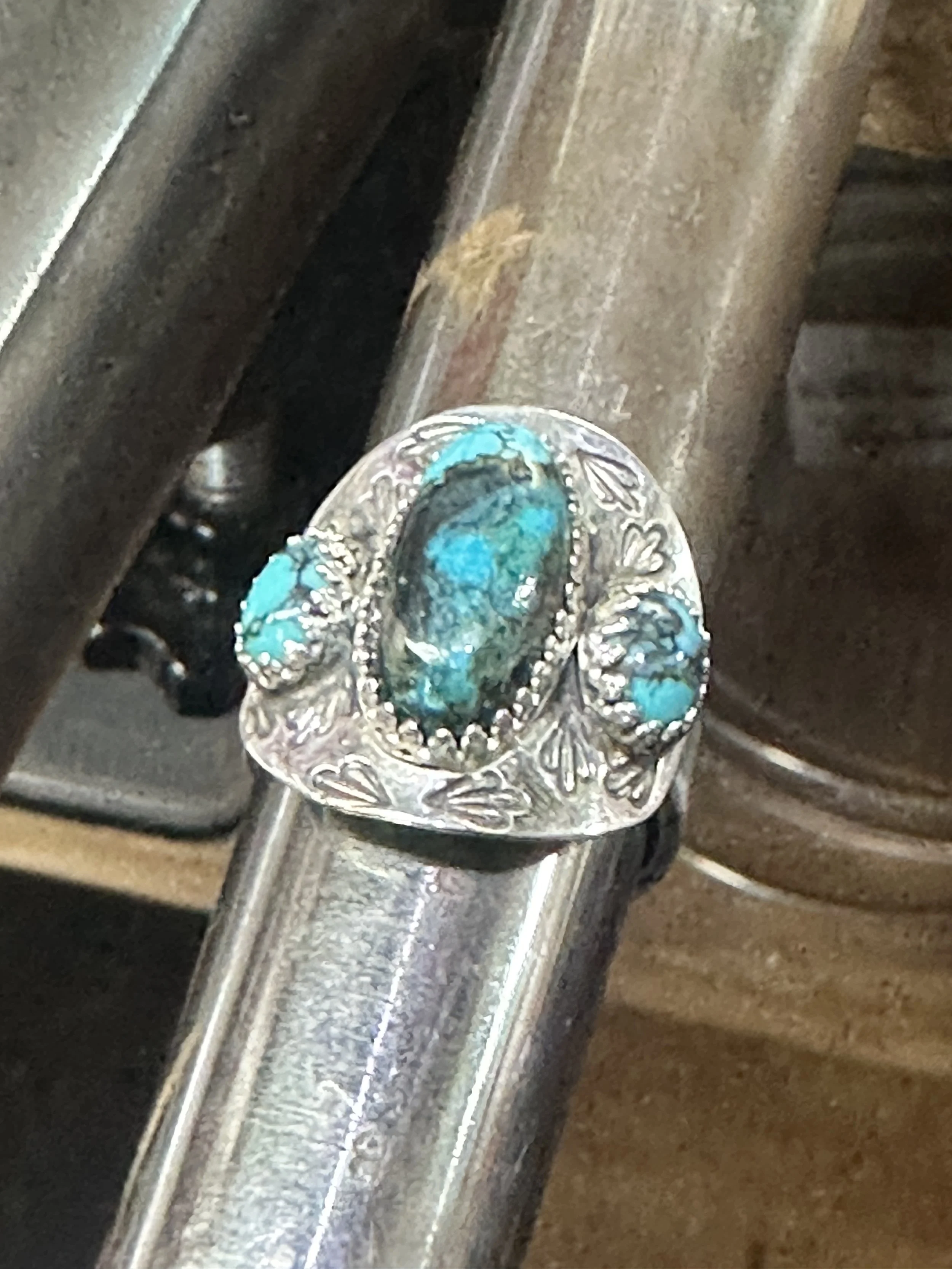
At its center sits a bold, freeform turquoise cabochon, flanked by two smaller cabochons and set within a hand-stamped sterling silver bezel. The wide sterling shield backplate is hand-stamped with a repeating leaf motif — mimicking a trail cut fresh through unfamiliar ground. Built on a thick, durable, comfortable wide band, this ring is hand-forged from scratch to become a permanent part of your daily armor.
Like every road worth taking, no two stones or hand-stamped details are identical. Each is a one-of-a-kind piece built to go the distance and last a lifetime.