
Chrysoprase: The Stone of New Beginnings
General Overview:
Chrysoprase is often called the "Stone of Spring" because of its vibrant, apple-green color. It was a favorite of Frederick the Great of Prussia and was even mentioned in the Bible as one of the foundation stones of the New Jerusalem
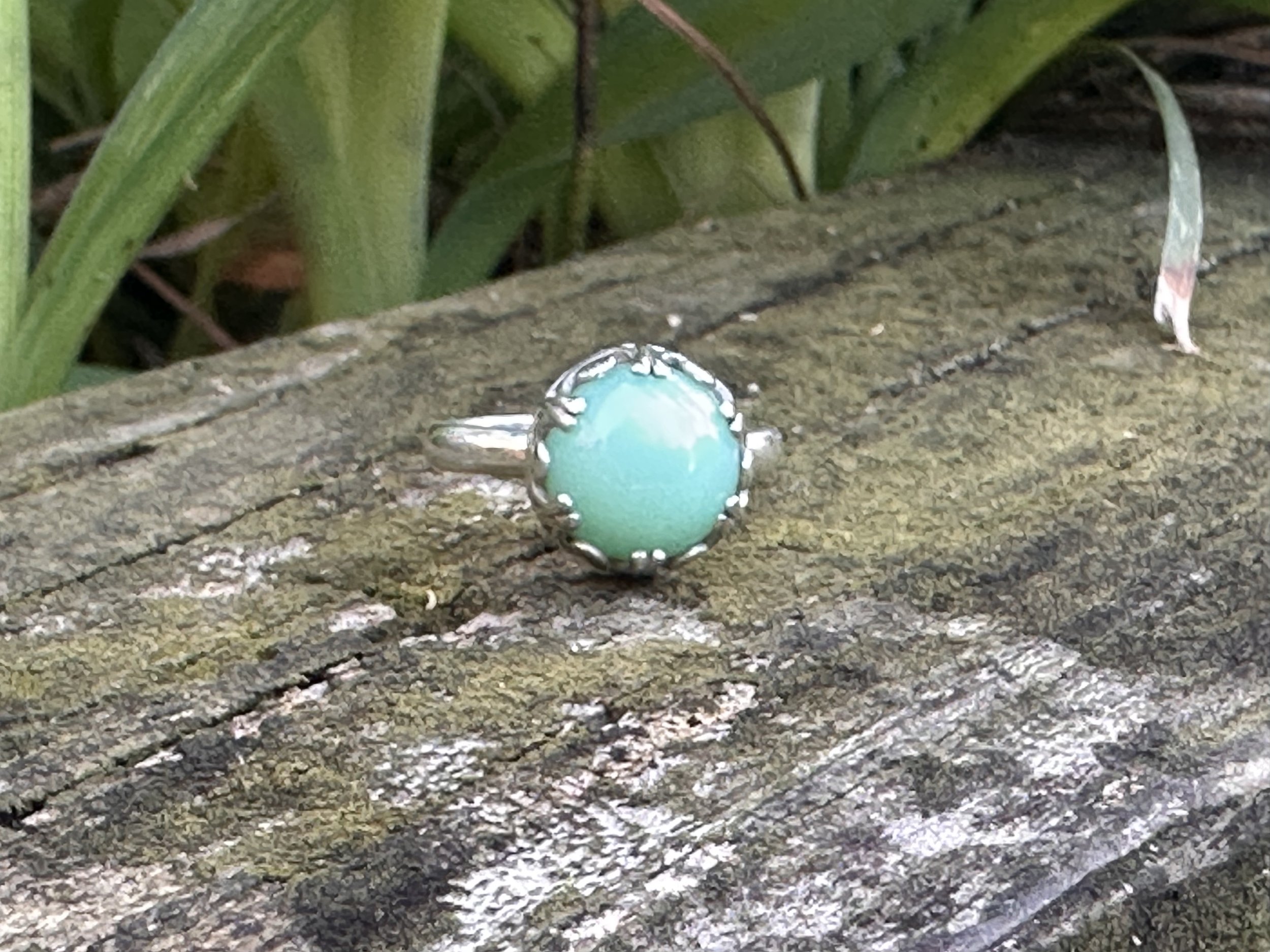
The Science:
Composition: A rare form of Chalcedony that gets its green color from Nickel (unlike Emerald, which uses Chromium).
Hardness: Roughly 6.5 to 7 on the Mohs scale.
Origin: About 85% of the world's supply comes from Australia.
Metaphysical Information:
Chakras: Connects the Heart Chakra with the Solar Plexus.
Key Benefits: It is a stone of hope and renewal, helping to heal a "broken heart" and boosting self-esteem. It encourages optimism and helps you avoid speaking in anger.
How to Care:
The Physical Care: This stone is sensitive to Sunlight. If left in the hot sun for too long, its vibrant apple-green color can actually fade. Keep it in a dark jewelry box when not in use.
The Energetic Cleanse: Since it’s a "Stone of Spring," it responds beautifully to Water. Rinse it under a natural stream or tap water for a few minutes while visualizing any stagnant energy washing away.
The name is a mashup of two Greek words — chrysos for gold and prason for leek — literally “golden leek,” a nod to its bright yellow-green color. It is not the most flattering name in the gem world, but it has stuck for a couple thousand years, and once you have seen the color next to a fresh spring leek, it is hard to argue with the ancient Greeks.
Frederick the Great was not a casual fan. He liked chrysoprase enough to have it carved and inlaid throughout the New Chambers at Sanssouci, his palace outside Berlin, where panels of the stone still line entire rooms today. Long before that, Greek and Roman engravers favored it for cameos and intaglios, prizing it for a translucence that let carved detail catch the light in a way most opaque green stones cannot.
That 85 percent figure traces back mostly to one place: the Marlborough deposit in central Queensland, Australia, discovered in the 1960s and still the single largest chrysoprase source on the planet. Smaller deposits exist in Poland, Brazil, and the United States, but none come close to matching the size or the consistency of color that the Australian material produces.
That Biblical mention is easy to miss reading Revelation quickly, but chrysoprase gets called out specifically as the tenth foundation stone of the New Jerusalem’s wall, sitting alongside stones like jasper, sapphire, and amethyst in a list that reads almost like a jeweler’s inventory of the ancient world. It is part of why chrysoprase carried such serious symbolic weight for so long: a stone literally written into the architecture of paradise is not something medieval jewelers took lightly.
Chrysoprase gets mistaken for jade more often than almost any other stone we work with, and it is an easy mix-up at a glance. The difference comes down to translucence: hold chrysoprase up to a light source and it glows from within, while jade stays comparatively opaque. It is also worth telling apart from aventurine, which carries the same general color family but with a visible sparkle from tiny mica inclusions that chrysoprase simply does not have.
At 6.5 to 7 on the Mohs scale, chrysoprase sits right in the same range as quartz, which means it holds up fine to normal daily wear even though the color itself needs a little more looking-after than the stone’s structure does. We have never had a chrysoprase piece come back for a cracked or chipped stone — the sun-fading is really the only thing to watch for, and that is solved by simply not leaving a ring sitting on a sunny windowsill for a week.
We reach for chrysoprase when a piece needs a little brightness without tipping into anything too bold. It sits well against sterling silver in a way that keeps the metal from reading too cold, and it is one of the few stones in the shop that genuinely looks good with almost any other color you put next to it — turquoise, denim lapis, even onyx. If you are building a stack for spring or just want one piece that photographs well against everything else in your closet, this is usually where we point people first.
The “new beginnings” reputation is not just marketing shorthand, either — it tracks with how people actually seem to reach for it. We hear from customers picking out chrysoprase for a first apartment, a new job, or just the start of a season they are ready to be done waiting for, more than with almost any other stone we carry. Whatever the occasion, it is a piece built to be worn constantly, not saved for one outfit and forgotten in a drawer.