
Tiger’s Eye: The All-Seeing Eye
General Overview:
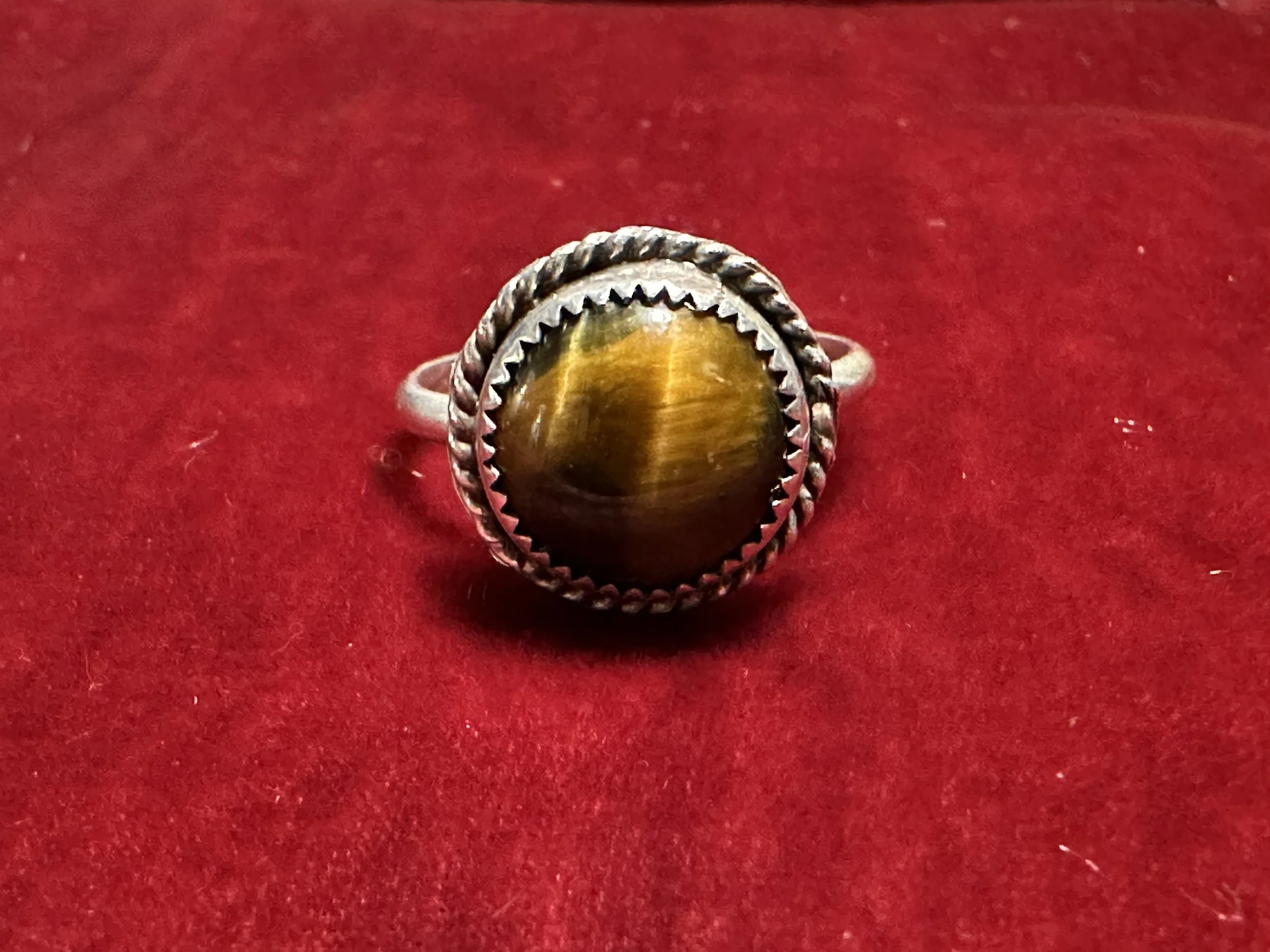
Tiger's Eye is famous for its "chatoyancy"—the shimmering band of light that mimics a feline’s eye. In ancient Egypt, it was used for the eyes of deity statues to represent divine vision, and Roman soldiers wore it in battle for courage.
The Science:
Composition: A pseudomorph of Quartz that replaces fibrous crocidolite (blue asbestos) with silica while keeping the fibrous structure.
Chatoyancy: The "cat's eye" effect comes from light reflecting off these preserved parallel fibers.
Hardness: A solid 7 on the Mohs scale.
Metaphysical Information:
Chakras: Dominates the Solar Plexus, boosting personal power and willpower.
Key Benefits: It is the go-to stone for courage and confidence. It helps you stay grounded while manifesting your goals, making it an excellent companion for entrepreneurs and students.
How to Care:
The Physical Care: Being a member of the Quartz family, Tiger’s Eye is very hardy. It’s safe to clean with warm soapy water and can handle a bit more "tough love" than the others.
The Energetic Cleanse: Tiger’s Eye is a solar stone. It thrives on Sunlight. Place it on a windowsill for 2–3 hours (morning sun is best) to "recharge its batteries" and sharpen its protective qualities.
Tiger’s Eye has been carried for protection for a very long time, and it shows up in more places than just Egypt and Rome. Sailors historically kept it aboard ships as a guard against bad luck, and it became one of the signature stones of the 1970s crystal revival, right alongside turquoise and amethyst, when a whole generation started paying attention to what they were wearing and why. It has stayed a mainstay ever since, mostly because it does exactly what people want a talisman to do: it looks striking, it survives daily wear, and it never goes out of style.
Most of the Tiger’s Eye on the market today comes out of the Northern Cape province of South Africa, where it forms in the same iron-rich rock formations that produce the region’s famous blue asbestos deposits — the same crocidolite that gets slowly replaced by silica to create the stone’s signature shimmer in the first place. Smaller deposits turn up in Western Australia, India, and Brazil, but South African material is still considered the benchmark for that deep, warm golden-brown color banding.
Not every piece of Tiger’s Eye looks the same, either. What most people picture — that warm honey-and-brown banding — is the classic version, but the same mineral shows up in a cooler blue-grey called Hawk’s Eye, where the crocidolite fibers have not fully oxidized into iron. Heat-treat the stone and you get Red Tiger’s Eye, a deeper rust-red version some people reach for specifically because it feels more grounding and intense. We stick with the classic golden tone across our pieces because it is the one that photographs — and wears — the most like sunlight.
It is easy to confuse Tiger’s Eye with other brown or golden stones at a glance, but the giveaway is always the chatoyancy. Citrine and smoky quartz can share a similar color palette, but neither one produces that moving band of light across the surface — it stays flat no matter how you turn it. Tiger’s Eye is the only one of the three where the shine actually travels with the stone, which is part of why it has held onto its own identity instead of getting lumped in with every other brown gem on the market.
It has also long been associated with Leo, which tracks — a solar stone for a sun sign, both centered on confidence and personal power. You do not have to buy into astrology for that association to make sense as a gift idea: it is an easy, meaningful pick for an August birthday, a new job, or anyone who could use a little extra nerve walking into a room.
We like building with Tiger’s Eye because it splits the difference between bold and wearable. The chatoyancy catches light every time your hand moves, so it never sits flat the way a solid-color stone can, but the warm brown tones stay easy to pair with almost anything else in your stack. It sits comfortably next to sterling silver without fighting it, and it layers just as easily with our darker stones — onyx or hematite — if you want more contrast, or with something lighter like chrysoprase if you want the whole hand to feel warmer.
If you are new to wearing stone jewelry day to day, Tiger’s Eye is one of the easiest places to start. It is hard enough to survive actual use, forgiving enough that you do not have to think too hard about caring for it, and the color works with nearly every metal and every season. Whether you are drawn to the history, the shimmer, or just the story of a stone that soldiers once carried into battle, it earns its spot in a jewelry box the same way it always has — by being useful, not just pretty.