
Chrysoprase: green that comes from nickel, not chrome
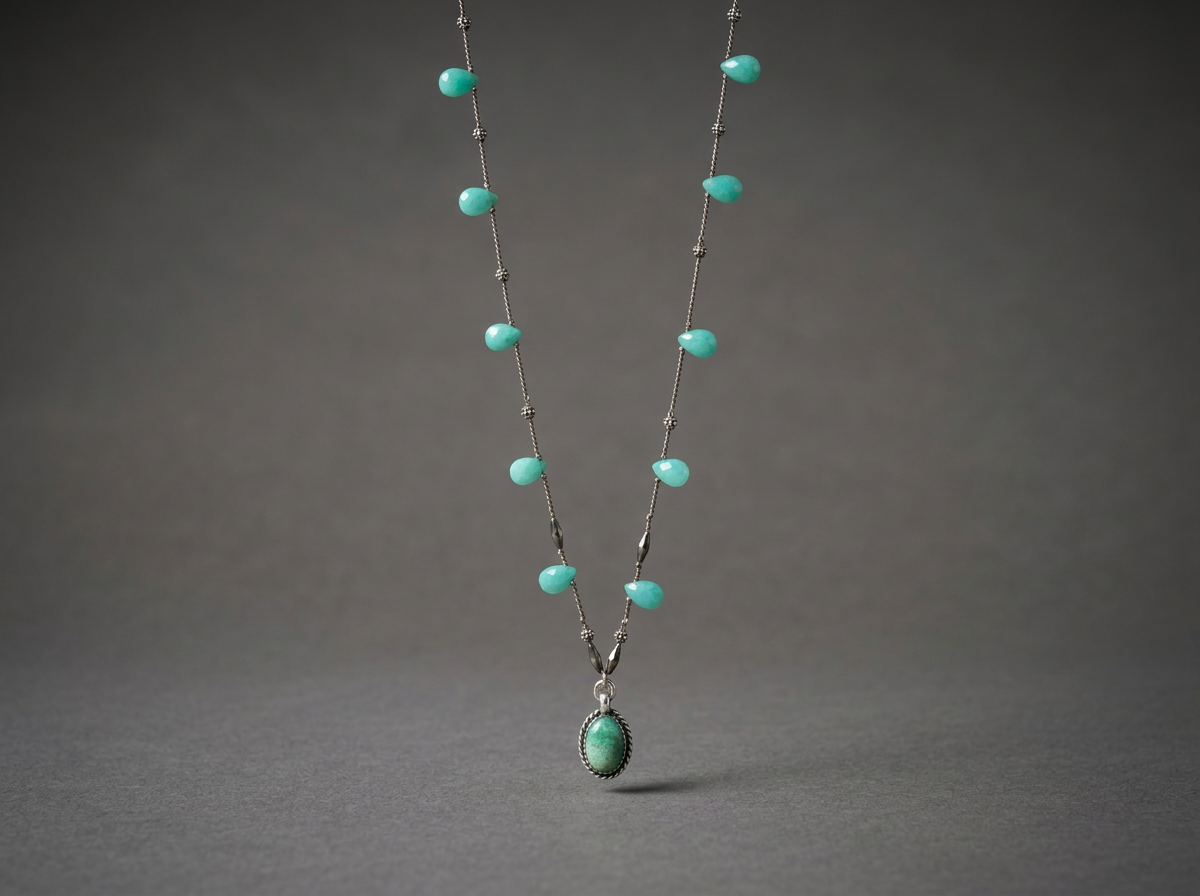
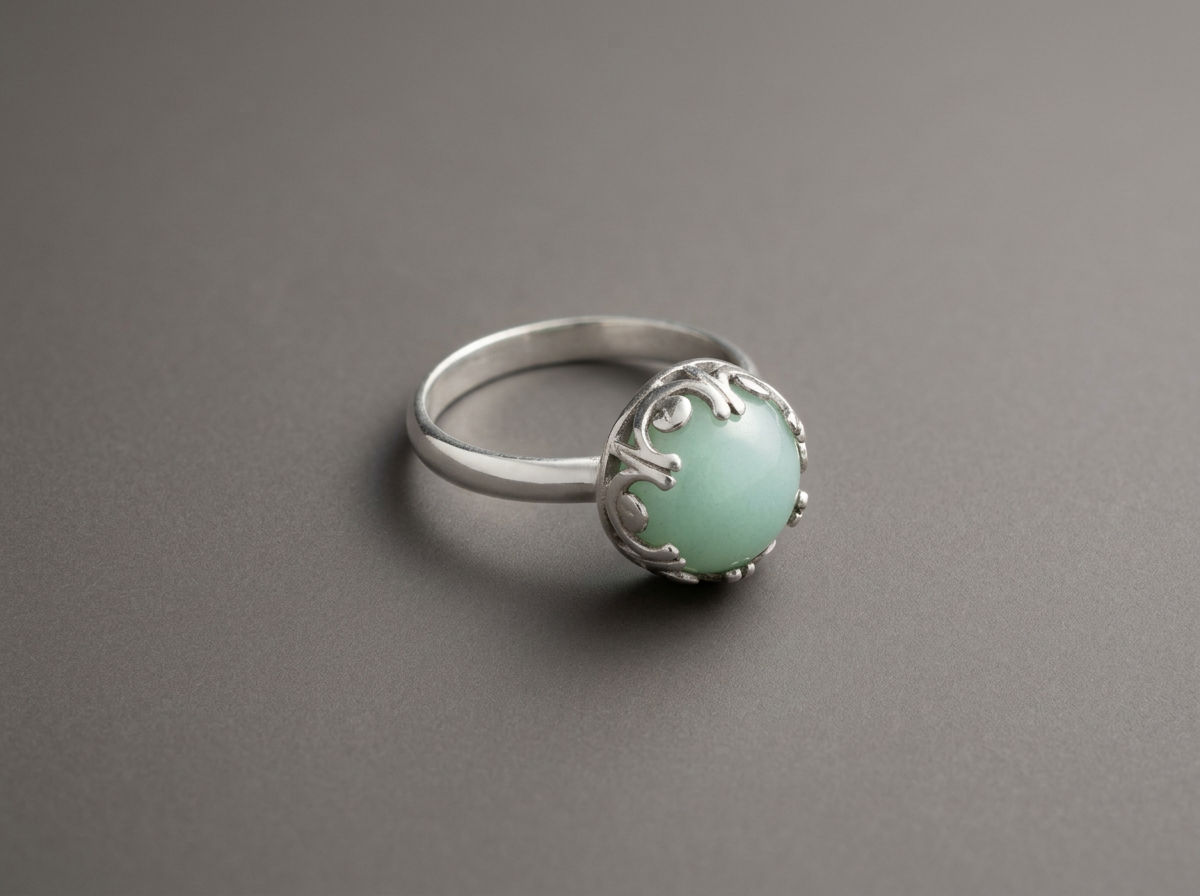
Three pieces in the shop are set with chrysoprase — hand-stamped dangle earrings, a station necklace and a statement ring — hand-forged in oxidised sterling silver and made to order in Nashville. Below: what makes it that apple green, the myth about it fading, and all three pieces I set it in.
What chrysoprase actually is
Chrysoprase is chalcedony colored by nickel. That is unusual — most green gemstones get their color from chromium or iron — and it is what gives chrysoprase its particular opaque, milky apple green rather than the transparent green of emerald or peridot.
It sits at 6 to 7 on the Mohs scale, the same as the rest of the chalcedony family, so it is perfectly content being worn.
It was among the most prized stones of the ancient world and was reportedly a favorite of Alexander the Great. Frederick the Great had it set into buildings. For a stone most people cannot name, it has an unusually grand history.
The fading myth, and what it's actually telling you
You will read everywhere that chrysoprase fades in sunlight. It is worth being precise about this, because it is mostly wrong and the correction is more useful than the warning.
Naturally coloured chrysoprase does not fade. Lapidaries have pieces cut sixty years ago and worn daily in strong sun that look the way they did the day they were finished.
What does fade is dyed material sold as chrysoprase — usually dyed chalcedony or magnesite. So fading is not a property of the stone. It is a test result.
If a green chalcedony loses its colour on a windowsill, it was dyed. If yours holds, it wasn't. That is a far more useful thing to know than a blanket instruction to keep it in a drawer.
Set in chrysoprase
Three pieces, each one forged to order.
If you want more green to choose from
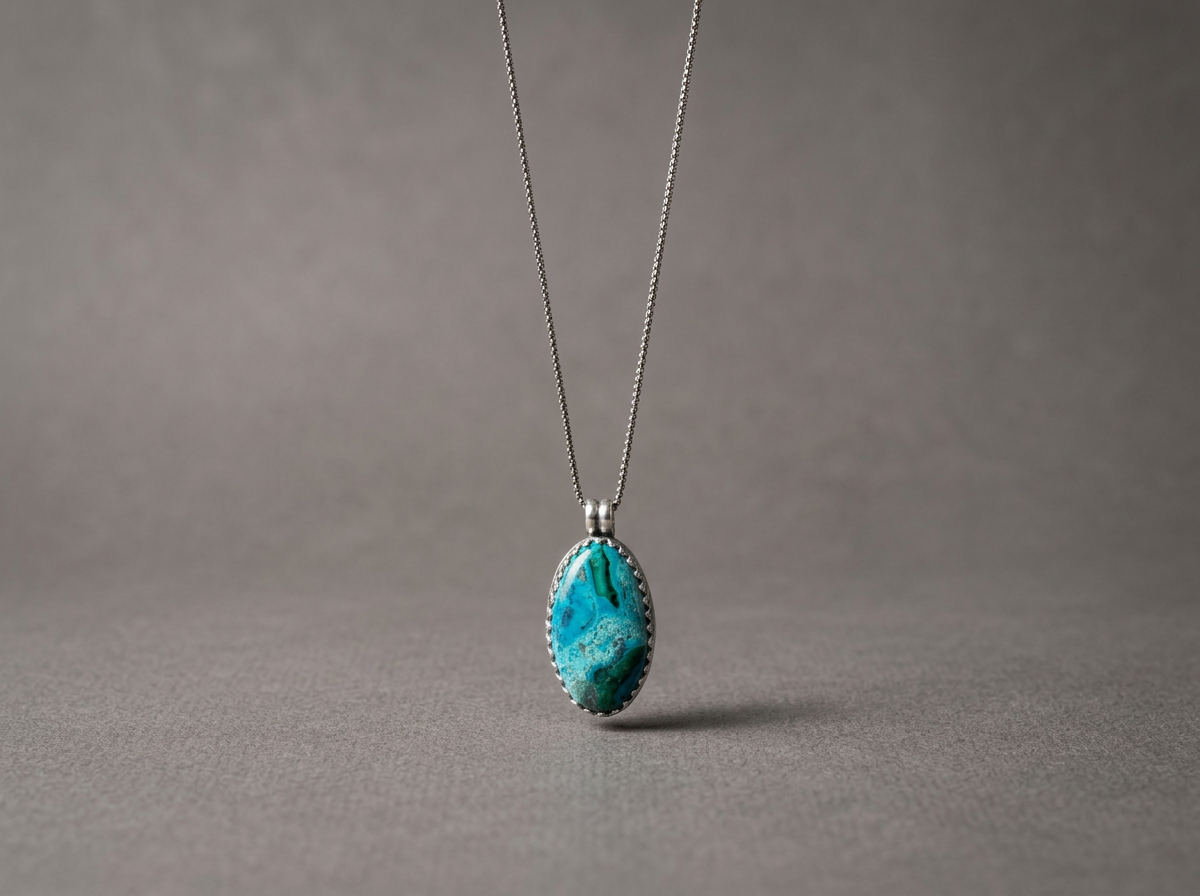
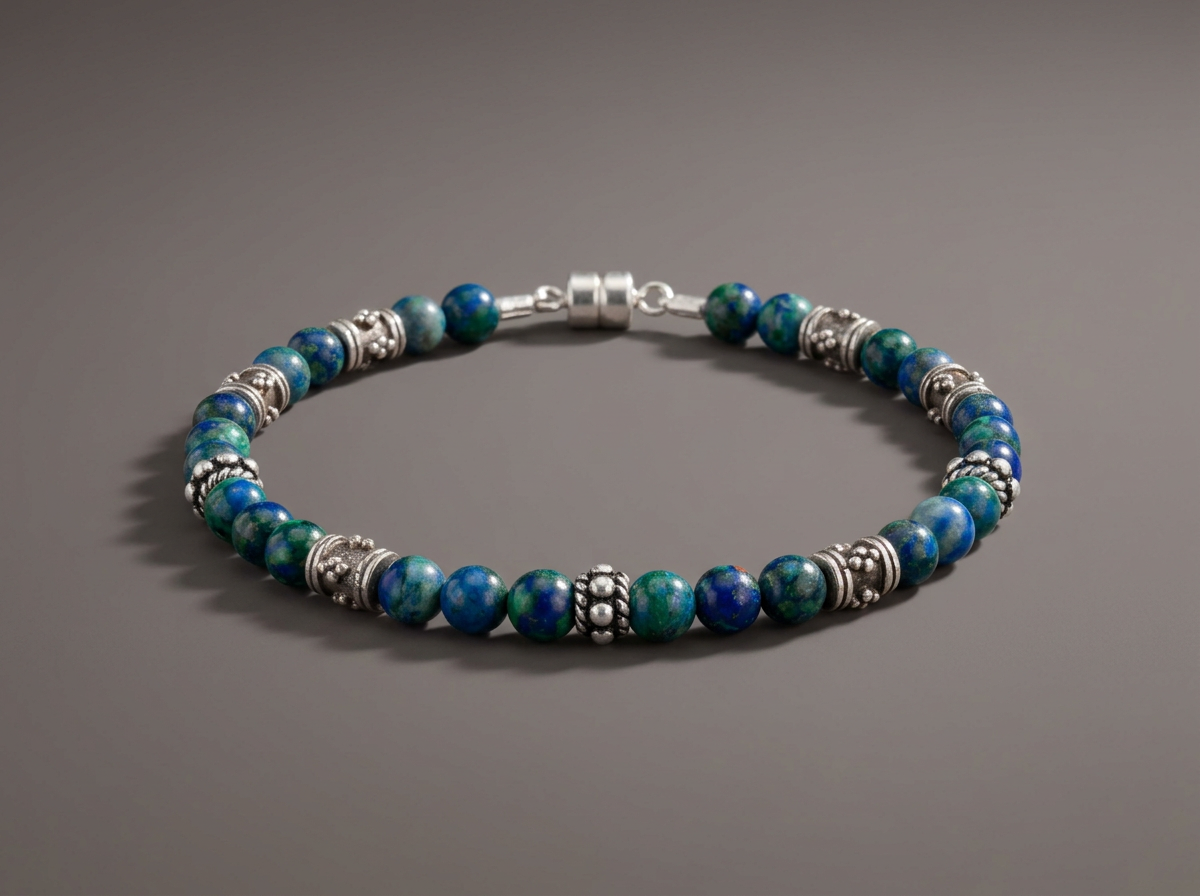
Chrysoprase is the brightest green I set, and there are only three pieces of it. Jade takes the same Color family deeper and quieter; chrysocolla pulls it toward blue. Same silver, same hands.
How I set it, and why the backing matters
Chrysoprase is hard enough for daily wear and is not porous, so it makes no special demands at the bench.
What it rewards is a bright, high-domed cut and a clean setting. It is a stone with almost no internal drama — no bands, no matrix, no flash — so everything rests on the quality of the Color and the shape of the dome. There is nowhere to hide.
Against dark Oxidized silver, that flat green does something no other stone I work with does. It looks like it has been switched on.
Looking after it
Warm water, mild soap, a soft cloth.
Avoid ultrasonic cleaners and steam, and keep it away from ammonia, bleach and supermarket silver dips — those are for the silver's sake as much as the stone's.
Off before the gym and the pool. Store it away from harder stones.
The silver is meant to darken. If it ever goes further than you want, bring it back — polishing and re-Oxidizing is free, forever, for anything I've made.
Questions I get about chrysoprase
Will it fade if I wear it in the sun?
Natural chrysoprase does not fade. Dyed material does. That is the honest answer, and it is why I would rather sell fewer pieces of the real thing.
Is it related to jade?
No, though it gets sold as "Australian jade," which is unhelpful. It is chalcedony — the quartz family — not nephrite or jadeite.
Why are there only two pieces?
Because good chrysoprase is genuinely hard to get in the sizes I want. When I find more, I'll make more.
Can you make something specific in Chrysoprase?
Yes — commissions start with a conversation, so just submit a commission request And if you’re buying for someone else and aren’t sure of their size, a gift card lets them tell me.
Some beginnings don't announce themselves. They just show up quiet, and stay.
The New Bloom Earrings are handcrafted talismans for the kind of courage that doesn't need to be loud. Each earring features a soft, apple-green Chrysoprase cabochon set flush against a hand-hammered sterling silver disc, its lower half worked with a hand-stamped chevron pattern that fans out beneath the stone and catches the light with every turn of the head. Suspended from simple sterling ear wires, these dangles move light and easy — built for the days when starting over feels less like a fight and more like permission.
No two discs hammer quite the same way, and no two stones are identical — each pair carries its own quiet variation.