
Lapis Lazuli — the stone that taught people what blue was
More pieces in my shop are set with lapis than any other stone. Deep royal blue shot through with gold pyrite, or the paler, softer denim grade that looks like a well-worn pair of jeans — both hand-forged into Oxidized sterling silver, both made to order in Nashville. Below: what the stone actually is, how to tell the two apart, and everything I set it in.
What lapis lazuli actually is
Lapis isn’t a single mineral — it’s a rock. The blue comes from lazurite; the white marbling is calcite; the gold flecks that make it look like a night sky are pyrite, fool’s gold. The proportions are why no two stones I set are the same.
Most of the good material still comes from the same place it has for six thousand years: the Sar-e-Sang mines in the Badakhshan mountains of Afghanistan. It was traded into Egypt long before the pyramids were finished — Tutankhamun’s funeral mask is inlaid with it. Renaissance painters ground it into ultramarine, the most expensive pigment on earth, and reserved it for the robes of the Virgin. When someone in 1500 wanted to say “this matters,” they spent lapis on it.
That’s the part I like. It’s not a stone that was ever cheap or casual. It has always been what you used when you meant it.
Denim or classic? The only choice you actually have to make
Both are lapis. The difference is how much calcite is in the mix.
Classic lapis is the dense, saturated, almost-navy blue with gold pyrite scattered through it. Less calcite, more lazurite. It reads as formal and heavy even in a small setting — it’s the one that stops people across a room.
Denim lapis has far more calcite running through it, which lifts the Color to a soft, dusty mid-blue with grey and white veining. It’s the same stone, relaxed. It wears every day without asking anything of you, and it sits better against silver that’s been Oxidized dark.
Neither is better. Classic if you want the piece to be the statement; denim if you want it to be part of your uniform. If you’re still deciding, I wrote a longer side-by-side over on the blog.
Some pieces — the Wisdom Keeper for one — come either way, so you can pick the blue rather than the design.
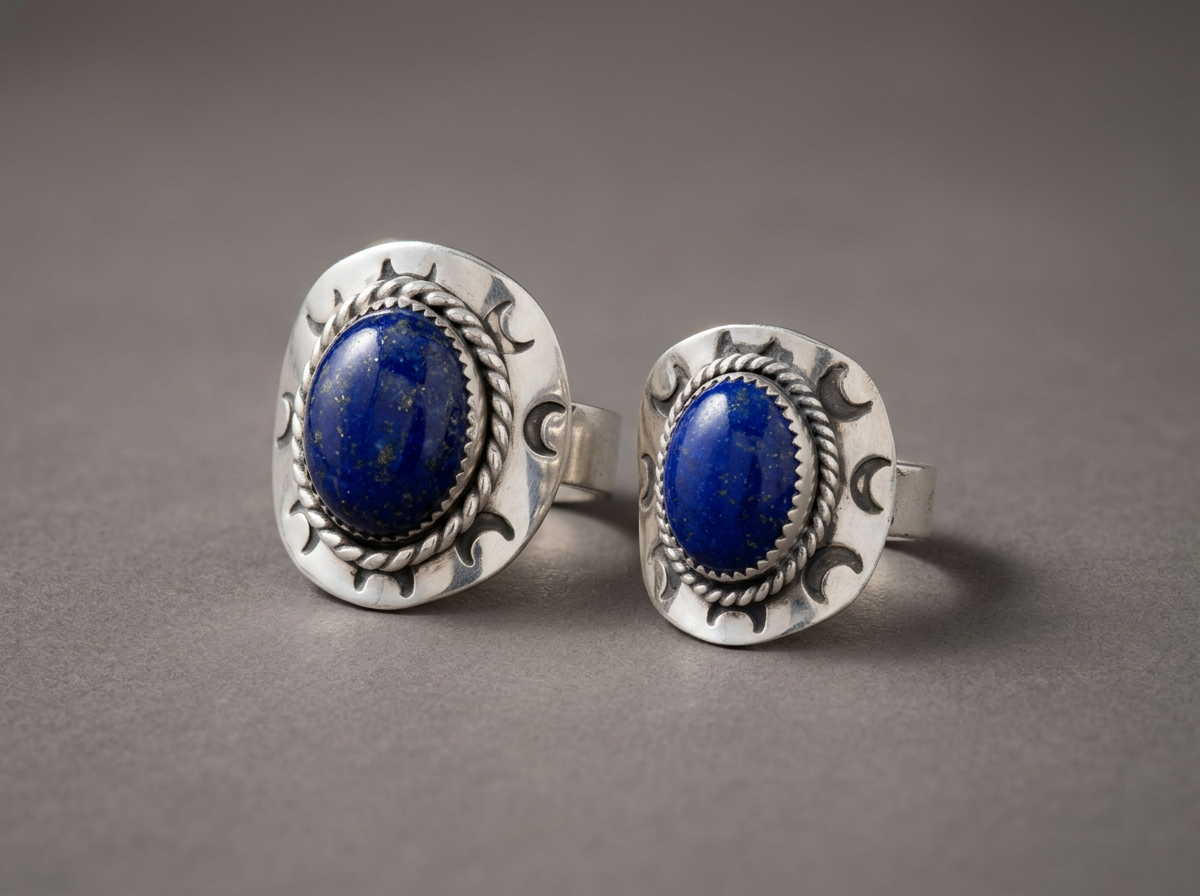
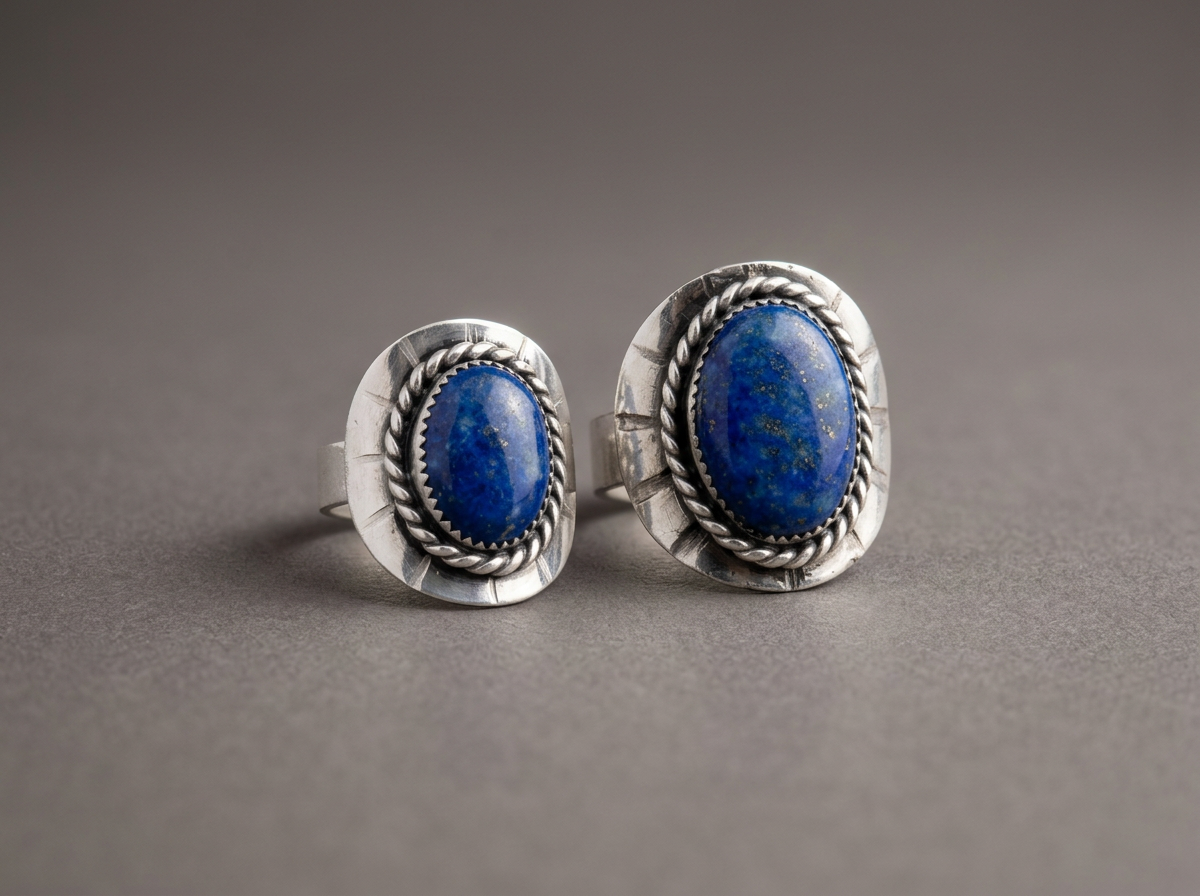
Set in classic lapis
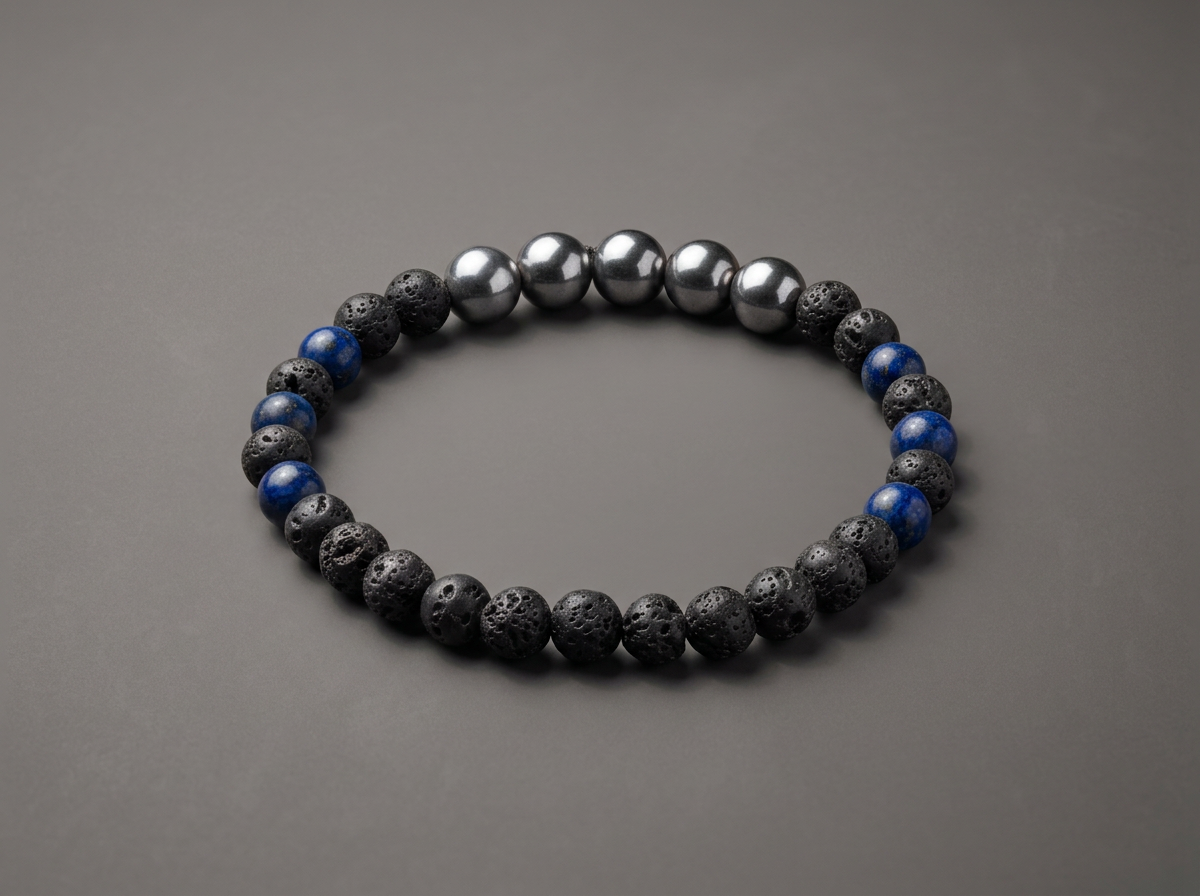
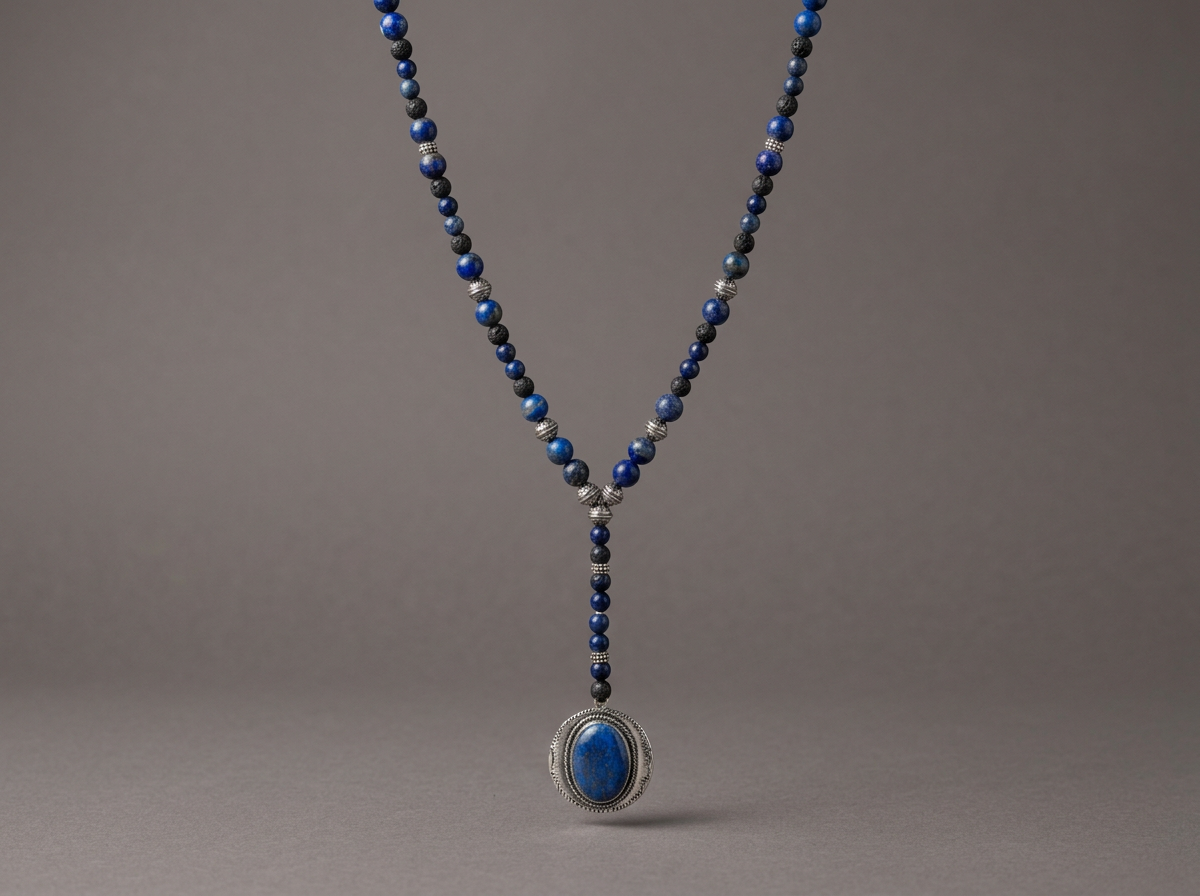
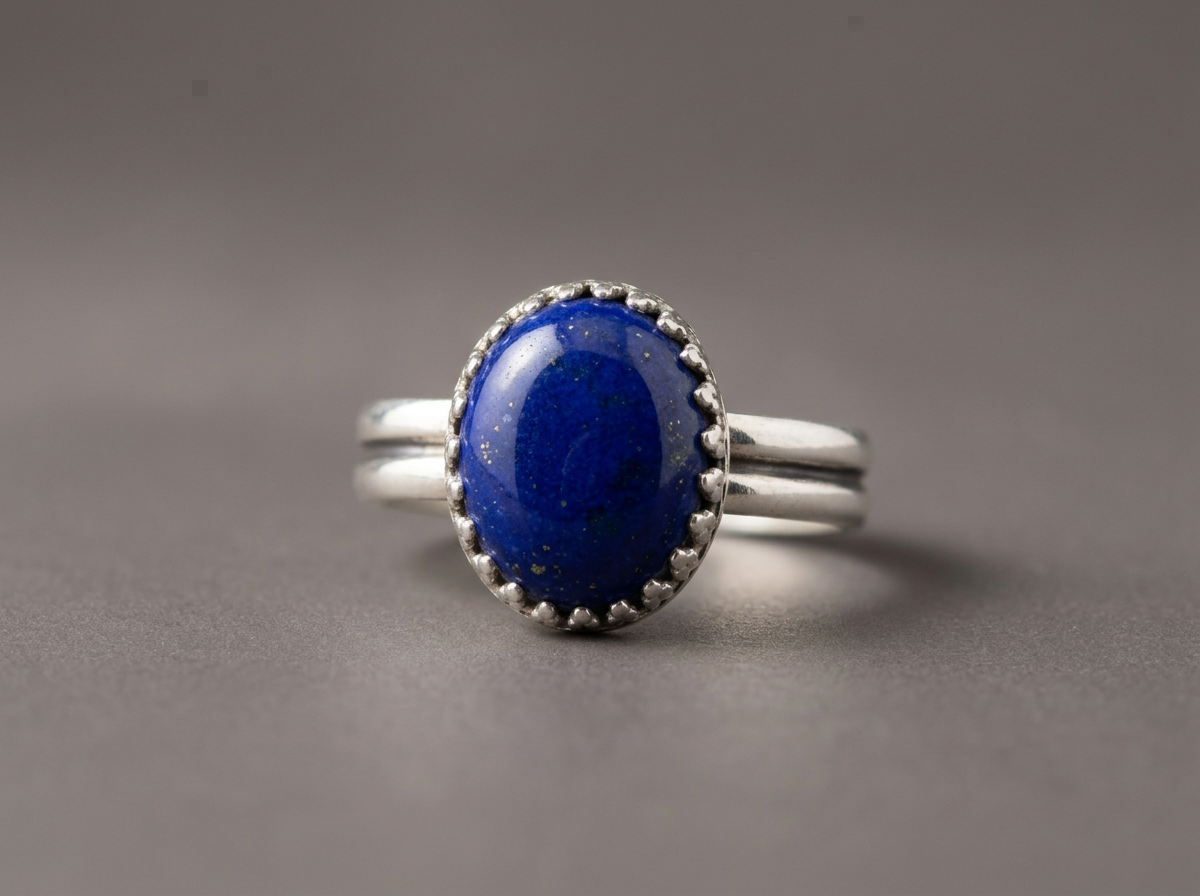
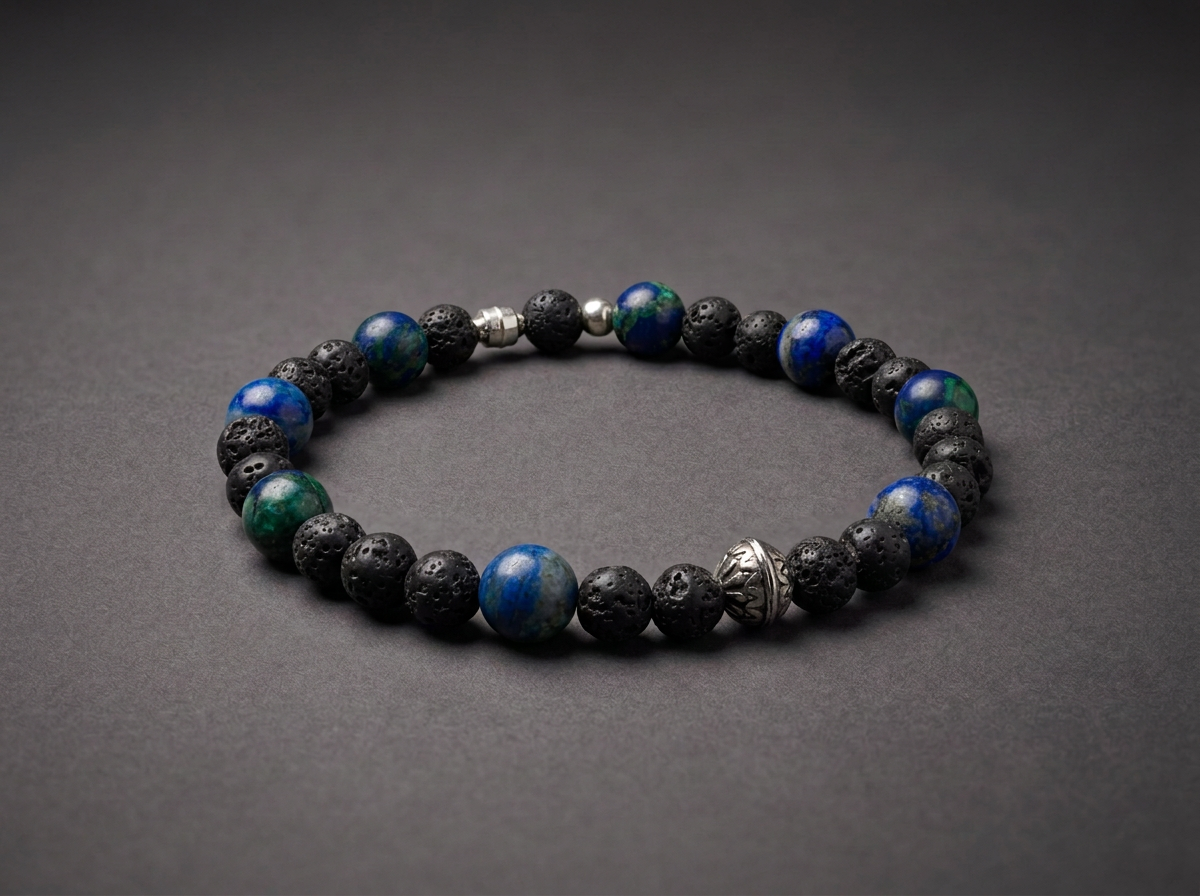
The deep end — dense, saturated, gold-flecked. Each one forged to order.
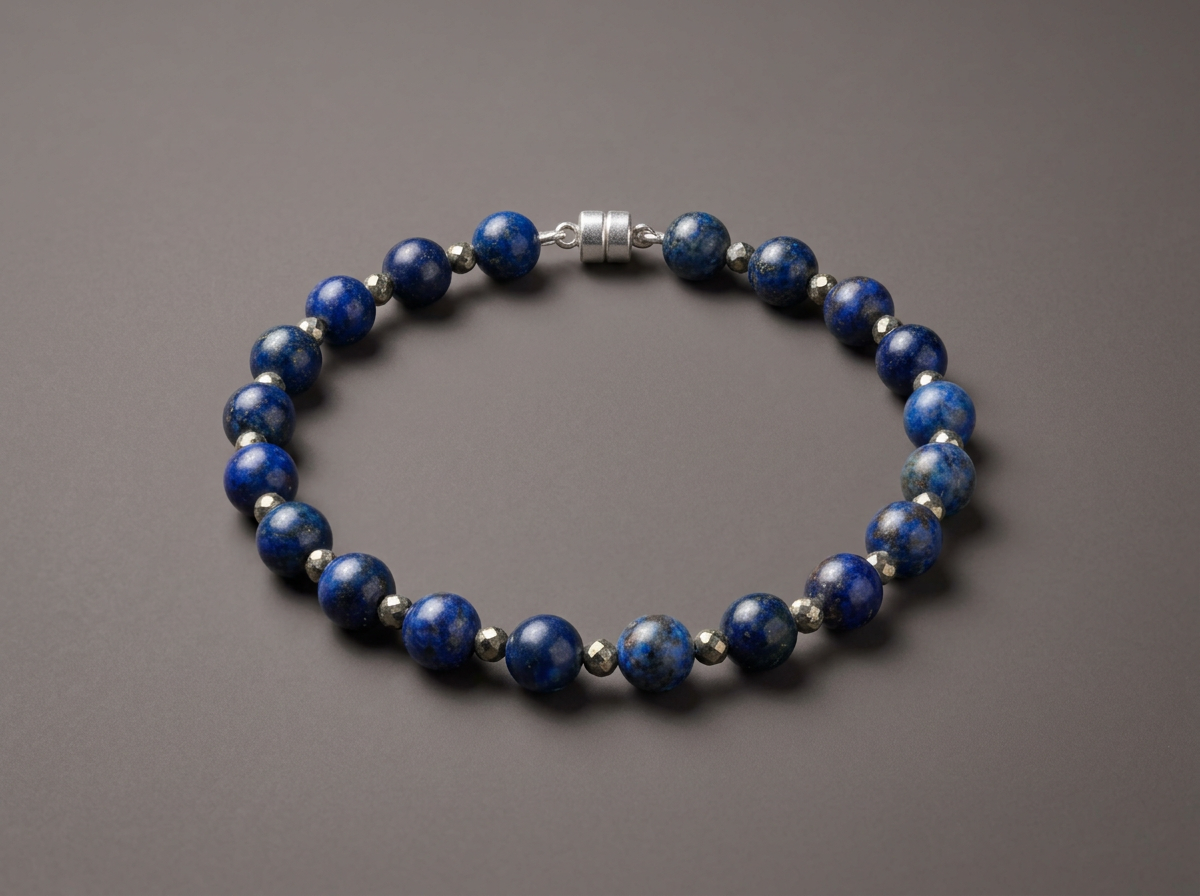
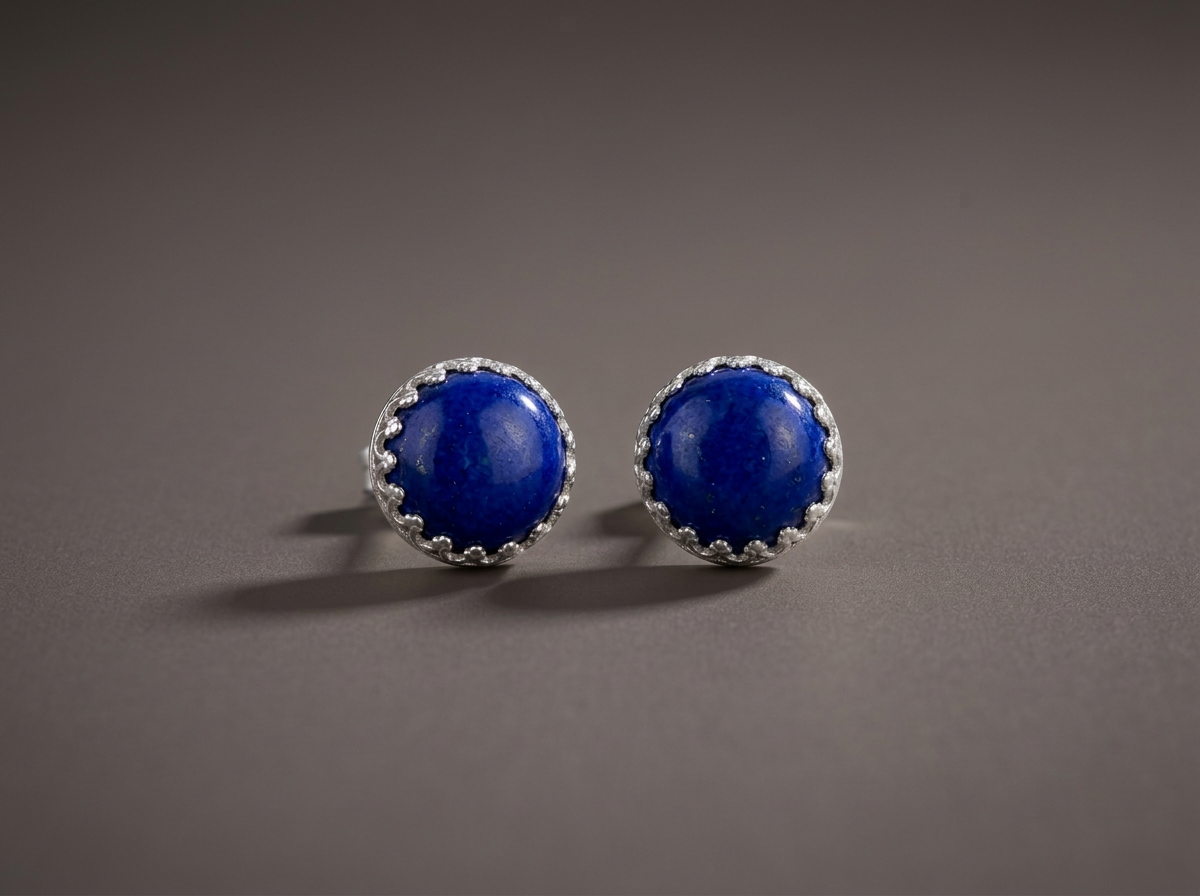
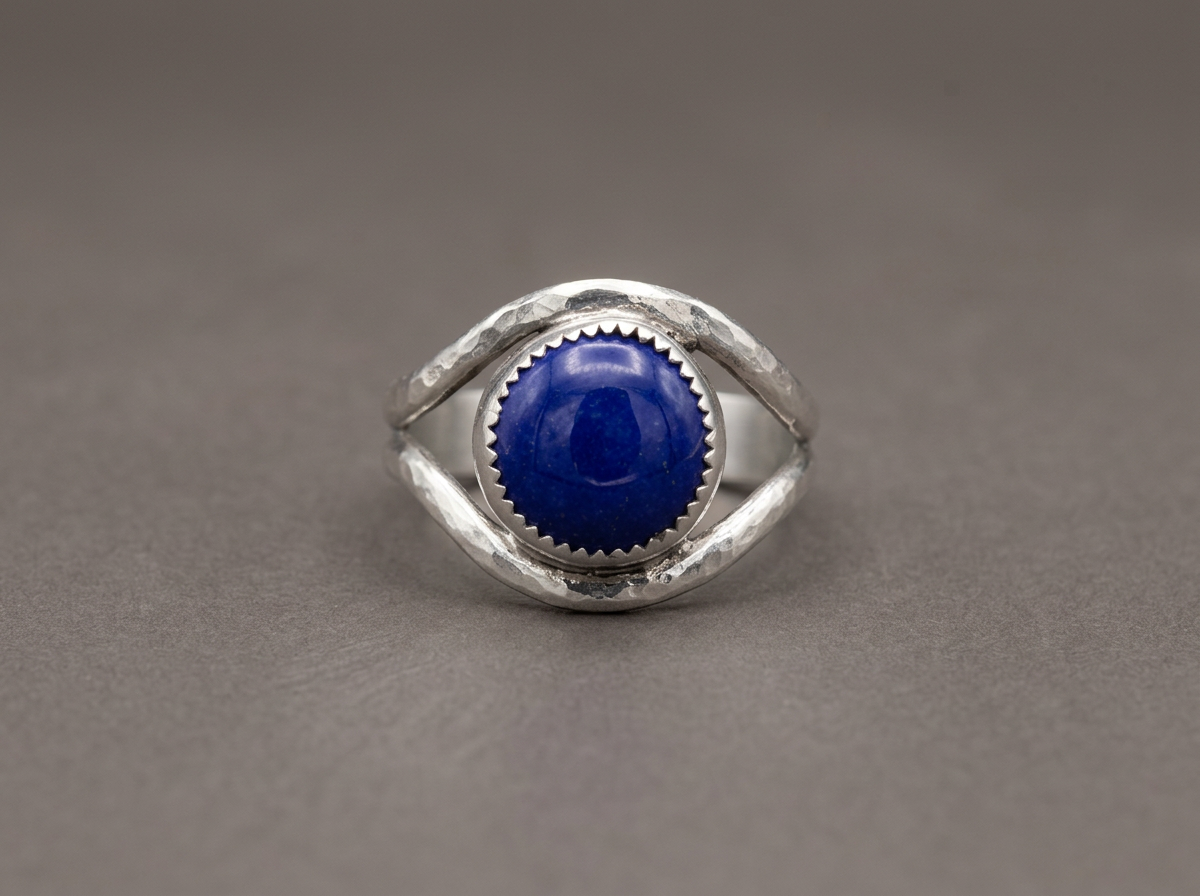
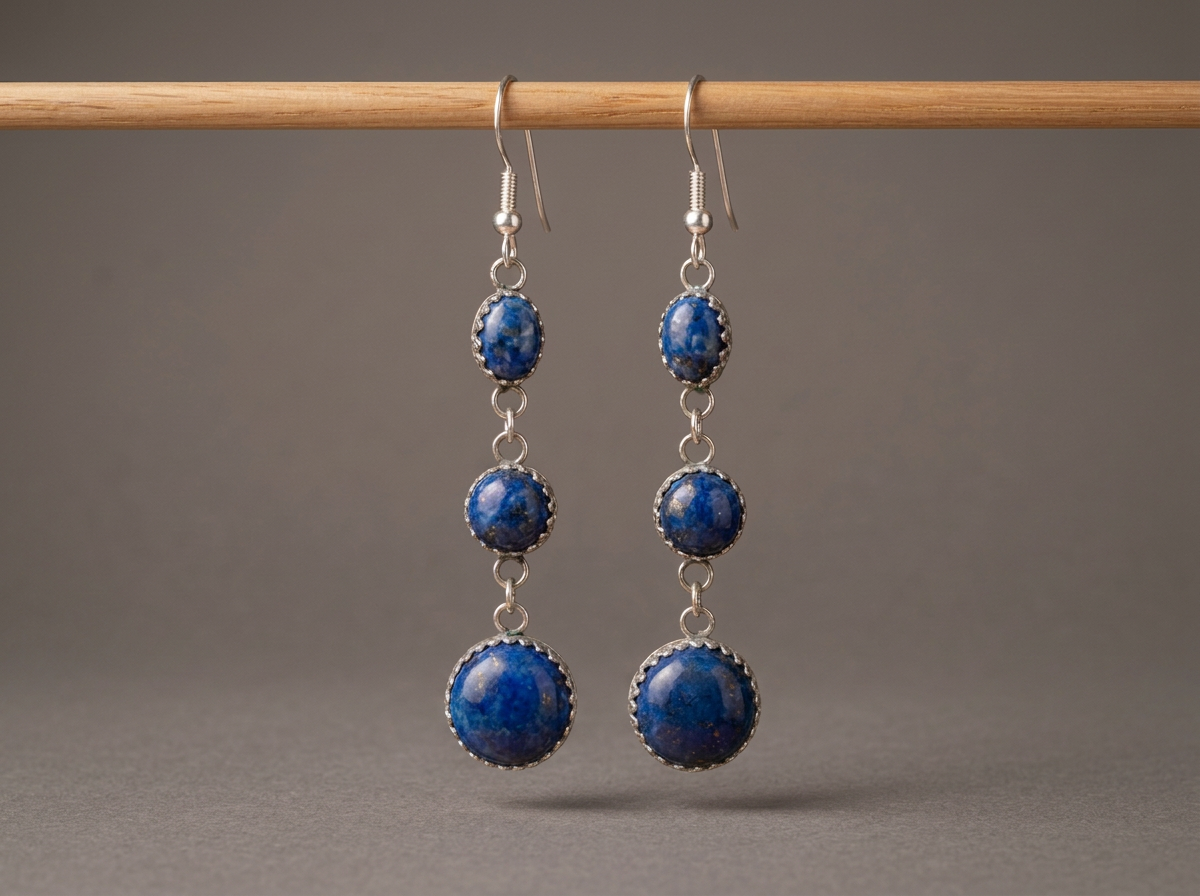
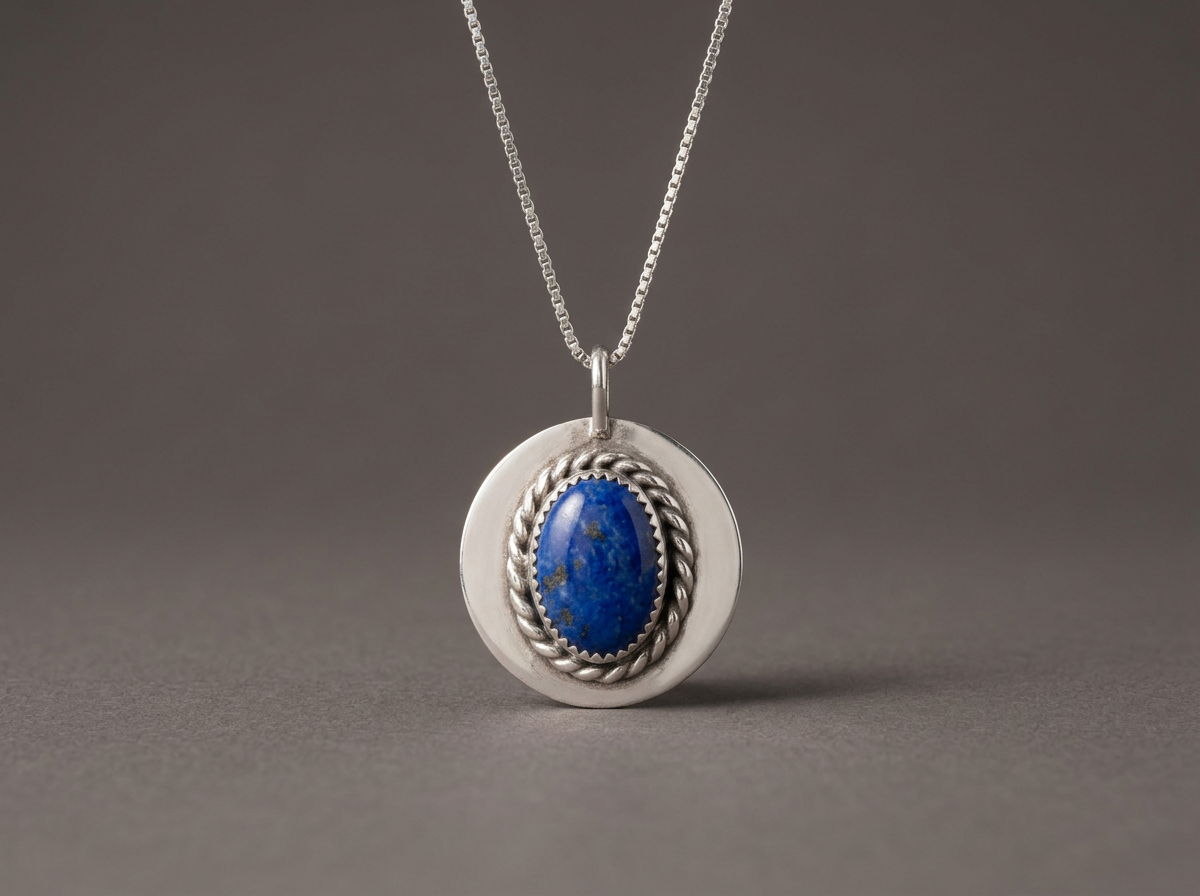
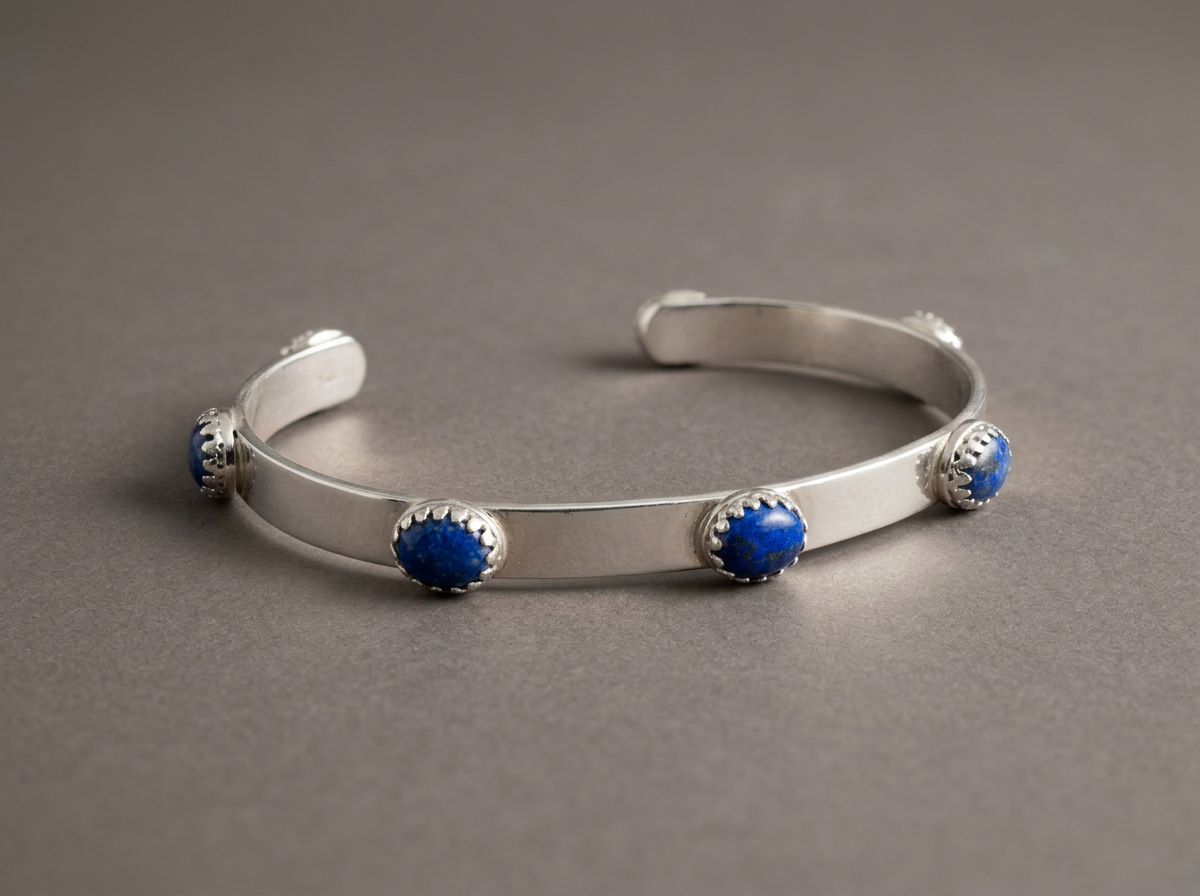
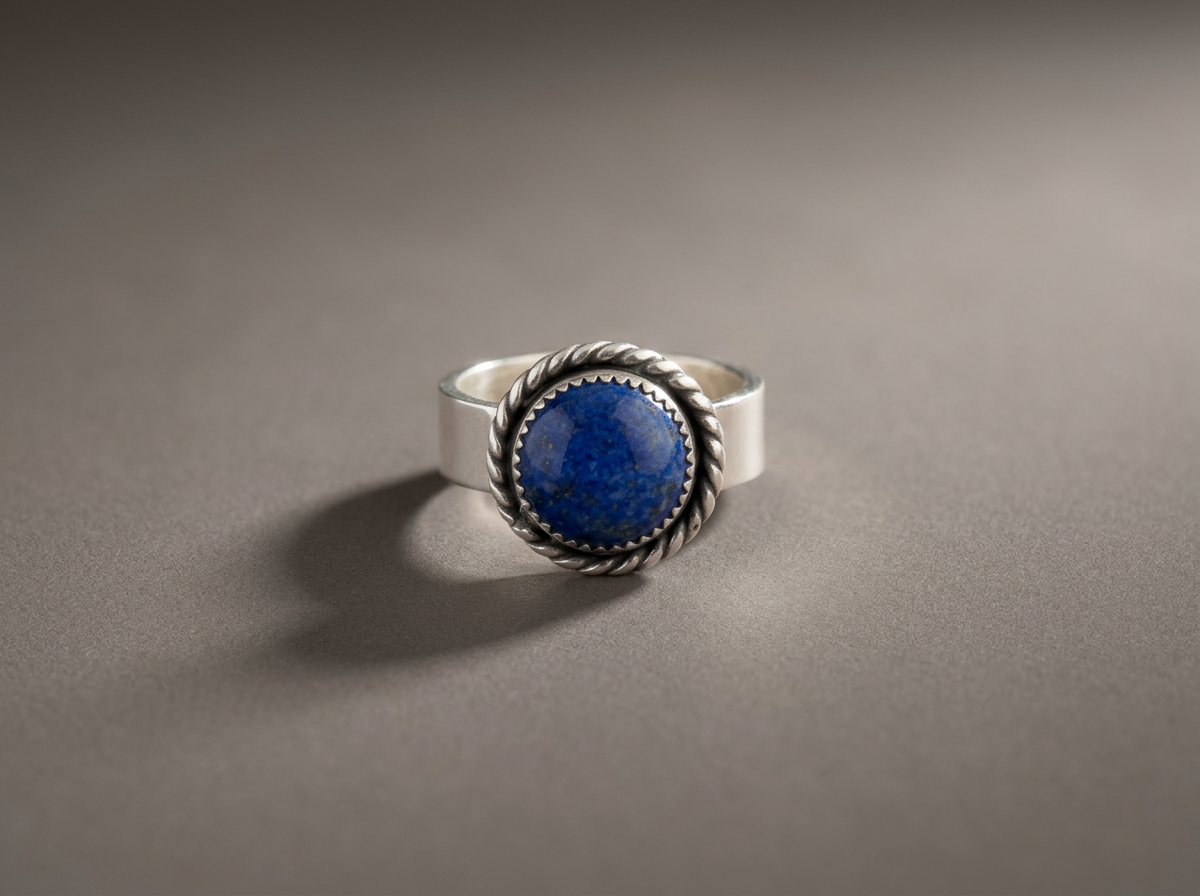
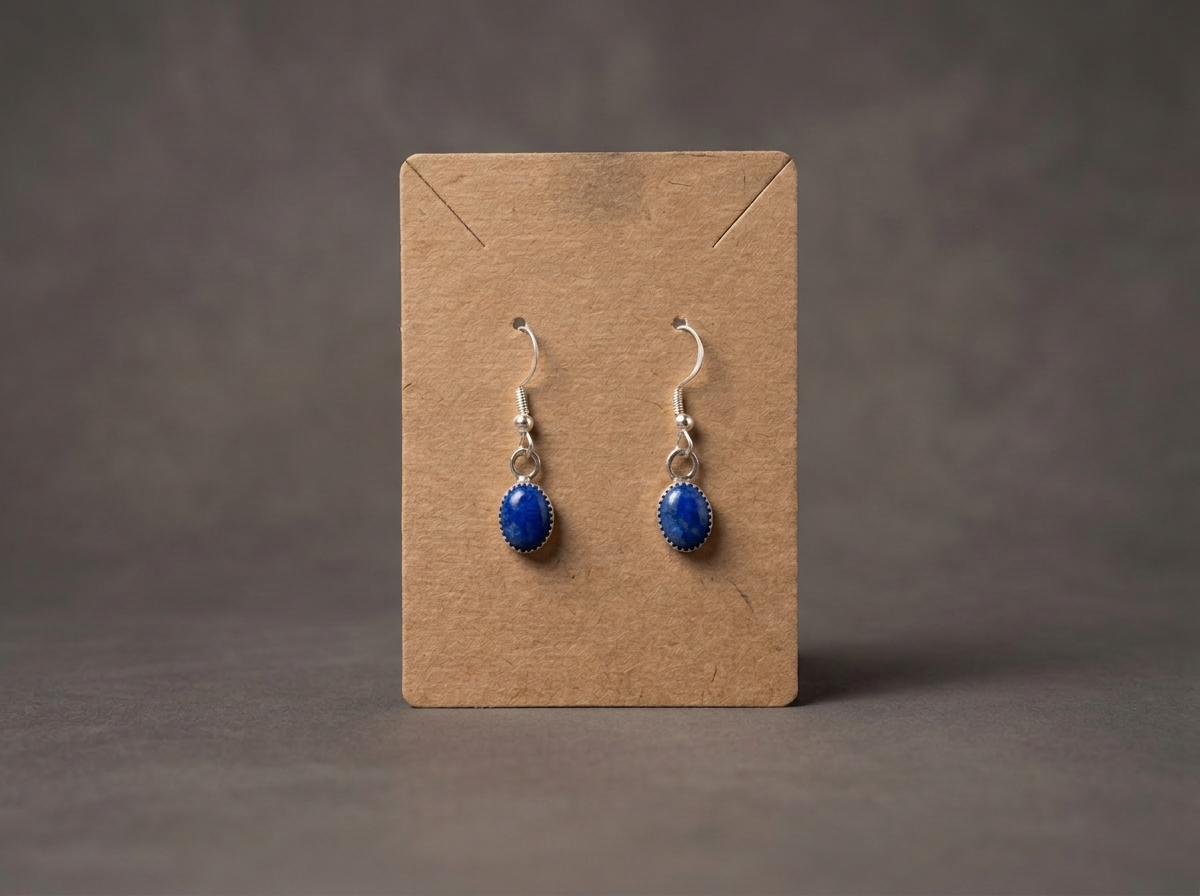
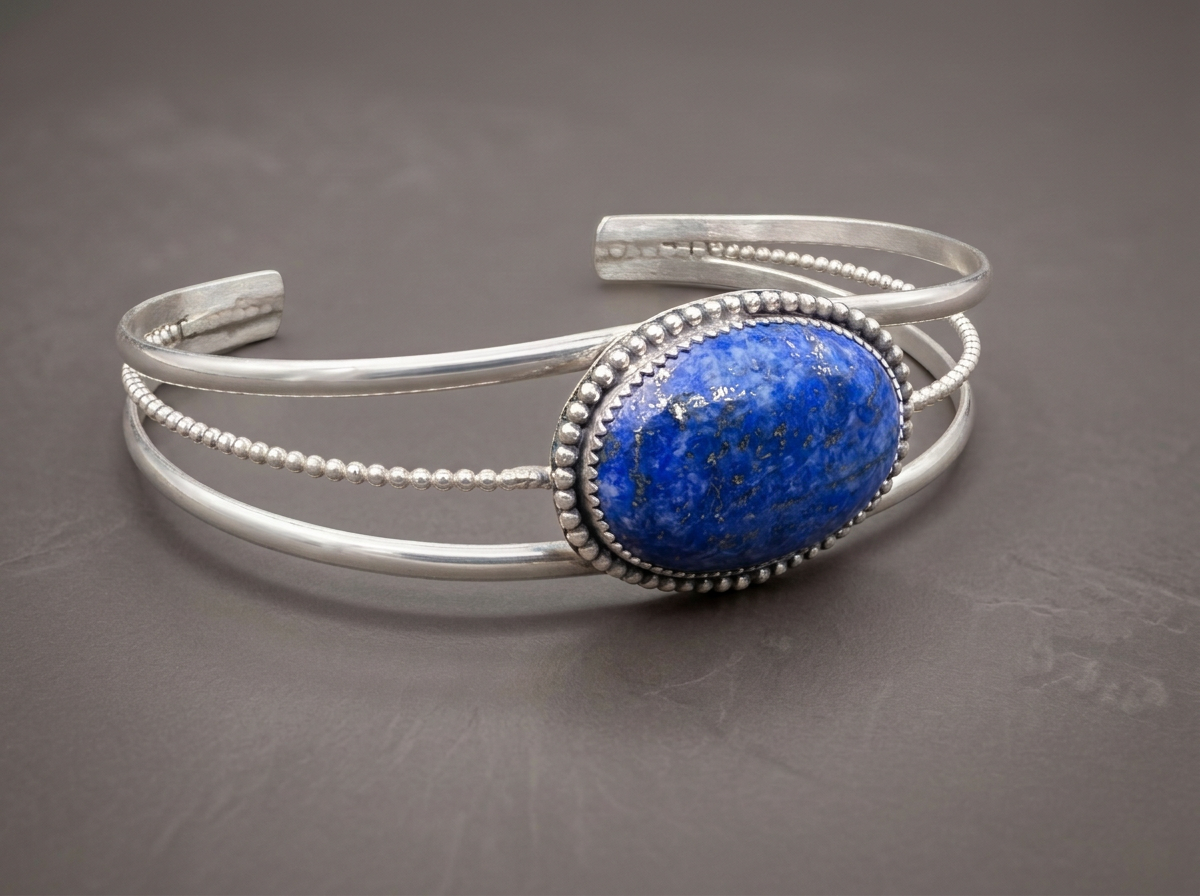
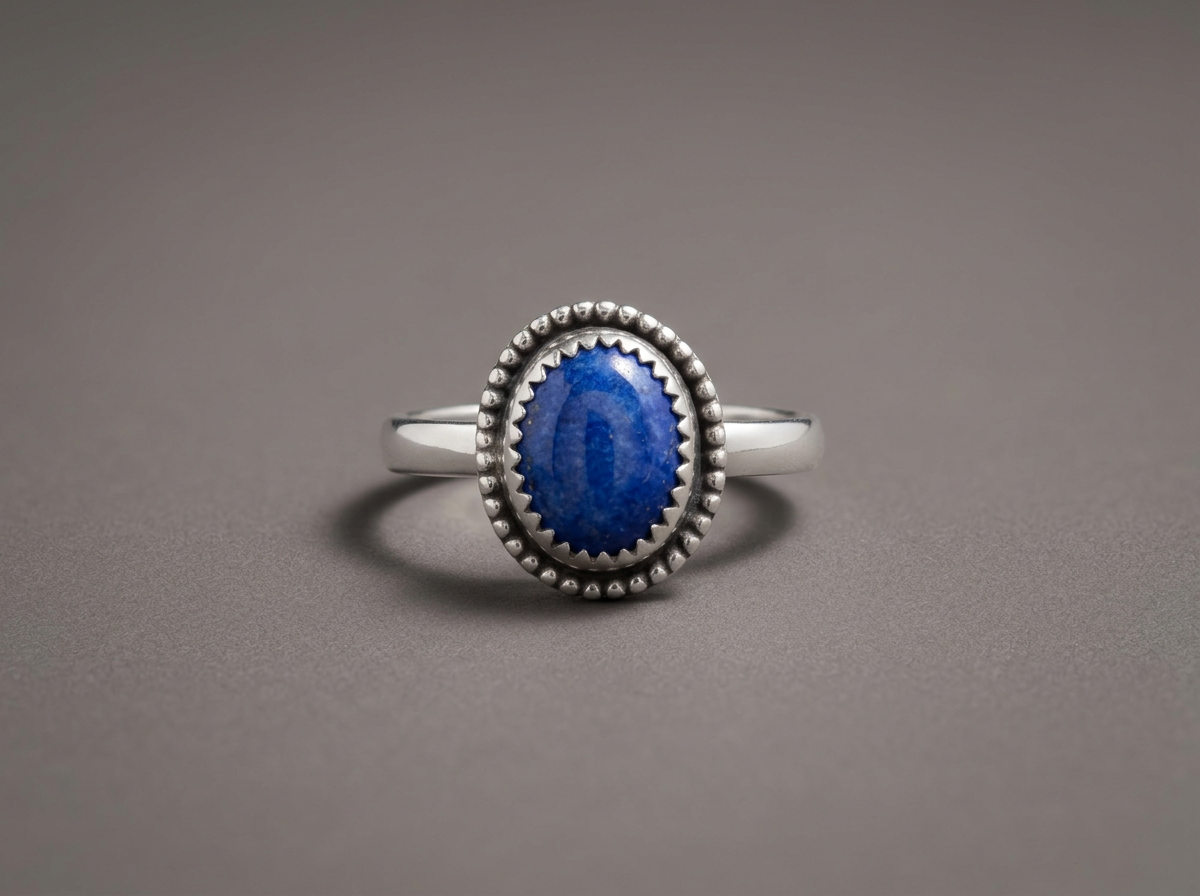
How I set it, and why that matters for lapis
Lapis is soft. Around 5 to 5.5 on the Mohs scale, which puts it well below quartz — soft enough that ordinary dust, which is mostly quartz, will scratch it over years. It’s also porous. That changes how a piece has to be built.
So every lapis stone in the shop sits in a bezel rather than prongs: a wall of silver around the girdle, which takes the knocks the stone can’t. I set the stone last, after the oxidizing is done. The chemicals that blacken silver will dull lapis if they reach it, and setting last keeps the washing — and the water a porous stone has to take — to a minimum.
None of that shows in a photograph. It’s the difference between a piece you wear for twenty years and one you wear for two.
Looking after it
Warm water, a drop of mild soap, a soft cloth. That’s it.
What to keep it away from: ultrasonic cleaners, steam, anything containing ammonia or bleach, and the silver dips sold in supermarkets — lapis is porous enough to absorb them and it will never look the same after. Perfume,
hairspray and sunscreen go on before the jewelry, not after.
Take it off before the gym, the pool and the shower. Store it somewhere it isn’t rattling against harder stones.
The silver is meant to darken — that’s Oxidization doing its job, and it’s what makes the blue read. If it ever goes further than you want, bring it back to me. Polishing and re-Oxidizing is free, forever, for anything I’ve made.
Questions I get about lapis
Is denim lapis real lapis lazuli?
Yes. It’s the same stone with more calcite in the mix, which lightens the Color. It isn’t dyed, treated or synthetic — it’s simply a different grade of the same rock.
Will the gold flecks wear off?
No. Those are pyrite, part of the stone itself, not a coating. They’re as permanent as the blue. They will rust if exposed to water for too long, so make sure to keep your lapis jewelry in a dry place and dry completely with a soft towel and tissue if it gets wet
My piece has a white line through it — is that a flaw?
That’s calcite, and it’s proof the stone is natural. Uniform, flawless blue at a low price is usually dyed howlite or reconstituted powder. I choose stones for character, so yours will have marks. Every one of my photos shows the style, not your exact stone.
Can you make something specific in lapis?
Yes — commissions start with a conversation, so just submit a commission request And if you’re buying for someone else and aren’t sure of their size, a gift card lets them tell me.
Some things you don't see with your eyes. You feel them settle into place.
The Seer's Sigil Pendant is a hand-forged talisman for those who trust what they sense before they can explain it. At its center sits a deep, royal-blue Lapis Lazuli cabochon, flecked with natural pyrite and set in a classic twisted sterling rope bezel. Circling the stone, the scalloped silver backplate is ringed with a repeating hand-stamped Third Eye — the Ajna symbol — carried openly rather than hidden, a sigil worn in plain sight instead of tucked away. It hangs from a 24-inch double sterling rope chain by a doubled silver bail, sitting close and steady — a weight over the heart that keeps you tethered to what you already know.