
Tiger's Eye: the stone with a light that moves
Eight pieces in the shop are set with tiger’s eye — a split-shank ring, a hand-stamped shield ring, a triple cuff, beaded lariats and talismans — hand-forged in oxidised sterling silver and made to order in Nashville. Below: what causes that band of light, why the cut decides whether you see it at all, and everything I set it in.
What tiger's eye actually is
Tiger's eye starts as crocidolite, a fibrous blue mineral growing in tight parallel strands. Over a very long time silica seeps in and replaces those fibres while keeping their arrangement, and iron oxides stain the whole thing gold and brown. What you end up with is quartz that remembers the shape of something else.
Those preserved parallel fibres are responsible for everything interesting about the stone. It sits around 6.5 to 7 on the Mohs scale, hard enough for daily wear without special handling, and most of the good material comes out of South Africa.
Blue tiger's eye — hawk's eye — is the same stone caught earlier in that process, before the iron went to work.
Why the light moves, and why the cut decides everything
The effect is called chatoyancy, from the French for cat's eye. Light hits those parallel fibres, reflects off all of them at once, and comes back as a single bright band that travels across the stone as you turn your hand.
Here is the part that matters at the bench: the band only appears if the stone is cut with the fibres running the right way. Cut across them and you get a flat brown stone. Cut along them, with a domed top, and the light gathers into a line. A tiger's eye cabochon is a decision made long before any silver is touched.
So when you turn one of these under a lamp and the band swims, you are not looking at a coating or a treatment. You are looking at several hundred million years of geology, cut correctly.
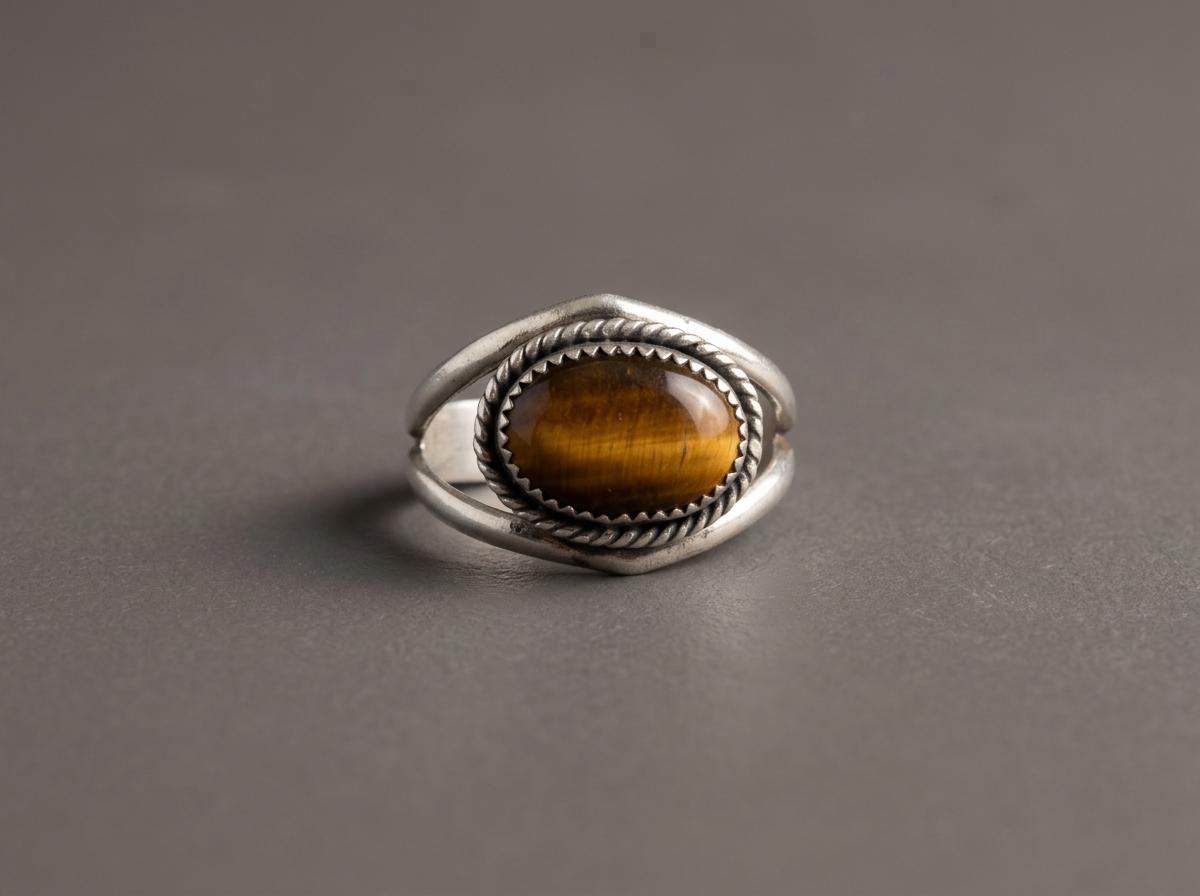
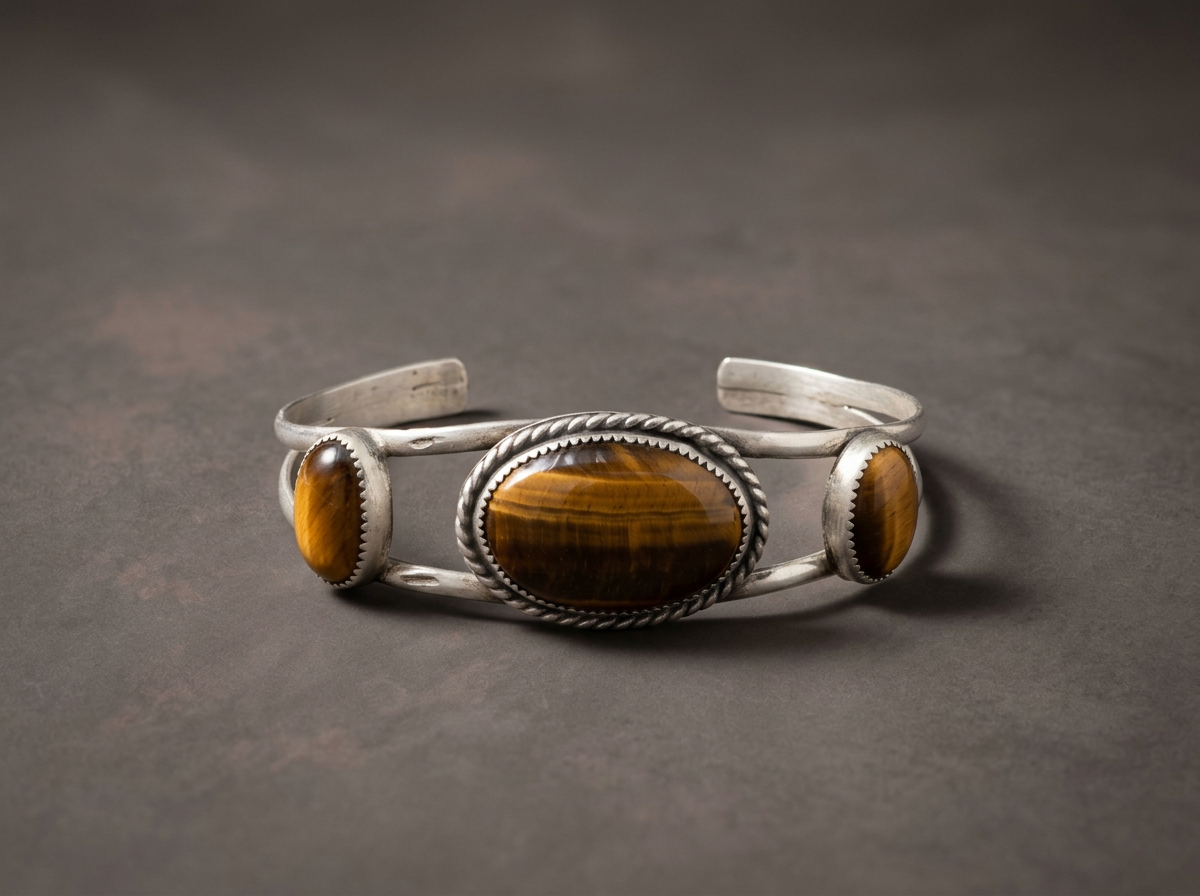
Set in tiger's eye
Eight pieces, each one hand-crafted to order.

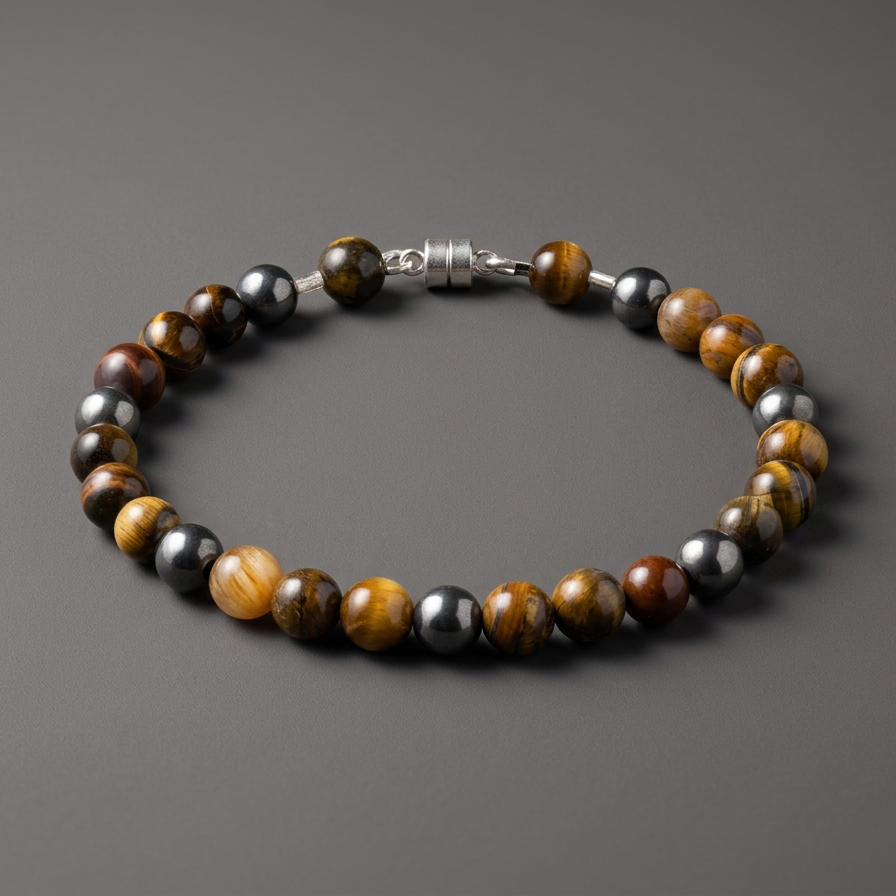
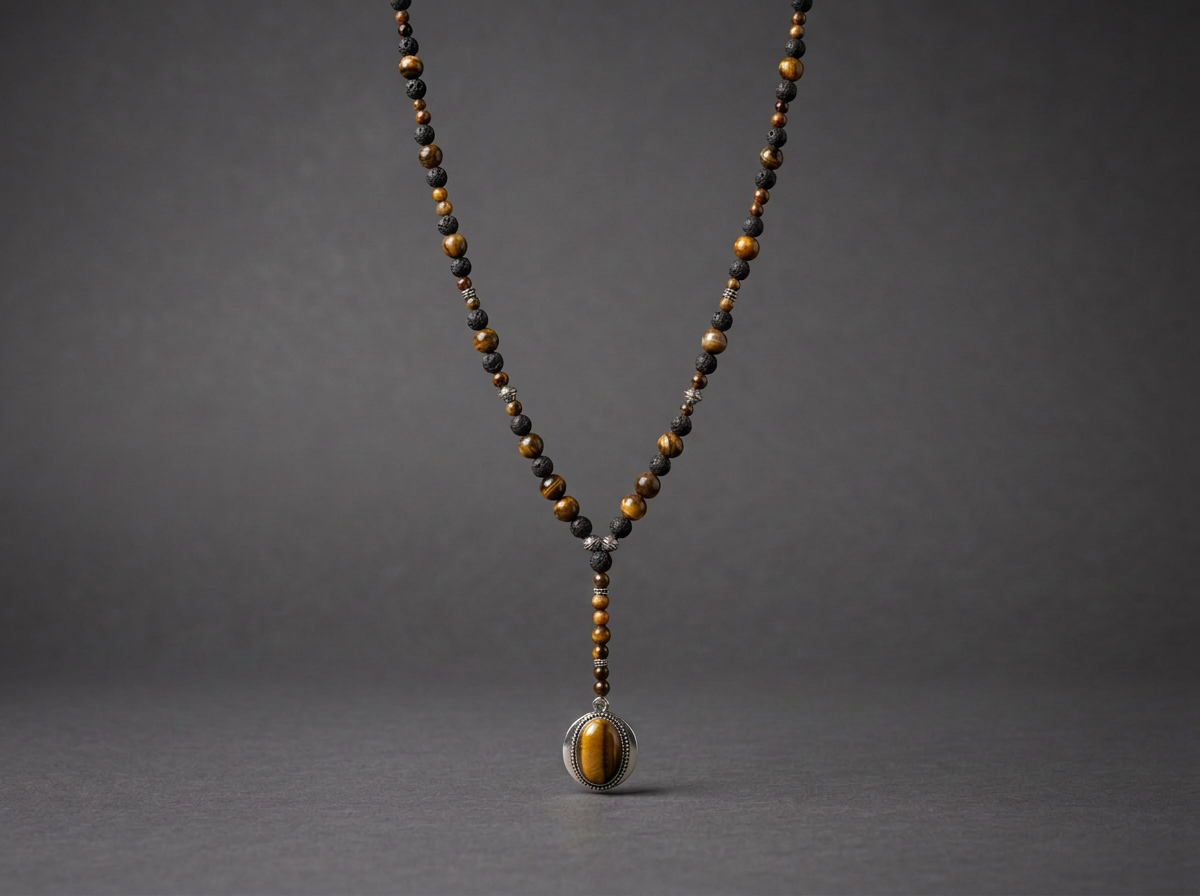

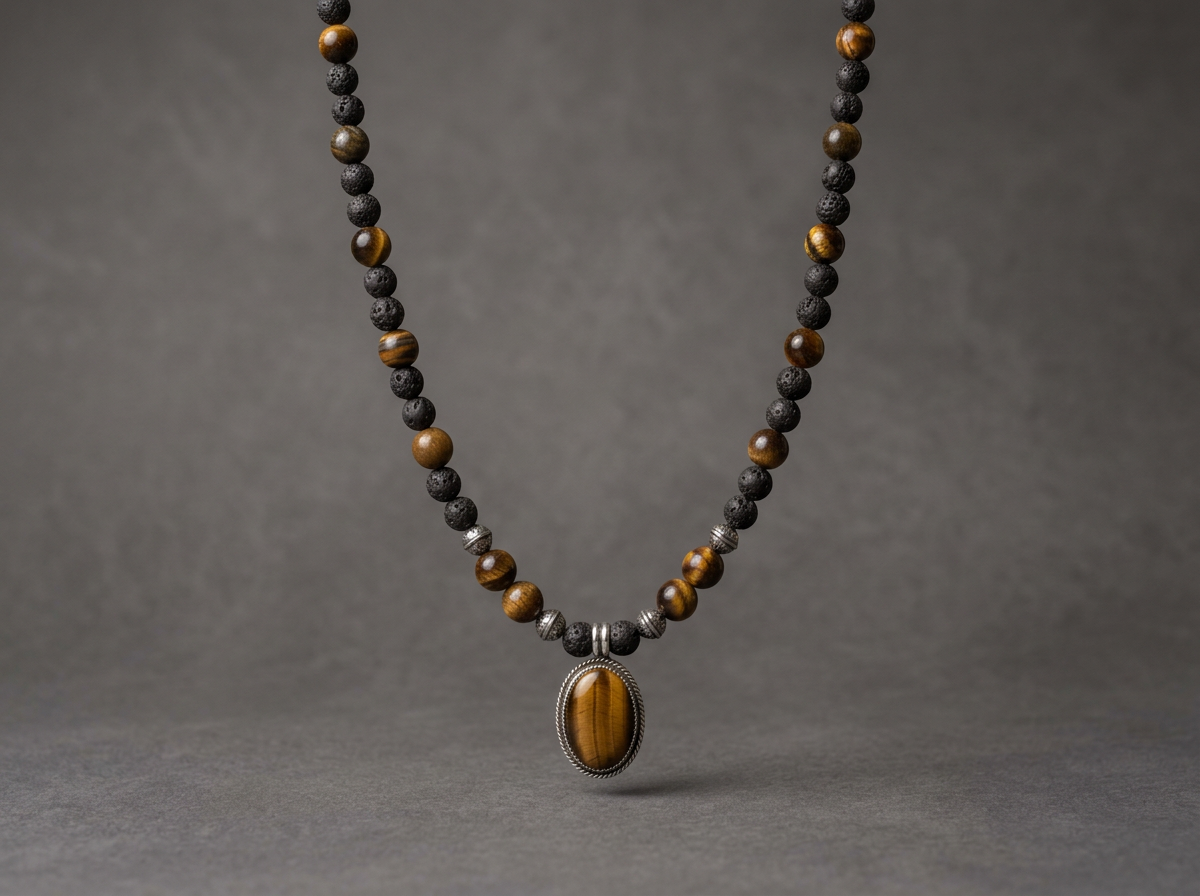
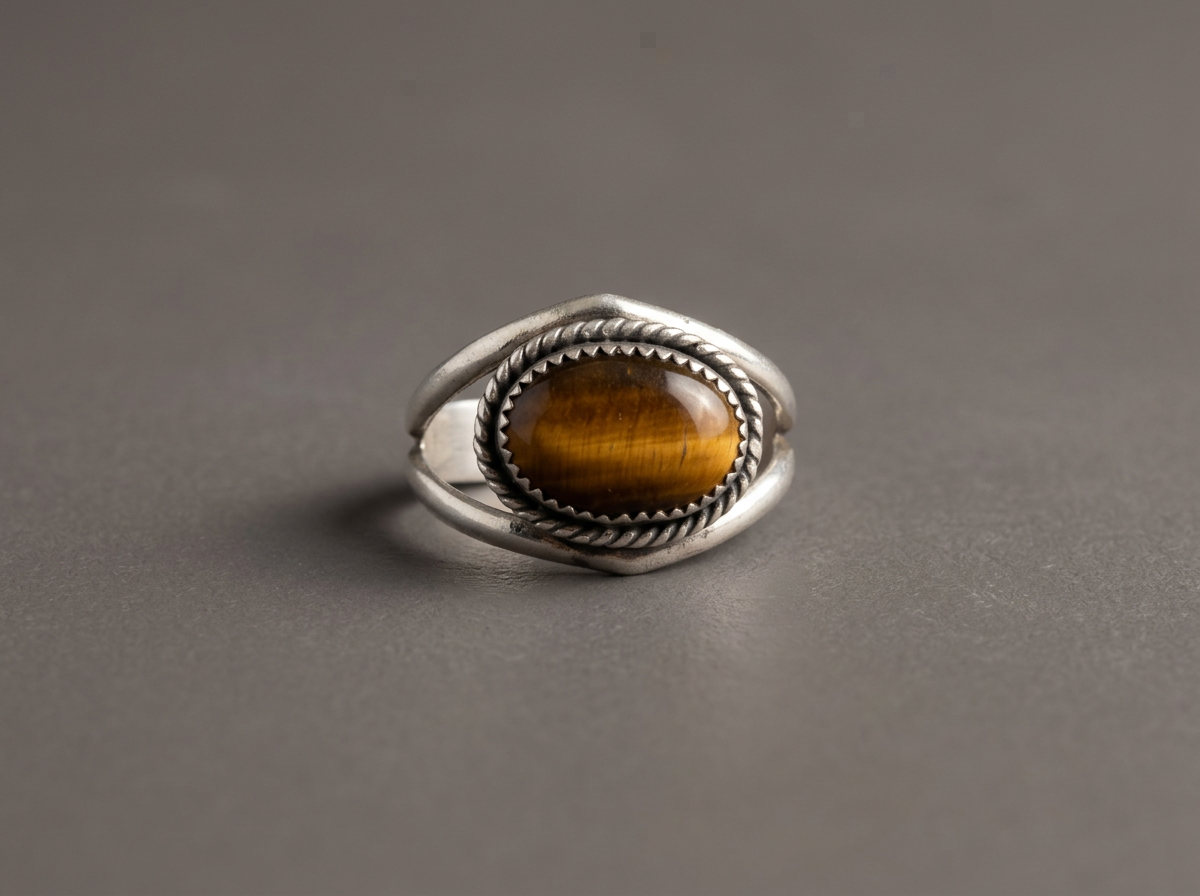
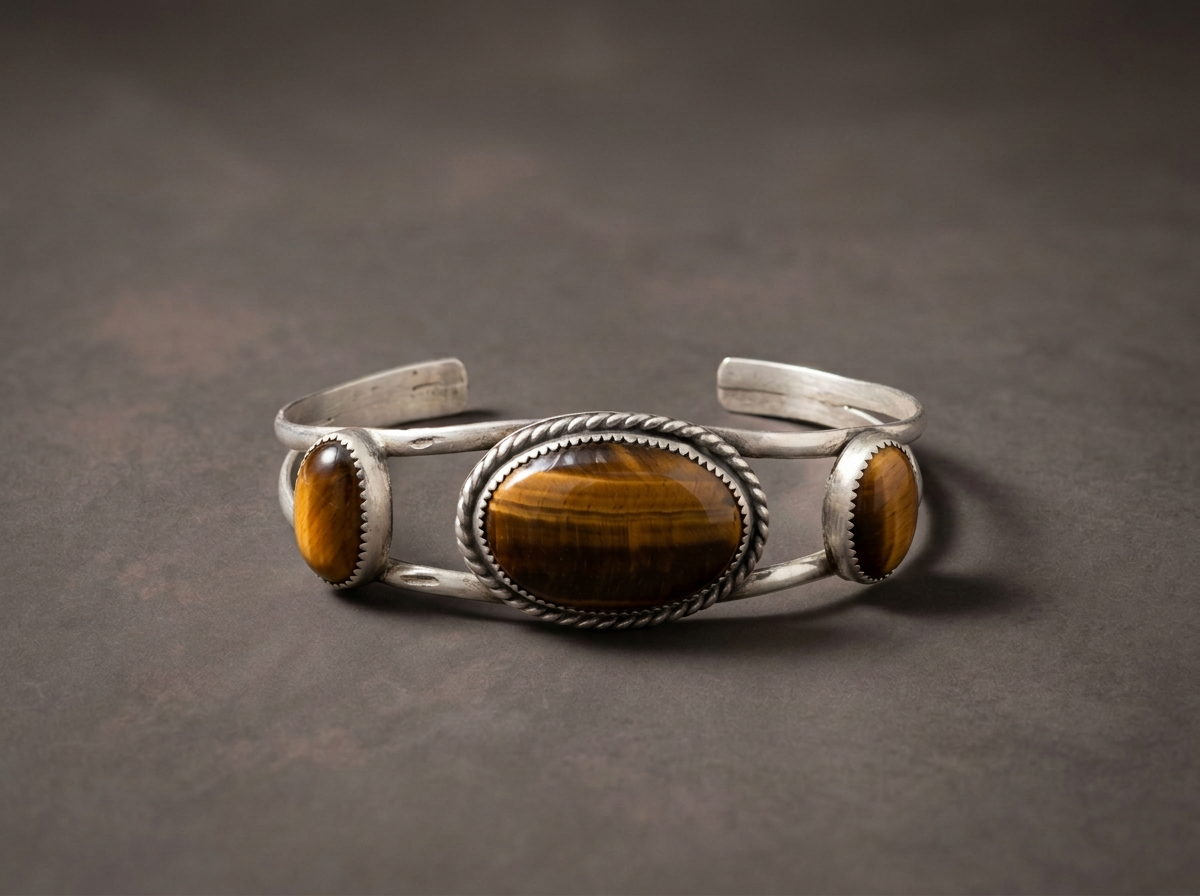
How I set it, and why orientation is everything
Tiger's eye is hard enough not to worry me — around 6.5 to 7 on the Mohs scale, not porous, no special handling at the bench.
What it demands instead is attention to direction. I set each stone so the band runs the way the piece is meant to be read: across a ring's face so it flashes as you gesture, along a cuff so it follows the line of the wrist. Rotate the same stone ninety degrees in the same bezel and the piece stops working.
That is not something you can see in a photograph, and it is not something a machine decides.
Looking after it
Warm water, mild soap, a soft cloth. Tiger's eye is straightforward.
Avoid ultrasonic cleaners and steam — the stone would probably survive both, but the Oxidized finish on the silver won't. No ammonia, no bleach, no supermarket silver dips.
Off before the gym and the pool. Store it away from harder stones.
The silver is meant to darken. If it ever goes further than you want, bring it back — polishing and re-Oxidizing is free, forever, for anything I've made.
Questions I get about tiger's eye
Why doesn't my stone flash in every light?
Chatoyancy needs a single directional light source — sunlight, a lamp, a spotlight. Under flat overcast light or diffuse office lighting the band goes quiet. Take it to a window.
Is the shimmer added?
No. It is the internal structure of the stone reflecting light. Nothing is applied and nothing can wear off.
Is tiger's eye dyed?
The red and green tiger's eye you sometimes see usually has been heated or dyed. The gold-brown is the natural Color, and that is what I set.
Can you make something specific in tiger's eye?
Yes — commissions start with a conversation, so just submit a commission request And if you’re buying for someone else and aren’t sure of their size, a gift card lets them tell me.
A lantern never shows you the whole road. It shows you enough to keep walking.
The Lantern is built for forward motion — the fire you carry, and the few feet of road it buys you. At its center sits a deep, honey-banded tiger's eye cabochon, wrapped in a rugged twisted sterling rope border. Turn your hand and the chatoyant band slides across the stone like a beam moving out ahead of you. The substantial sterling silver shield backplate is struck at nine and three with the sigil of the solar plexus chakra — the body's own fire, the thing that actually does the moving — and ringed with hand-stamped crescent moons: the nights crossed, the ground already covered. Notched at twelve and six and forged with a thick, comfortable, durable wide band, this piece is built from raw silver to sit square on the hand and stay there.
Tiger's eye is chatoyant: a single bright band of light that moves when you do. No two cabochons band the same way, and no two strikes of the stamp land identically. Each is an individual piece of art, made to turn heads and outlast the trends.