
Onyx: The Warrior’s Shield
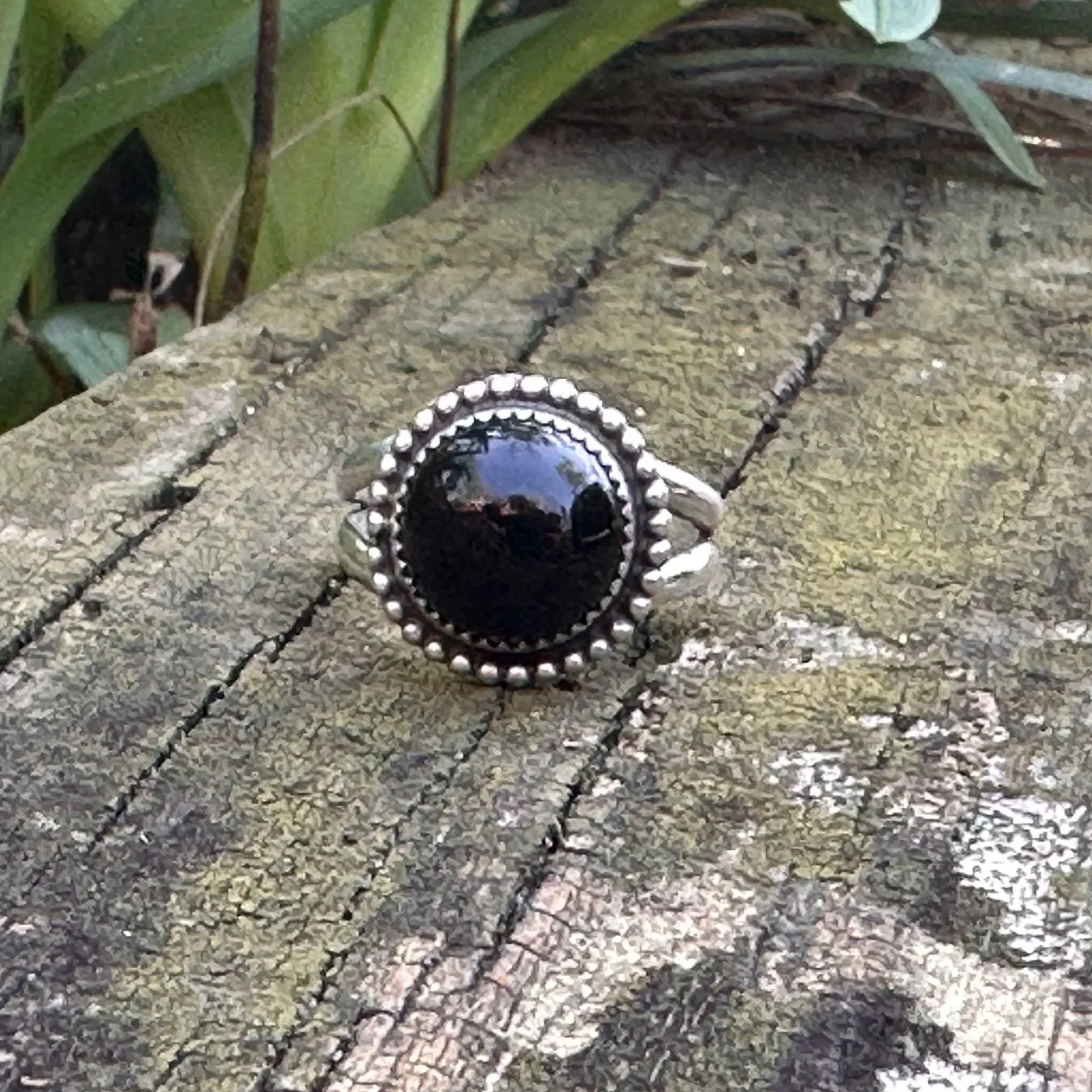
Make it stand out
The Science:
Composition: A variety of Chalcedony (cryptocrystalline quartz) made of silicon dioxide.
Structure: Features parallel bands, often in black and white.
Hardness: A durable 6.5 to 7 on the Mohs scale.
Metaphysical Information:
Chakras: Resonates strongly with the Root Chakra, providing stability and security.
Key Benefits: It is a powerhouse for protection, believed to absorb and transform negative energy. It’s ideal for athletes or anyone under high pressure, as it boosts stamina and self-control.
How to Care:
The Physical Care: Onyx is quite durable, but it can be prone to scratches if stored with diamonds or sapphires. Wash it with mild soap and lukewarm water.
The Energetic Cleanse: As a "vacuum" for negative energy, Onyx needs frequent clearing. Brown Rice or SEA Salt is a fantastic method—bury the stone in a bowl of Rice or salt overnight to draw out the "heavy" vibes it has absorbed for you.
The Recharge: placing your onyx in view of a full moon will recharge the stone’s energy.
Rome was not the only ancient civilization that reached for onyx. Egyptian and Mesopotamian artisans carved it into seals, small vessels, and amulets thousands of years earlier, prizing the stone for how cleanly it took an engraved line. That same quality made it the material of choice for intaglios and cameos across the classical world — a carved onyx signet ring was as much a functional tool as an accessory, since pressing it into wax was how you signed your name.
Onyx had another major moment much more recently. After Prince Albert’s death in 1861, Queen Victoria spent the rest of her life in mourning, and the fashion for somber black jewelry that followed her example made onyx one of the defining stones of the Victorian era. Mourning rings, brooches, and lockets set in onyx became a way to carry grief with you quietly, which is part of why so much antique onyx jewelry that survives today has that same restrained, formal look.
Most of the banded chalcedony that gets cut and sold as onyx today comes out of Brazil, Uruguay, India, and Madagascar, where it forms in the same volcanic rock cavities that produce agate. The deposits are not rare, exactly, but a very specific one is: natural stone with the deep, even, jet-black color most people picture when they hear the word “onyx” almost never occurs in nature.
Here is the part most retailers will not tell you: the overwhelming majority of black “onyx” jewelry on the market is actually dyed gray agate, heat-treated and color-enhanced to reach that uniform black. It is not a scam exactly — the practice is centuries old and the industry treats it as standard — but true, naturally black onyx is genuinely rare, and most of what gets called onyx today is chosen and treated specifically to look the way people expect onyx to look. If you want to check a piece yourself, look closely at any drill hole or edge for a faint gray or brownish undertone peeking through — dye concentrates at the surface and rarely penetrates a stone evenly all the way to the core.
At 6.5 to 7 on the Mohs scale, onyx holds up fine to daily wear, which is part of why it became a practical choice for signet rings in the first place — a stone you are pressing into wax and knocking against a desk all day needs to survive that. The main thing to actually watch for is exactly what the care note above mentions: storing it loose next to harder stones like diamond or sapphire, where it is the onyx that will pick up the scratches, not the other way around.
We like building with onyx because it does the opposite of almost every other stone in the shop — instead of catching the eye, it grounds everything around it. A piece with black onyx in the center gives your hand a visual anchor, which makes it a natural pick for someone who wants one deliberate, serious piece rather than a stack of smaller ones. It also plays well as the quiet stone in a mixed stack, giving brighter pieces like turquoise or chrysoprase something dark to stand out against.
The “warrior” framing is not just a marketing hook, either. Across a lot of the cultures that reached for onyx, it shows up specifically as protection for people heading into difficult or high-stakes situations — soldiers, orators standing in front of a crowd, anyone who needed their nerve to hold. That is still basically what people reach for it now: not a stone for a quiet day, but one for the day you need to walk into the room steady.