
Denim Lapis: The Stone of Soft Truth
General Overview:
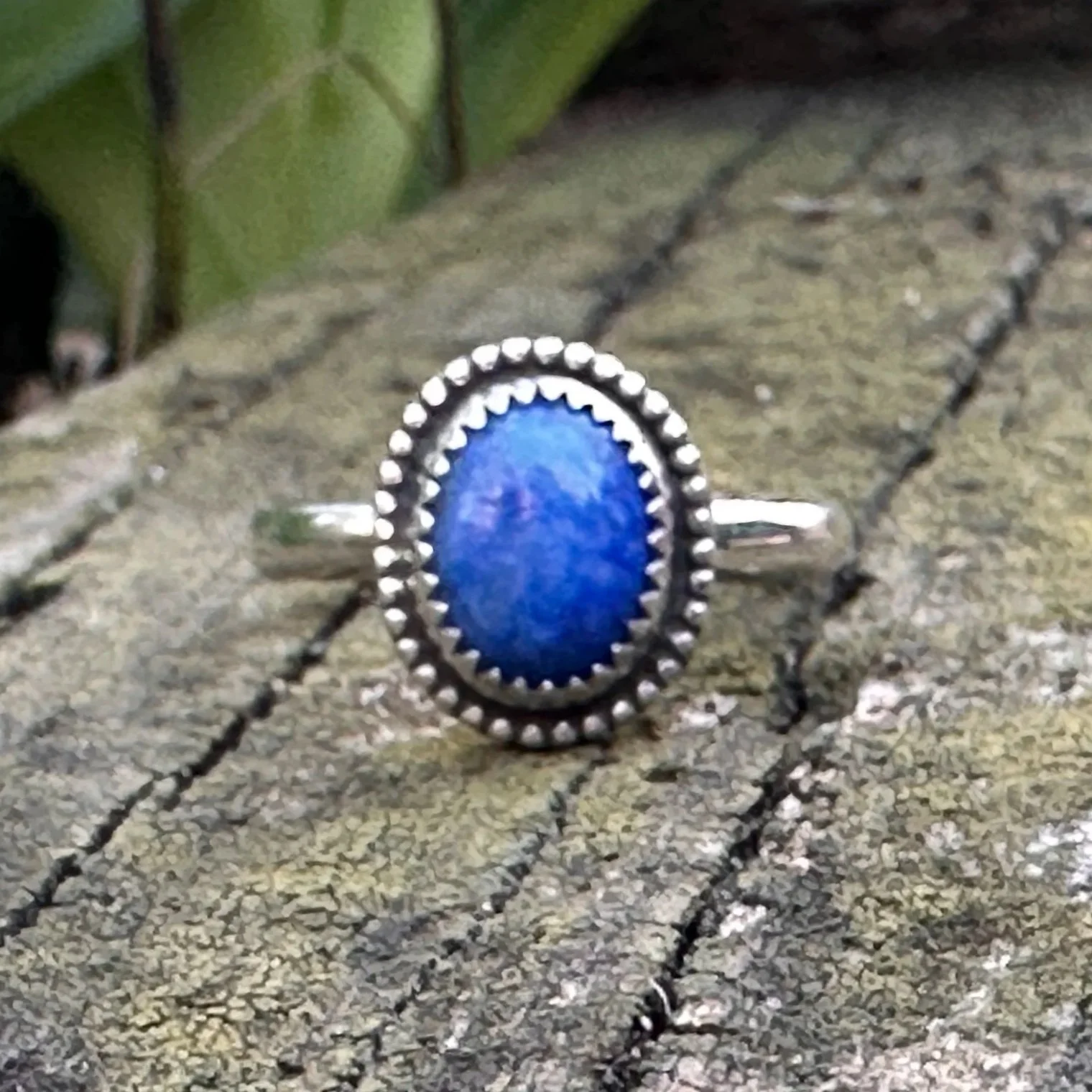
Think of Denim Lapis as the relaxed, "weekend" version of traditional Lapis Lazuli. While regular Lapis is famous for its intense, royal blue and golden pyrite flecks, Denim Lapis features a lighter, "washed out" blue hue—much like your favorite pair of jeans.
The Science:
Composition: A rock (not a single mineral) primarily made of Lazurite, with significant amounts of white Calcite and metallic yellow Pyrite.
Hardness: It typically sits between 5 and 6 on the Mohs scale.
The "Denim" Look: The lighter color is due to a higher concentration of white calcite compared to the deep blue lazurite found in "AAA" grade specimens.
Metaphysical Information:
Chakras: Primarily targets the Throat Chakra for clear communication and the Third Eye for intuition.
Key Benefits: Known as the "Stone of Soft Truth," it helps you speak your mind with calmness rather than intensity. It is often used to soothe a busy mind and promote emotional purity.
How to Care:
The Physical Care: Because of its high Calcite content, Denim Lapis is porous and sensitive to acids. Avoid ultrasonic cleaners or harsh chemicals. Clean it with a soft, damp cloth and pat dry immediately.
The Energetic Cleanse: Since it’s a stone of the mind and throat, it loves Sound Healing. Use a singing bowl or a bell to clear its energy. Avoid long soaks in water, as it can dull the finish.
The “soft truth” reputation is not something we invented for marketing. Blue stones tied to the throat have shown up across a lot of traditions specifically because of their color — ancient healers and mystics tended to link blue with clear water and open sky, both things associated with communication and calm, and lapis in any form inherited that association early. Denim Lapis just takes it a step further: the muted, washed-out blue reads as gentler than the high-contrast royal blue of classic lapis, which is part of why people reach for it specifically when they want a stone for saying hard things kindly rather than loudly.
No two pieces of Denim Lapis look quite alike, and that is a direct result of how the stone forms. Lazurite, calcite, and pyrite crystallize together unevenly, so the ratio of white calcite to deep blue lazurite shifts from one pocket of rock to the next — sometimes within a single stone. That is why one ring can look almost solid periwinkle while another leans more toward a marbled, cloudy blue-grey. We do not sort for uniformity here, because the variation is the entire point: it is what makes the stone read as worn-in rather than manufactured.
The Throat Chakra connection is worth taking seriously even if you do not think about your jewelry in those terms day to day. A lot of people we talk to say they specifically reach for a piece when they know a conversation is coming that they have been avoiding — a hard conversation with a partner, a direct ask at work, telling someone the truth they do not necessarily want to hear. Whether that is the stone doing something or just the ritual of putting on a piece that reminds you to stay calm and say the thing plainly, the effect seems to hold either way.
That porosity is worth taking seriously, more than with most stones we carry. Because Denim Lapis has so much calcite mixed into it, it reacts to acid the way a piece of limestone would — perfume, lotion, and even the acidity in sweat over time can etch or dull the surface if you are not paying attention. The fix is simple: put it on last, after you are done with anything you are spraying or rubbing on, and take it off before anything that involves prolonged water contact, like washing dishes or a long swim.
We use Denim Lapis constantly because it is one of the easiest stones in the shop to actually live in. The muted color does not compete with anything else you are wearing, it goes from a T-shirt to something dressier without looking out of place, and the pyrite flecks catch just enough light to keep it from reading flat. It is the stone we reach for most often ourselves, on days that do not call for anything loud.
A lot of what we set comes from the same broad supply chain as Classic Lapis — most fine lapis of any grade still traces back to Afghanistan, regardless of how much calcite ends up in the final piece. What changes is which part of the deposit a stone gets cut from, not where it came from. So when you are wearing Denim Lapis, you are wearing the same several-thousand-year lineage as a pharaoh’s burial mask, just in a softer, more wearable register. It is the same story, told a little more quietly. That is worth remembering the next time someone tells you a subtler version of something is a lesser one.