
Morganite: emerald's family, in a completely different mood
One piece in the shop is set with morganite — The Graceful Heart, a twisted split-band ring, hand-forged in sterling and made in Nashville. Below: what morganite actually is, why nearly all of it has been heated, and the piece It’s set in.
What morganite actually is
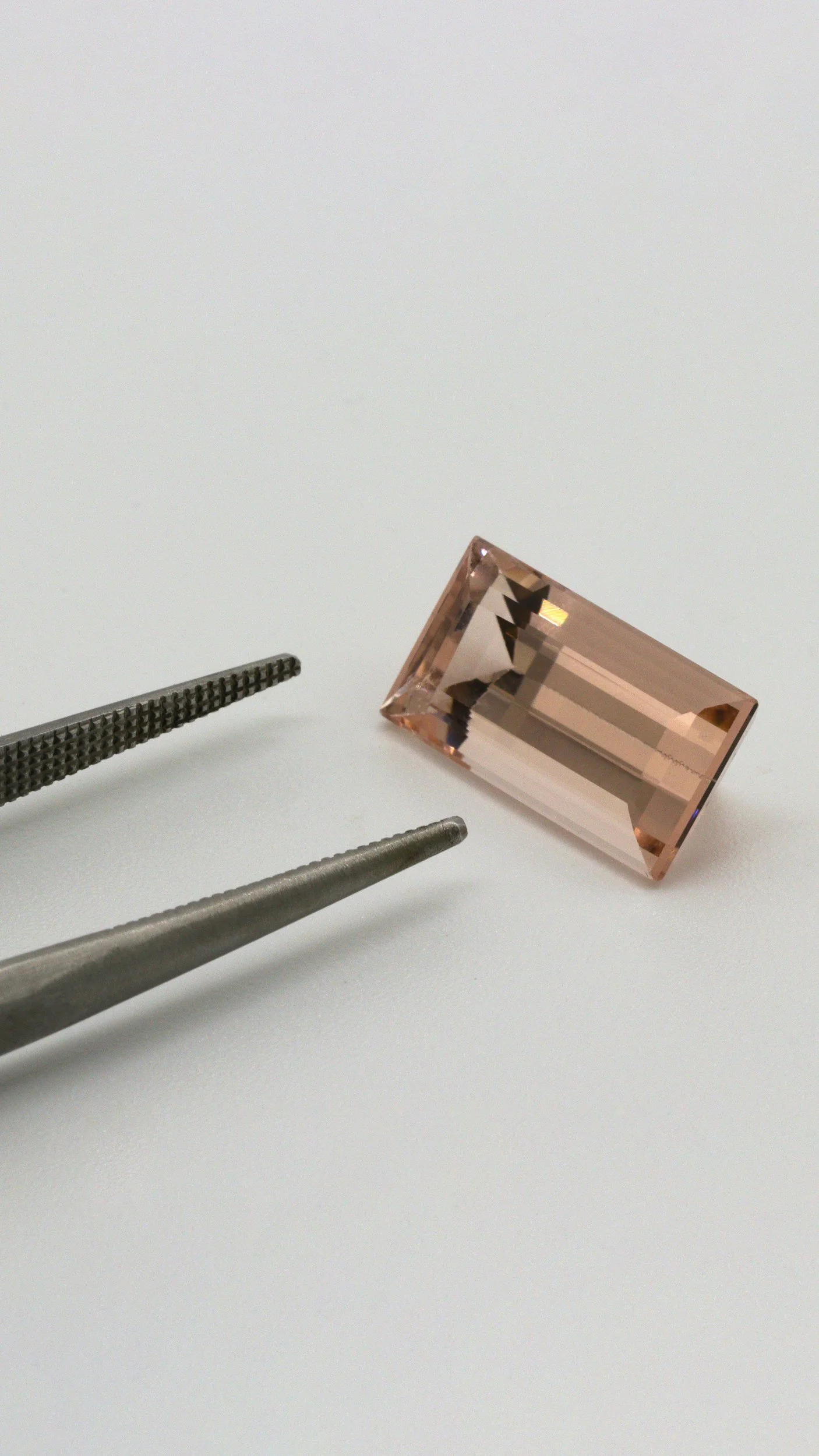
Morganite is beryl — the same mineral species as emerald and aquamarine. Emerald is beryl coloured by chromium, aquamarine by iron, morganite by manganese, which gives it that soft peach-pink.
It sits at 7.5 to 8 on the Mohs scale, making it one of the hardest stones I set and genuinely suitable for a ring worn every day.
It is a young name. The stone was identified in Madagascar in 1910 and named after J. P. Morgan, who was an obsessive gem collector as well as a banker. Before that, pink beryl had no particular identity of its own.
Why nearly all morganite has been heated
Most rough morganite comes out of the ground with an orange or salmon cast, from traces of manganese sitting in a different oxidation state. Gentle heat shifts it and leaves the clean pink the market wants.
This is routine, stable and permanent. It is not a dye and not a coating — it is the same manganese, rearranged. A heated morganite is a real morganite and it will not revert.
What it does mean is that untreated morganite with a strong natural pink is genuinely rare and priced as such. Anyone selling "untreated" morganite cheaply is worth a second question.
The Color is also famously delicate. Morganite reads better in daylight than under a lamp, and better in larger stones than small ones, because a pale Color needs depth to show at all.
Set in morganite
One ring, forged to order.
If you want the warmth with more presence
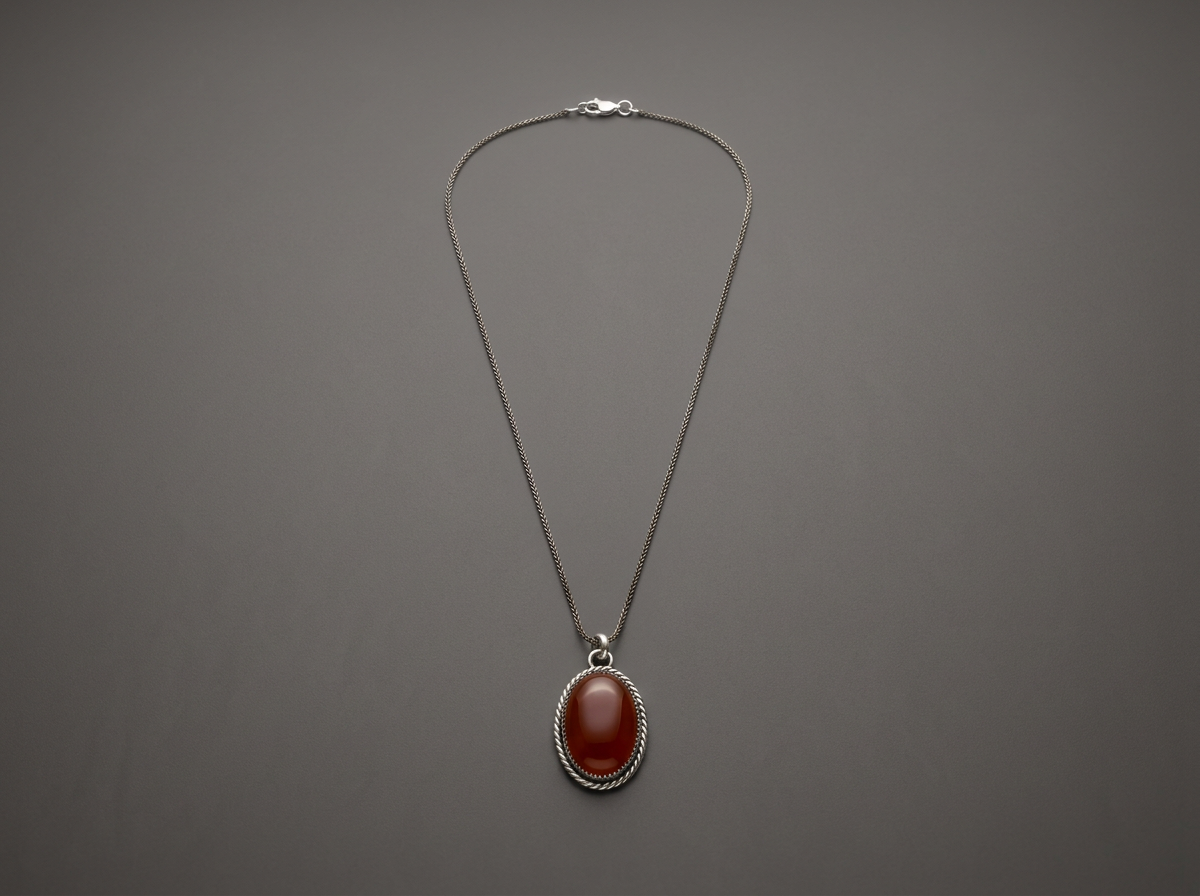
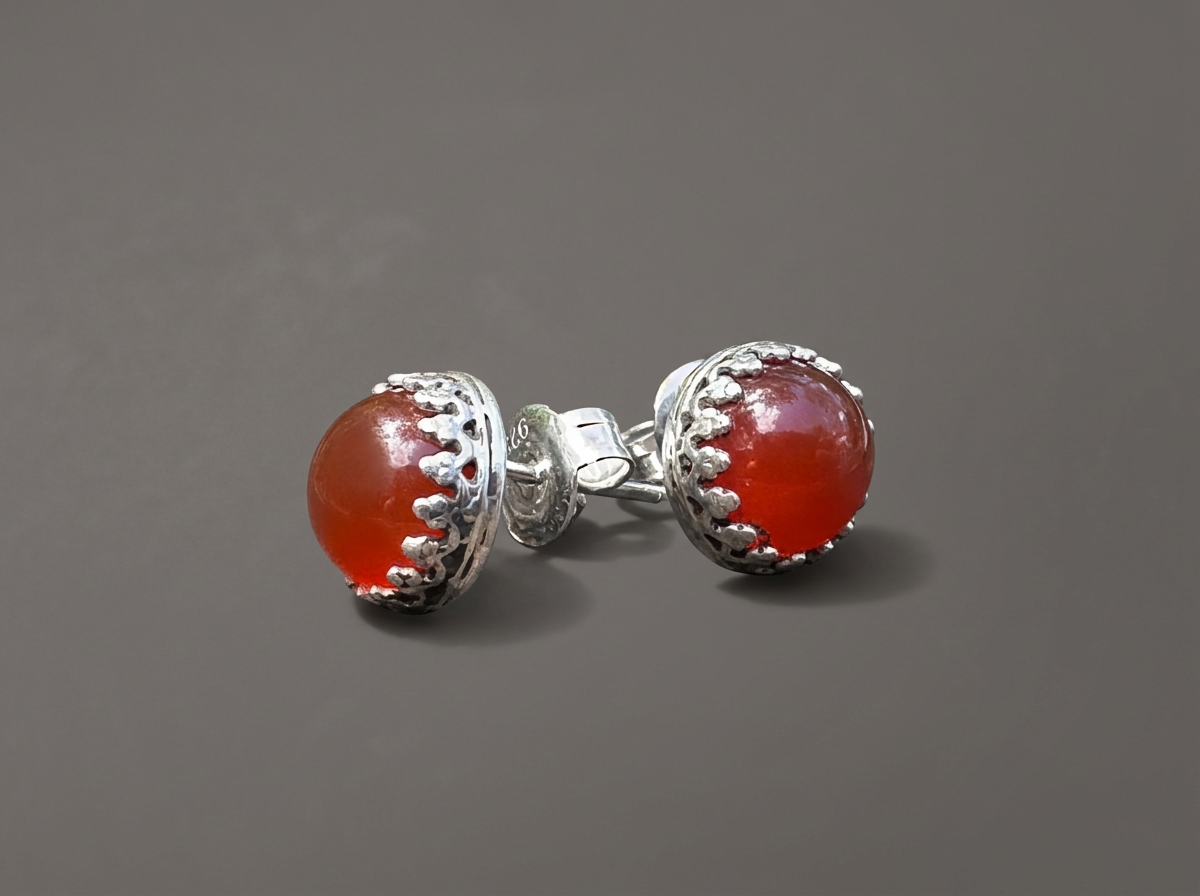
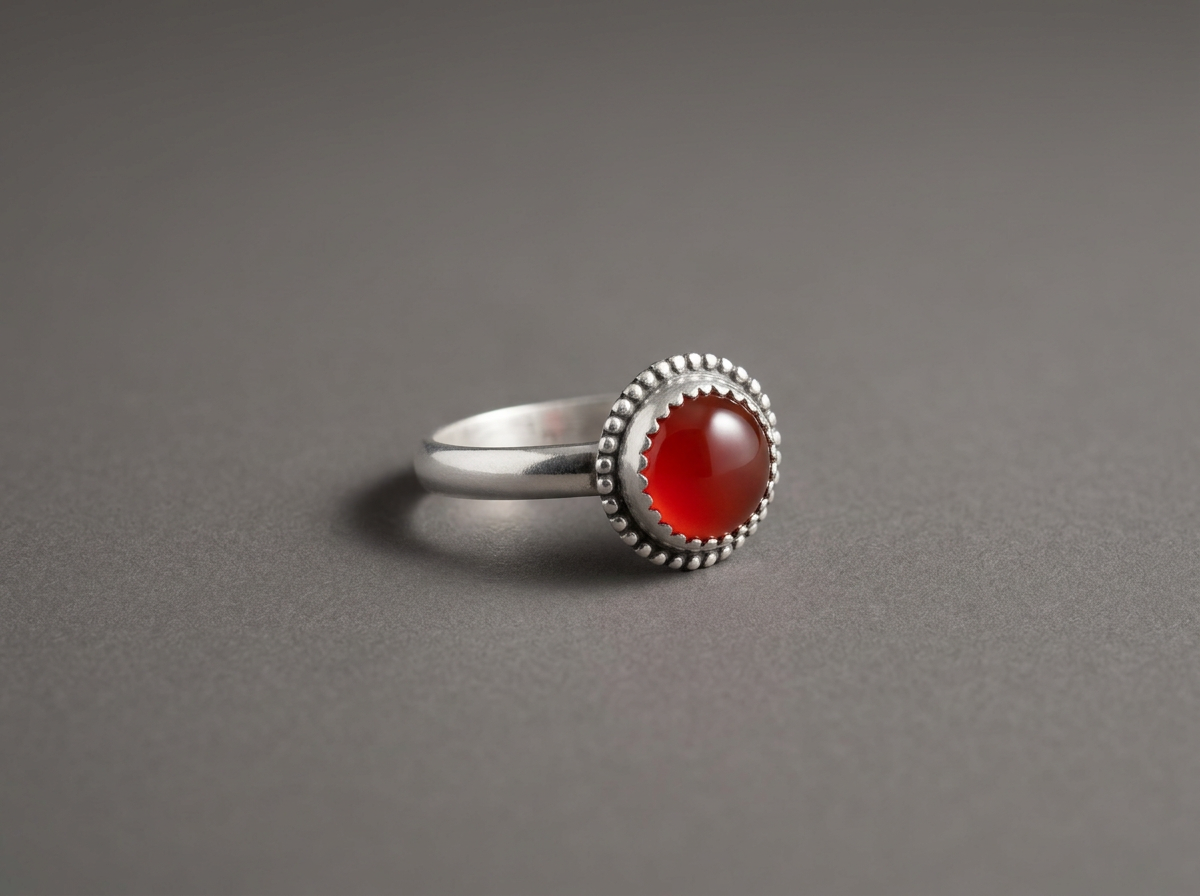
Morganite is the softest Color I work with, and it is meant to be. If you want warm and loud rather than warm and quiet, carnelian is the other end of the same idea. Same silver, same hands.
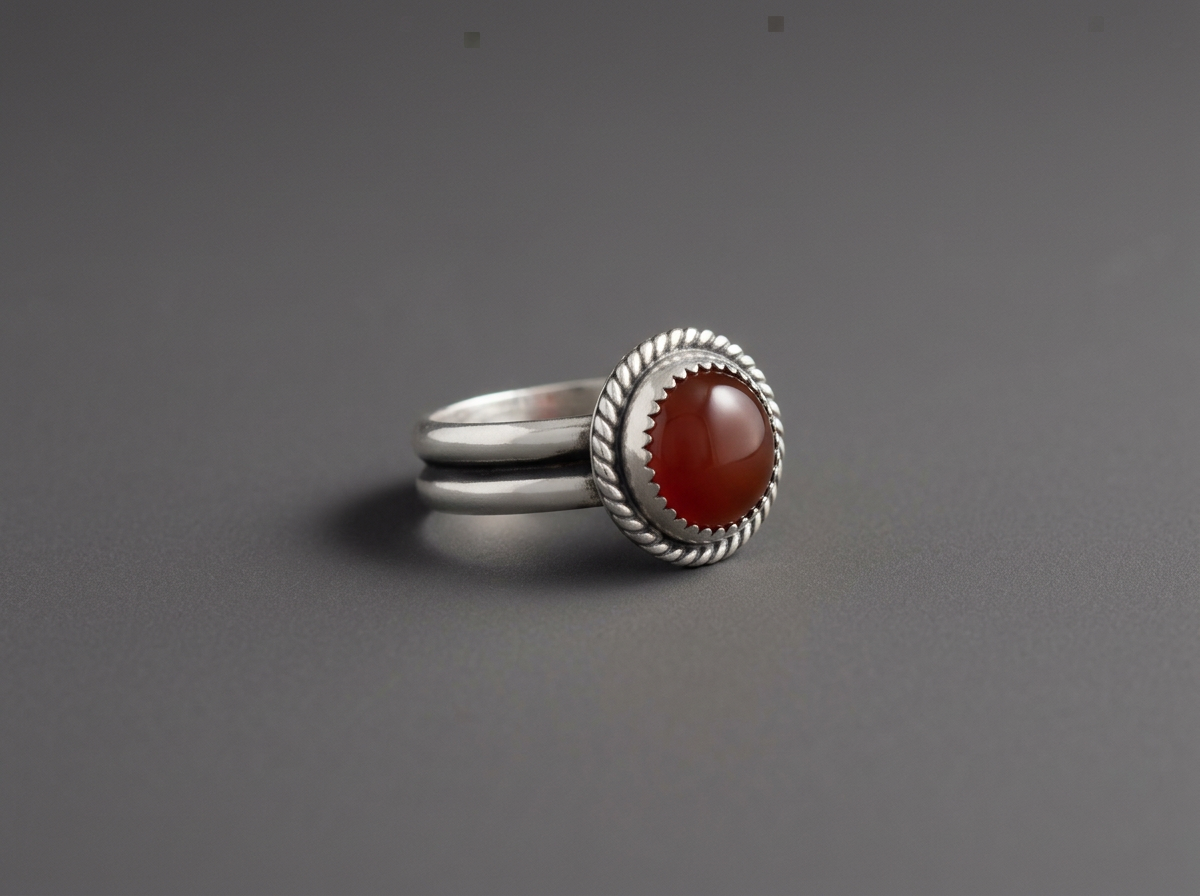
How I set it, and why the band is split
At 7.5 to 8 on the Mohs scale morganite can handle a ring, so this is one of the few stones where I am not designing defensively.
The twisted split band does something specific for a pale stone: it breaks the silver into strands that catch light separately, so there is movement and brightness right up against a Color that could otherwise get lost against dark metal.
I keep the Oxidizing lighter close to the stone for the same reason. Pale pink against heavy black reads grey; pale pink against textured, part-bright silver reads pink.
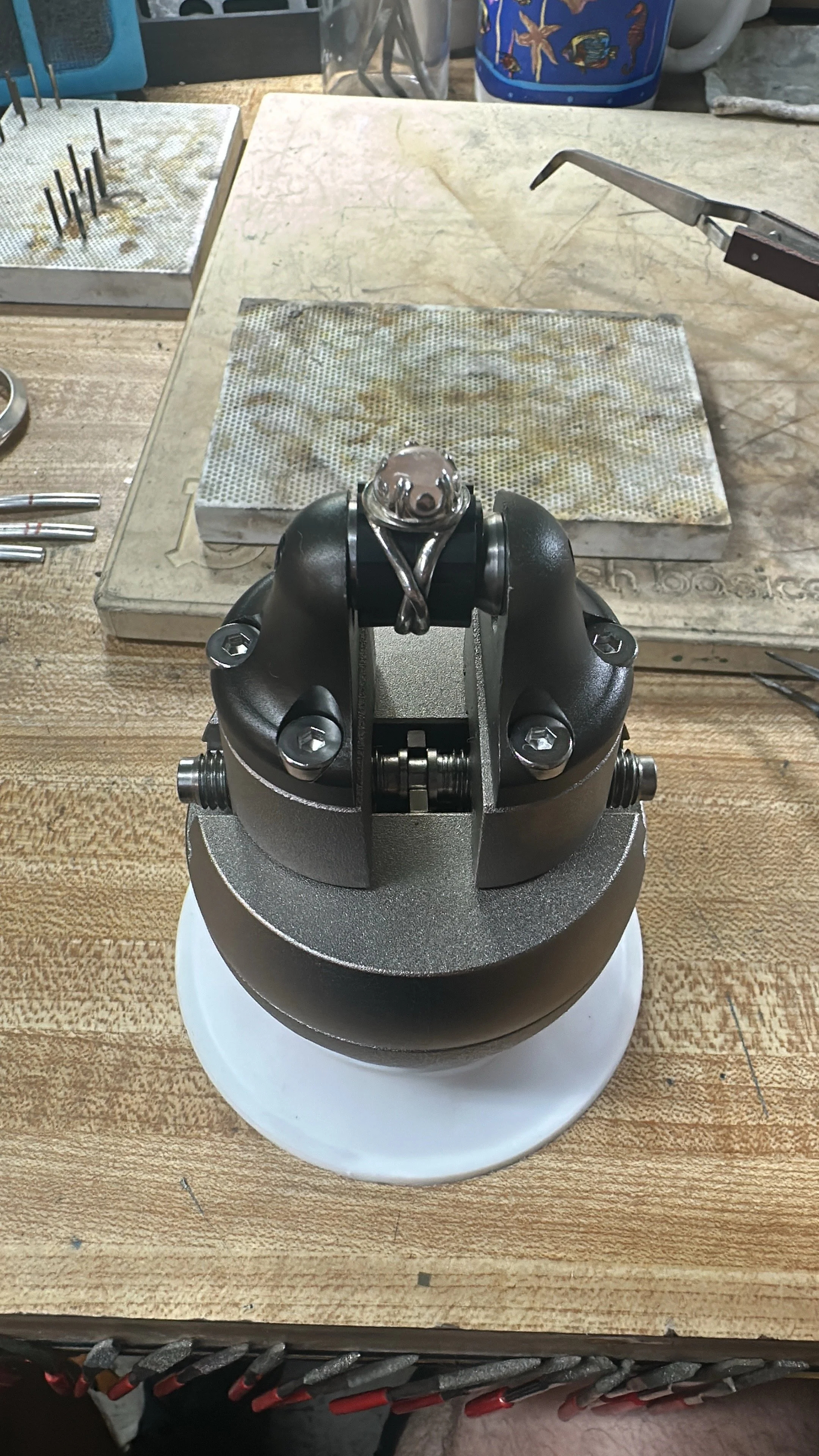
Looking after it
Warm water, mild soap, a soft cloth. Morganite is hard and undemanding.
Avoid steam and abrupt heat anyway — beryl can carry inclusions that dislike thermal shock, and the oxidised silver won't like it either. Skip ultrasonic cleaners. No ammonia, no bleach, no silver dips.
Off before the gym and the pool. Store it away from anything harder.
The silver is meant to darken. If it ever goes further than you want, bring it back — polishing and re-Oxidizing is free, forever, for anything I've made.
Questions I get about morganite
Is morganite related to emerald?
Directly — the same mineral, beryl. The only difference is which trace element got into the crystal.
Is it heat-treated?
Almost certainly, like nearly all morganite. It is a permanent, stable treatment that shifts Color already present in the stone.
Is it hard enough for daily wear?
Yes. At 7.5 to 8 it is harder than most of what I set, and harder than quartz, which means everyday dust won't touch it.
Can you make something specific in morganite?
Yes — commissions start with a conversation, so just submit a commission request And if you’re buying for someone else and aren’t sure of their size, a gift card lets them tell me.
Softness is not a weakness; it is a profound act of courage.
The Graceful Heart Ring is a heavy-duty talisman built for those who protect their empathy with ironclad boundaries. This striking piece features a round, peach-pink Morganite cabochon secured within an ornate, darkened sterling silver crown bezel. The focal point rests on a split-shank silver band that seamlessly twists down the sides, offering a beautiful, structural design that contours perfectly to the finger. Built to be worn daily, this ring is a physical reminder that true strength lies in keeping your heart open, no matter how rugged the terrain gets.