
Carnelian: the stone that holds light instead of reflecting it
Four pieces in the shop are set with carnelian — crown studs, a beaded ring, a statement ring and a drop pendant — hand-forged in Oxidized sterling silver and made to order in Nashville. Below: what gives carnelian its color, the treatment nearly every carnelian has had, and everything I set it in.
What carnelian actually is
Carnelian is chalcedony — the same microcrystalline quartz family as onyx and chrysoprase — coloured by iron oxide. Rust, essentially, distributed through the stone. That is where the orange comes from, and why it runs anywhere from pale apricot to deep brick red.
It is translucent, which is the thing that separates it from most of what I set. Hold a carnelian up to a window and light goes into it and comes back warmer. Against dark oxidised silver that reads like something lit from the inside.
It is an ancient jewelry stone: Mesopotamian burial goods, Egyptian amulets, Roman signet rings. Chalcedony takes an intaglio beautifully and hot wax does not stick to it, which made carnelian the practical choice for sealing letters for well over a thousand years.
Almost all carnelian has been heated, and that's fine
Most carnelian on the market began life as a duller, browner agate and was heated to bring the iron forward into that clear orange-red.
This is not a modern shortcut. The practice is thousands of years old — the Romans did it deliberately, and there is evidence of it well before them. The heat does not add anything to the stone. It drives an oxidation change in iron that was already sitting there.
So a heated carnelian is genuine carnelian, permanently colored, and it will not fade. The line worth drawing is between heat treatment, which is universal and stable, and dyed agate sold as carnelian, which is neither.
A rough guide: natural and heat-treated carnelian tends to show cloudy, uneven Color when you hold it to a light. Dyed material often shows Color concentrated in bands or along fractures.
Set in carnelian
Four pieces, each one forged to order.
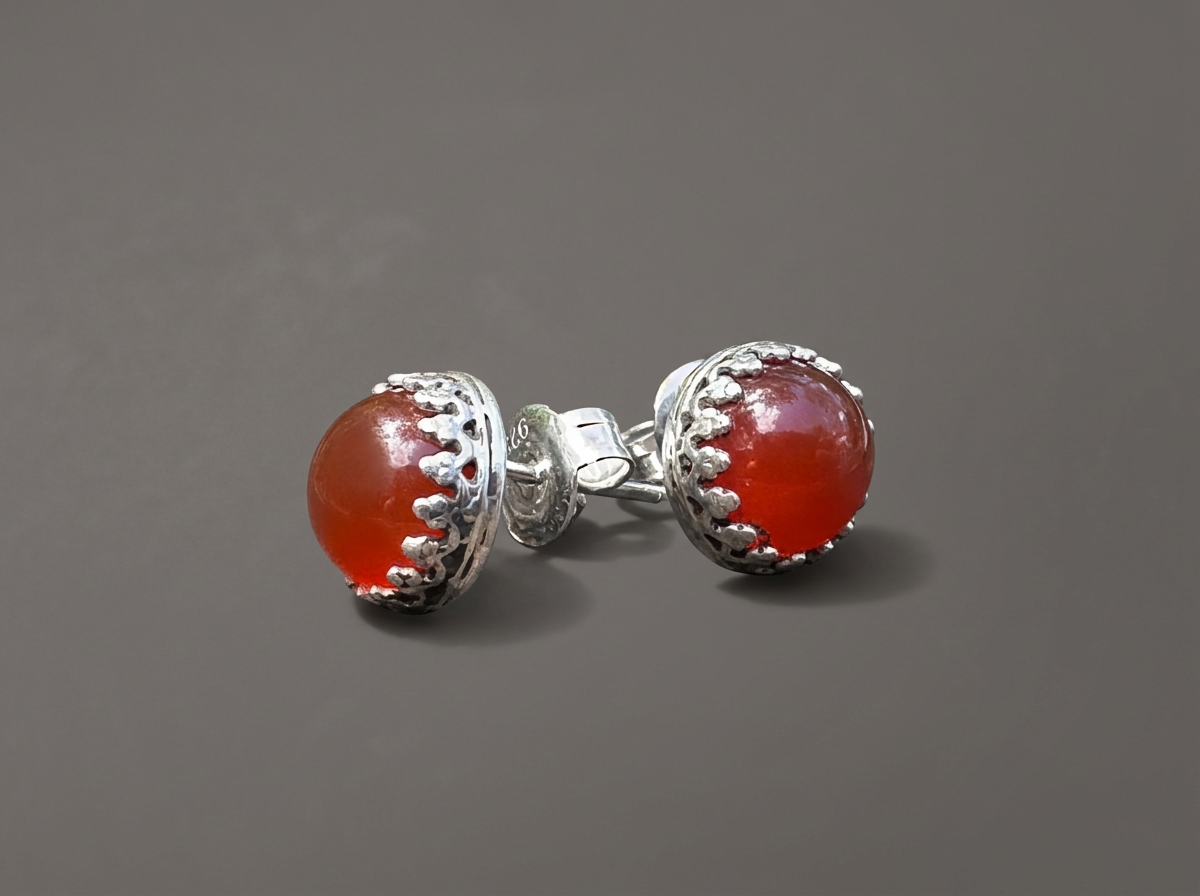
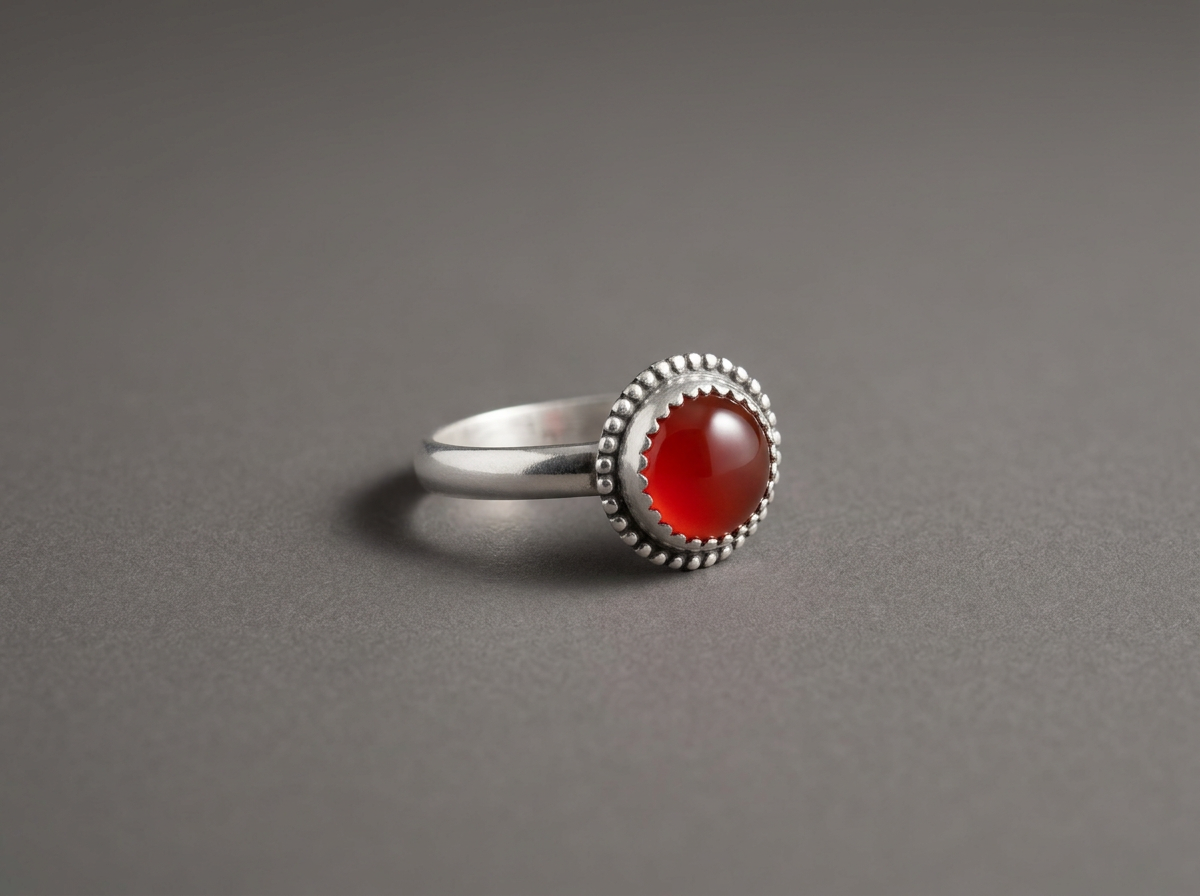
How I set it, and why translucency changes the design
Carnelian is hard enough to ignore — around 6.5 to 7 on the Mohs scale, not porous, no special care needed. The design problem is not durability. It is light.
A translucent stone in a closed bezel sits on a floor of silver, and that silver decides how the stone reads. Left bright, it bounces light back up through the stone and lifts the colour. Left dark, the stone goes deep and moody. That choice gets made before the stone ever goes in.
It is the one stone I work with where what sits underneath matters as much as what sits around it.
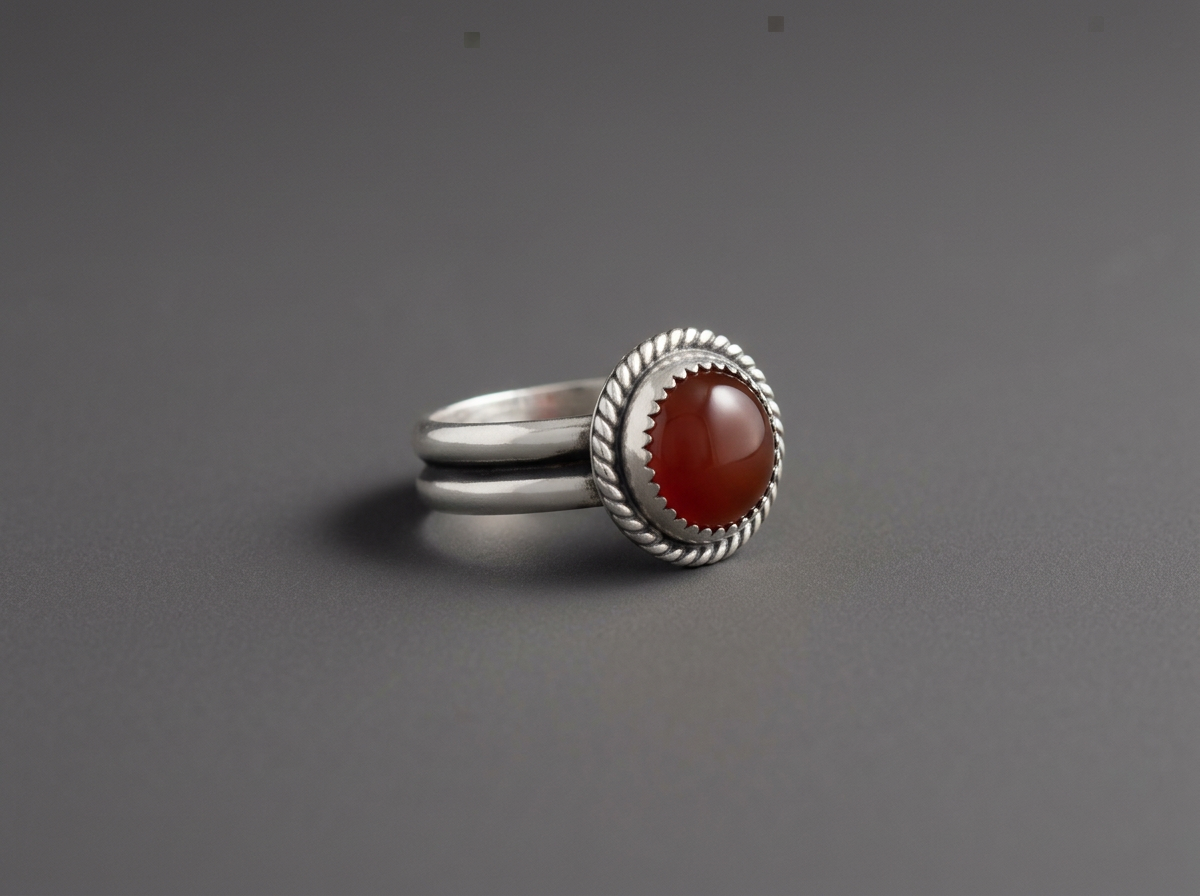
Looking after it
Warm water, mild soap, a soft cloth. Carnelian is easy.
Avoid ultrasonic cleaners and steam — prolonged heat is not good for a heat-treated stone, and the Oxidized silver will not thank you either. No ammonia, no bleach, no supermarket silver dips.
Off before the gym and the pool. Store it away from harder stones.
The silver is meant to darken. If it ever goes further than you want, bring it back — polishing and re-Oxidizing is free, forever, for anything I've made.
Questions I get about carnelian
Is your carnelian heated?
Almost certainly, like nearly all carnelian anywhere. It is an ancient and permanent treatment that brings out Color already present in the stone, and it will not fade.
Will it fade in sunlight?
No. Heat-treated carnelian is stable. Dyed agate sold as carnelian can fade, which is one more reason to buy from someone who will tell you which one you have.
Why is the Color uneven?
Because it is a natural stone. Cloudy, uneven Color is a good sign — perfectly even Color usually means dye.
Can you make something specific in carnelian?
Yes — commissions start with a conversation, so just submit a commission request And if you’re buying for someone else and aren’t sure of their size, a gift card lets them tell me.
Courage doesn't announce itself. It just doesn't flinch.
A single oval Carnelian cabochon sits in a twisted rope bezel, set against an oxidized sterling silver backplate that's been left dark the way it's meant to wear. No stamping, no ornamentation competing for attention — just warm stone against blackened silver, hung from a thin oxidized rope chain. This is the quiet version of courage: the kind you carry instead of performing.