
Hematite: the stone that draws a red line
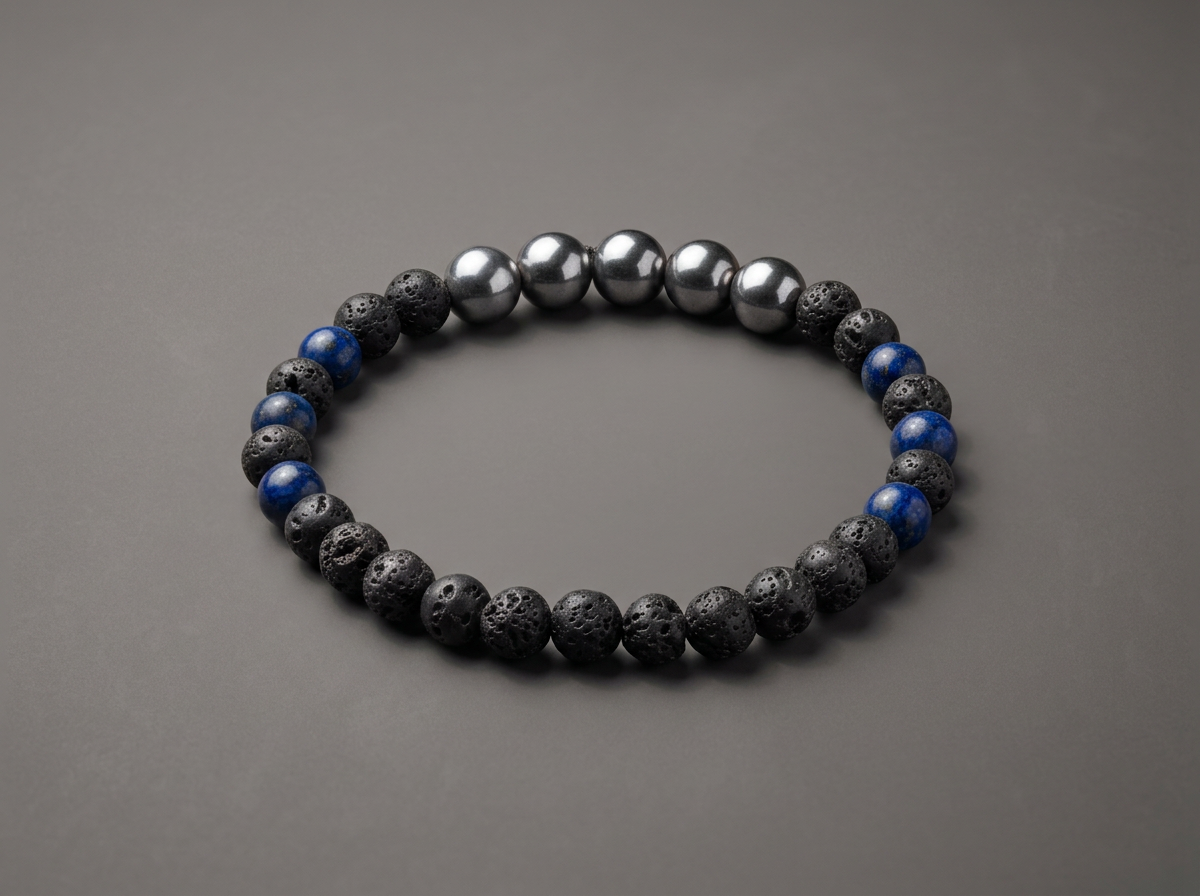
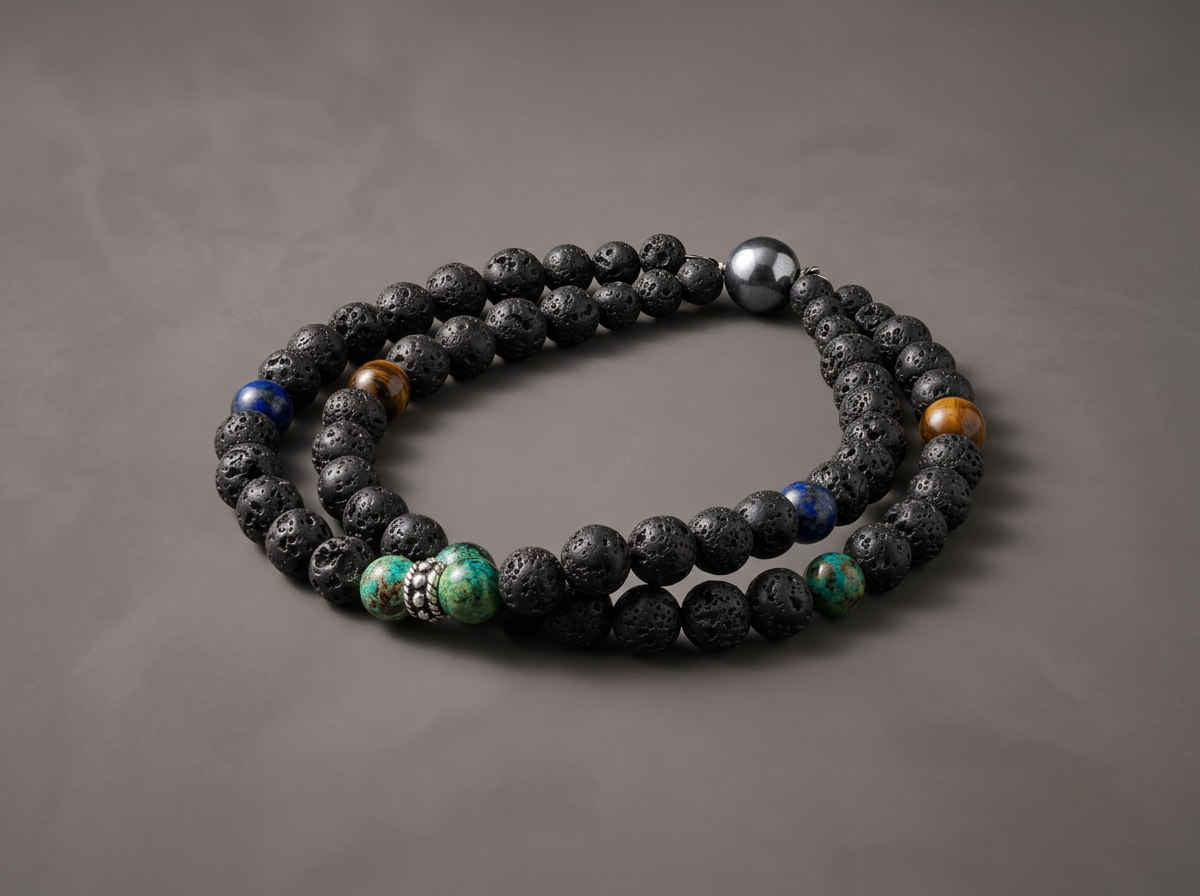
Hematite appears in three pieces in the shop, as weight and contrast — in The Centered Mind alongside lava and lapis, in The Grounded Fire alongside tiger’s eye and lava, and in The Aligned Core multi-stone wrap. Made and strung in Nashville, to order. Below: where the name comes from, the thing nearly every “hematite” bead in a craft shop gets wrong, and where I use it.
What hematite actually is
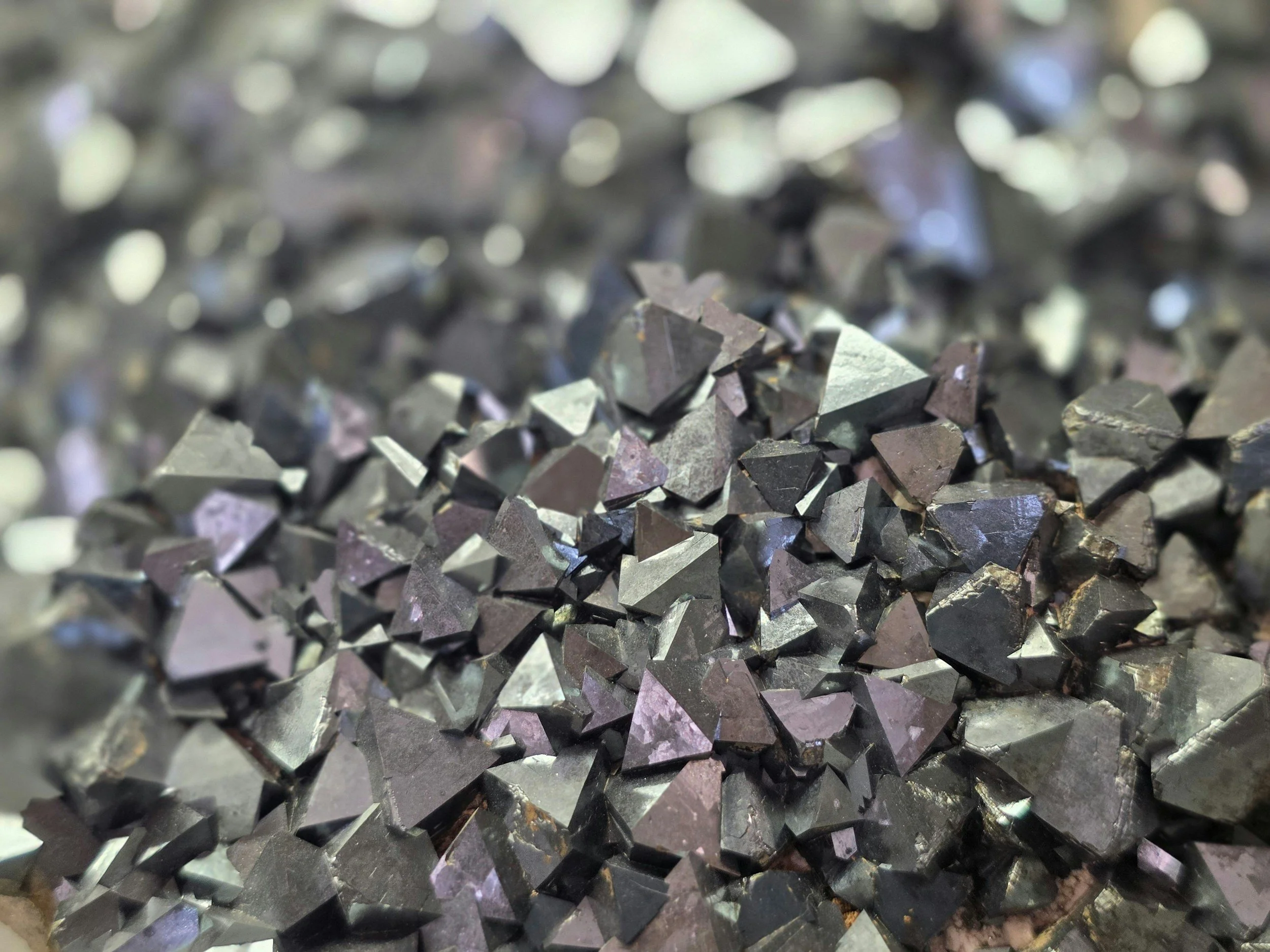
Hematite is iron oxide — rust, essentially, in crystalline form — and it is the most important iron ore on earth. Polished, it takes a hard metallic shine that looks more like machined steel than stone.
The name comes from the Greek for blood, and not because of how it looks polished. It is because of what it does when you grind it: hematite leaves a red streak, and powdered hematite is the red ochre humans have used as pigment for tens of thousands of years. The oldest paintings we have were made with it.
It sits around 5 to 6 on the Mohs scale and it is noticeably heavy. Density is the first thing people notice when they pick a strand up.
The thing most "hematite" beads get wrong
If a hematite bead sticks firmly to a magnet, it almost certainly isn't hematite.
The strongly magnetic beads sold everywhere as "magnetic hematite" are usually hematine — a synthetic barium-strontium ferrite, engineered specifically to be magnetic and to look like polished hematite. It is a manufactured material, not a mineral, sold under a name designed to blur the difference.
Natural hematite is at most very weakly attracted to a magnet. It is iron oxide, not a permanent magnet.
None of which makes hematine bad in itself. It just isn't the thing it is usually named as, and that is worth knowing before someone sells you healing properties attached to a factory product.
How I work with it
Hematite goes on strands, not into bezels. Its appeal is the mirror finish and the density, and both work best in the round, where you can turn a bead and watch light run off it.
In The Centered Mind it sits between lava and lapis for contrast: one matte and porous, one deep and soft, one bright and hard. Three surfaces doing three different things.
It is also heavier than it looks, which is a real part of how the piece feels on the wrist. Weight is a design decision, not an accident.
Looking after it
A dry or barely damp soft cloth. Hematite polishes to a mirror and shows fingerprints, so it wants wiping more than washing.
Keep it dry where you can. It is iron oxide, and prolonged damp will dull the surface over time. No ultrasonic cleaner, no steam, no ammonia, no bleach, no silver dips.
Off before the gym, the pool and the shower. Store it flat and on its own.
If a strand ever needs restringing, bring it back.
Questions I get about hematite
Is your hematite magnetic?
No, and that is the right answer. Natural hematite is at most weakly attracted to a magnet. Beads that snap onto a magnet are usually hematine, a synthetic.
Why is it so heavy?
Because it is iron oxide. Density is the giveaway, and it is one of the ways you tell real hematite from lighter imitations.
Will it rust?
Not the way steel does — it is already fully Oxidized, which is what hematite is. Keep it dry anyway; prolonged damp dulls the polish.
Can you make something specific with hematite?
Yes, as beads and strands. commissions start with a conversation, so just submit a commission request.
Fire needs ground beneath it, or it just burns out.
Tiger's Eye brings the heat here — warm, golden, solar — tempered bead for bead by Hematite's cool iron weight and matte black Lava Rock. Where The Watchful Eye stands guard, this one runs the engine: contained heat, meant to last the distance instead of flaming out in the first mile.