
Fluorite: the stone that gave fluorescence its name
One piece in the shop is set with fluorite — The Illumined Mind, an open-back pendant, hand-forged in sterling and made to order in Nashville. Below: why fluorite is the softest stone I set, why that pendant has an open back, and the piece itself.
What fluorite actually is
Fluorite is calcium fluoride, and it grows in cubes and octahedra so clean they look cut rather than grown. It comes in more colours than almost any mineral — purple, green, blue, yellow, colourless — often banded through a single crystal.
It is the stone that named a phenomenon. Many fluorites glow under ultraviolet light, and when the effect was described in the 1850s it was named fluorescence, after the mineral it was first properly studied in.
It is also soft. Fluorite defines 4 on the Mohs scale — that is not an estimate, it is the reference point the scale is built on — which makes it softer than a steel blade and far softer than anything else in the shop.
Why this is a pendant and not a ring
Two reasons, and both are physics rather than taste.
First, hardness. At 4 on the Mohs scale, fluorite will scratch against ordinary household dust, which is largely quartz at 7. A fluorite ring worn daily would go cloudy inside a year. A pendant hangs clear of almost everything.
Second, cleavage. Fluorite has perfect cleavage in four directions — it parts cleanly along those planes if struck. That is what makes it a joy to cut into octahedra and a menace to set carelessly.
So it hangs, in an open-back setting that lets light through the stone rather than trapping it, held at the girdle where it needs holding and nowhere else. It is the right piece for the material, not a compromise.
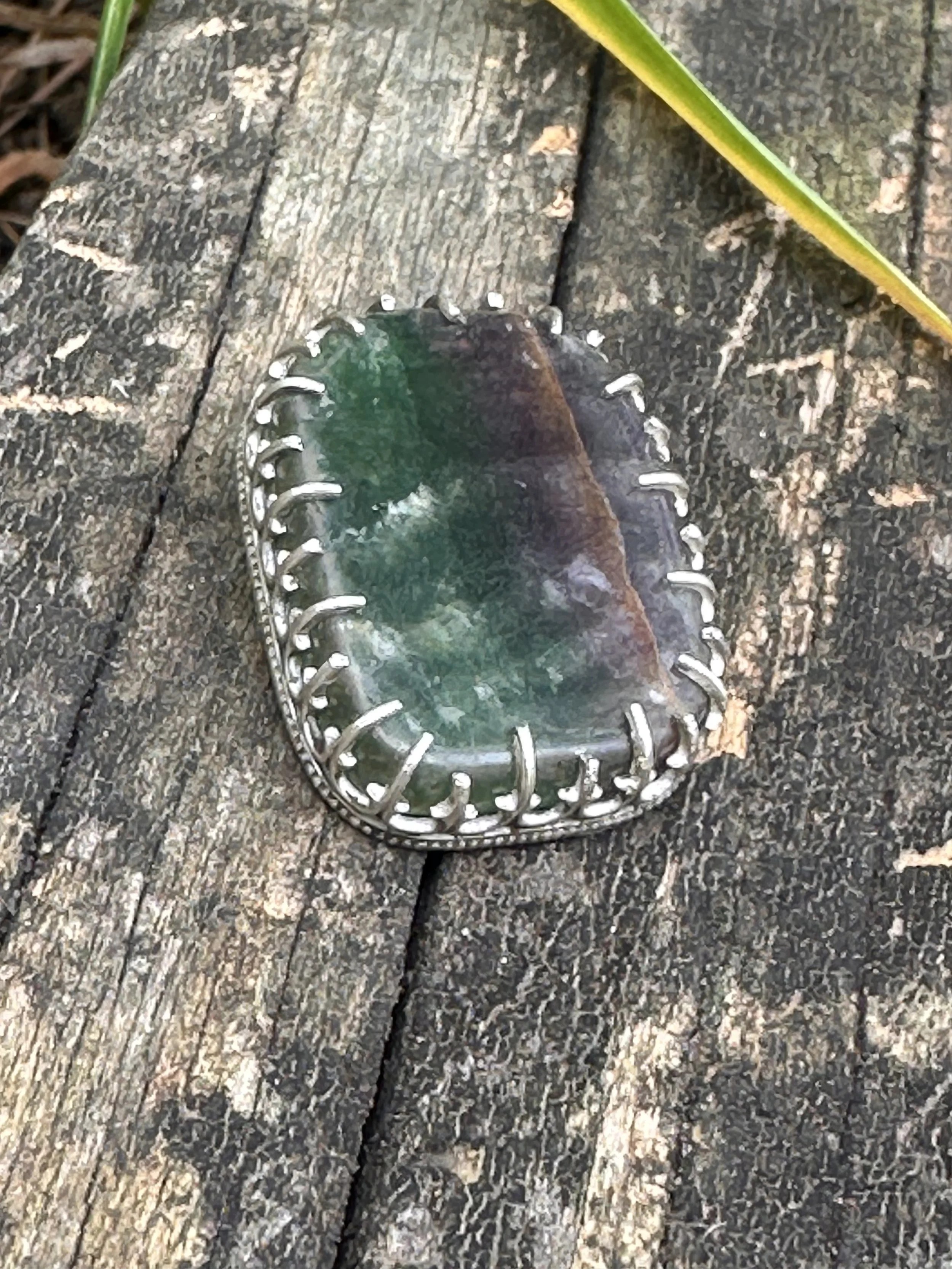
Set in fluorite
One pendant, forged to order.
How I set it, and why the back is open
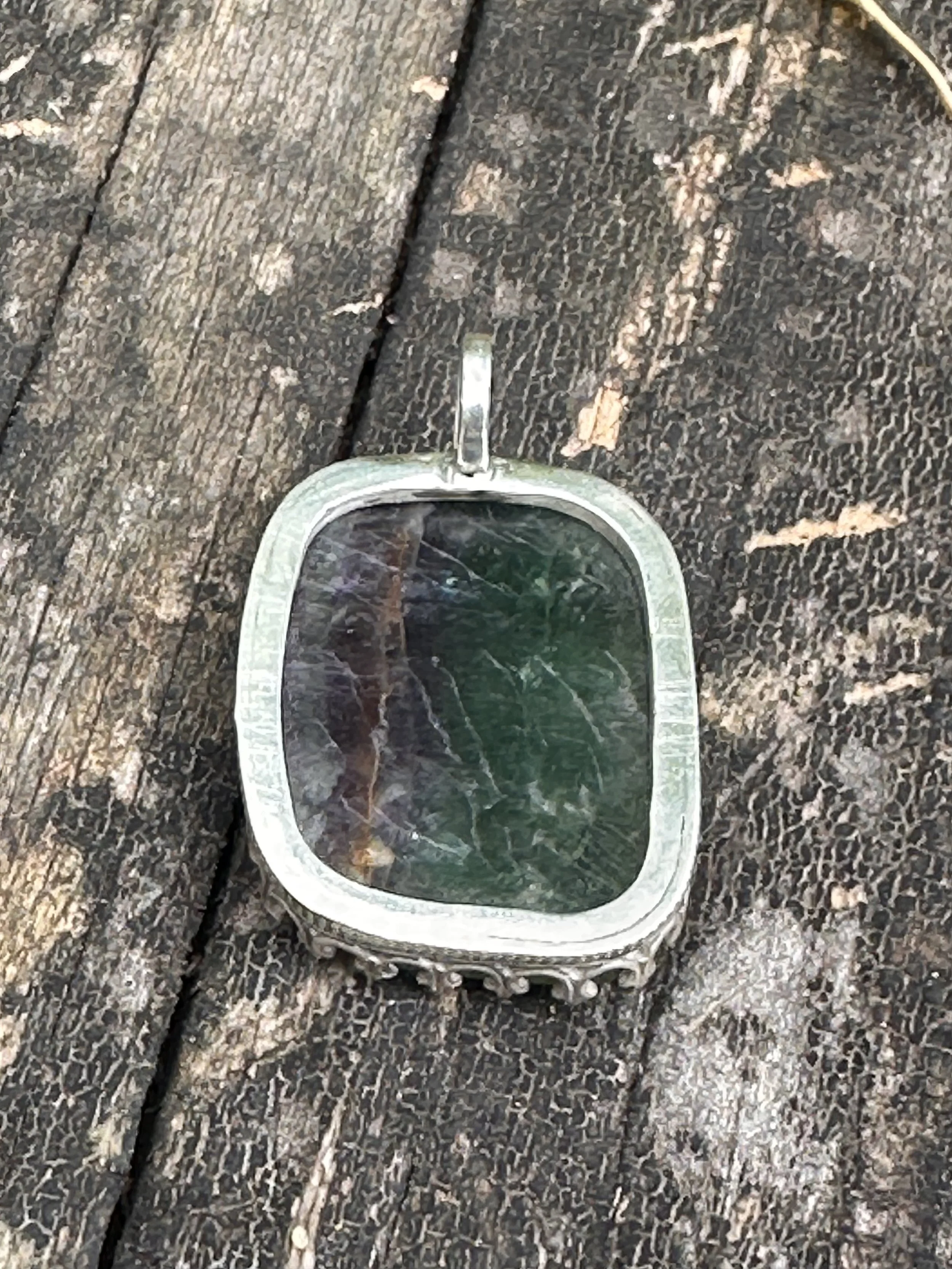
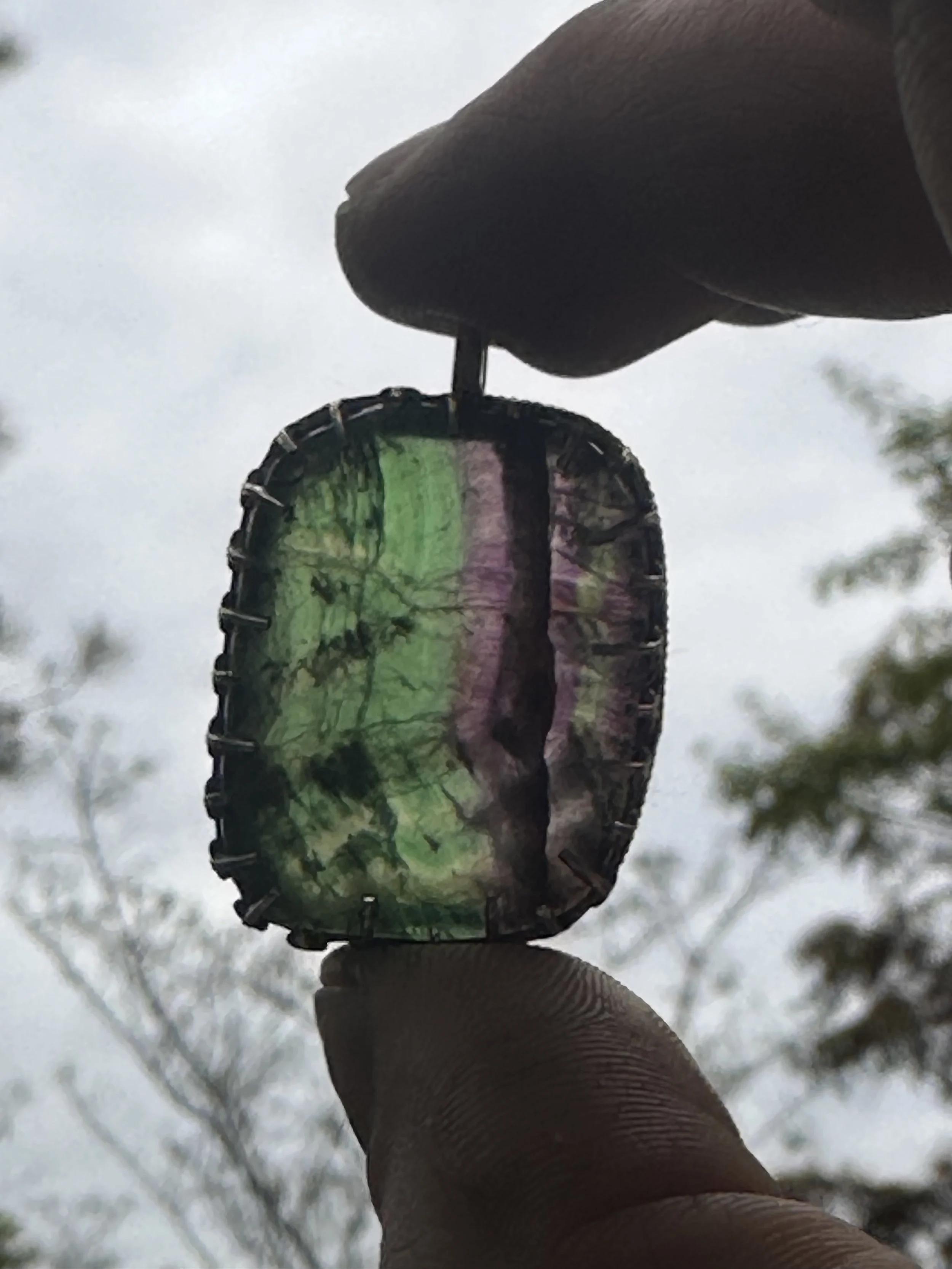
An open-back setting means there is no floor of metal behind the stone, so light passes straight through it instead of bouncing off silver. For a translucent, banded stone like fluorite that is the difference between seeing into it and seeing at it.
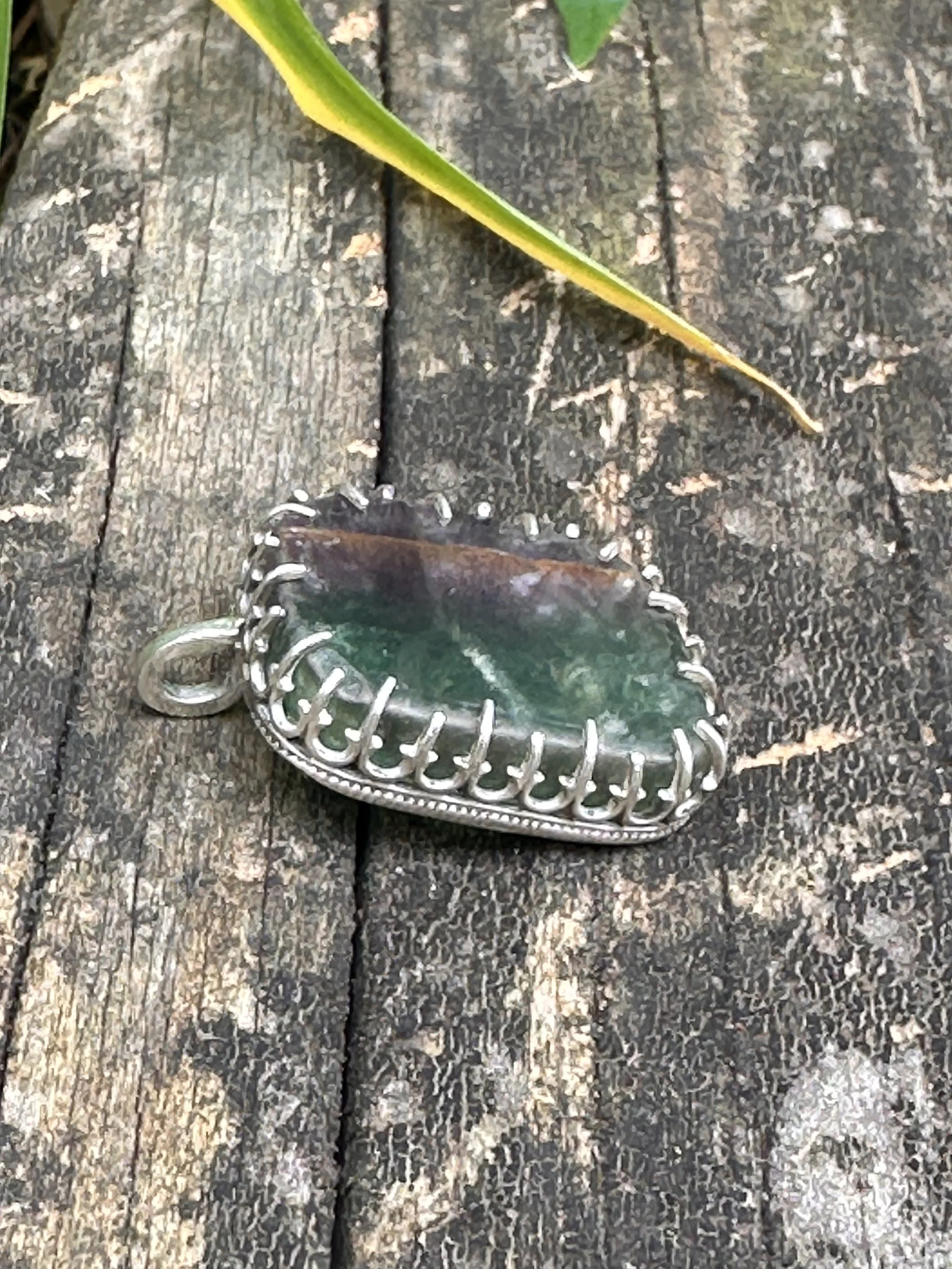
It also means I am holding the stone at the girdle with as little metal as will do the job. Every extra bit of pressure on a stone with perfect cleavage is a risk taken for no reason.
I don't oxidise heavily right at the setting either. The point of this piece is light, and blackened silver hard against a translucent stone eats it.
Looking after it
This is the most careful item in the shop. Warm water, a drop of mild soap, a soft cloth, dried immediately.
Never an ultrasonic cleaner. Never steam. Avoid sudden temperature changes entirely — fluorite is sensitive to thermal shock. No ammonia, no bleach, no silver dips.
Take it off before anything physical, and store it flat and on its own rather than in a pile with harder stones. It will scratch against almost anything.
If it ever needs re-polishing or the silver refreshing, bring it back. That is free, forever, for anything I've made.
Questions I get about fluorite
Is fluorite too fragile to wear?
Not as a pendant, worn with a little awareness. As a ring, honestly, yes — which is why I don't make one.
Does it really glow under UV light?
Many fluorites do, and the word fluorescence was coined from the mineral's name. Whether a particular stone glows depends on the trace elements in it.
Why is it banded?
Because fluorite grows in layers as conditions change, and traces of different elements Color each layer. The banding is a record of how it formed.
Can you make something specific in fluorite?
Ask, and I'll tell you what is realistic. Some shapes I would talk you out of, and I would rather do that than sell you something that chips. commissions start with a conversation, so just submit a commission request.
Confusion cannot survive where light is allowed to shine.
The Illumined Mind Pendant is a striking, raw-edged talisman built to bring absolute order to internal chaos. This statement piece features a large, semi-translucent slab of natural Fluorite, flashing with rich, stormy bands of deep green and purple. The stone is secured in a heavy-duty, open-back sterling silver prong frame. By leaving the back completely open, this necklace catches the light as you move, shifting from dark and mysterious to vibrant and glowing. Suspended from a classic silver chain, it serves as a bold, structural reminder to let your inner light break through.